
How FIFA came to its controversial decision on Folarin Balogun
A Controversial Turn in the World Cup
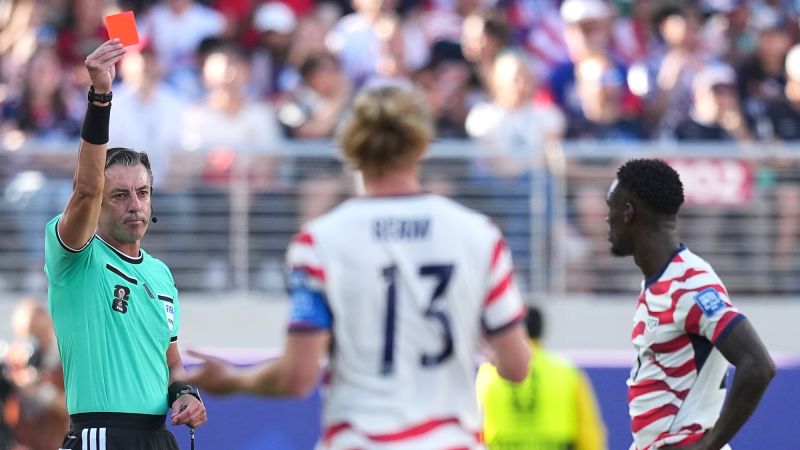
How FIFA came to its controversial – As the World Cup progressed, the initial optimism surrounding the tournament’s momentum was abruptly disrupted by a decision that raised eyebrows across global sports circles. The controversy centered on Folarin Balogun, a pivotal player for the U.S. team, whose red card in the Round of 32 game against Bosnia and Herzegovina sparked a chain of events that would redefine the narrative of the competition. This incident, which seemed minor at first, became a focal point for discussions about fairness and political influence within FIFA’s governance.
The Incident That Sparked the Debate
On the morning of July 6, the World Cup’s credibility now faces scrutiny due to an apparent oversight in disciplinary action. Balogun, the striker, was shown a red card during a match against Bosnia for an accidental foul that left a defender’s leg grazed. While the defender was fortunate to escape serious harm, the incident left fans and analysts questioning the severity of the punishment. Balogun himself claimed, “I didn’t think it was a foul,” reflecting his belief that the decision was a misjudgment rather than a deliberate act of misconduct.
“I didn’t think it was a foul,” Trump told reporters on Monday about the incident that has gripped the world.
Though the match itself was thrilling, the controversy surrounding Balogun’s red card quickly overshadowed the action. Trump, known for his vocal presence in sports discourse, took to Truth Social to praise FIFA’s reversal of the suspension. His statement, “FIFA reversed a great injustice,” highlighted the political weight behind the decision. Sources close to the situation confirmed that the president had directly engaged with Gianni Infantino, FIFA’s leader, to request a review of the call. This intervention, while not publicly documented, has fueled speculation about the extent of political influence in the tournament’s rulings.
Political Interference and FIFA’s Rulebook
FIFA’s disciplinary committee cited Article 27 of its disciplinary code as the basis for the decision, which allows for suspending a disciplinary measure for up to four years. In Balogun’s case, the one-match ban was extended to a full year, enabling him to participate in the Round of 16 and beyond. The move, while legally justified, has sparked debates about the fairness of the process. US Soccer, initially compelled to accept the ban, now faces a dilemma: how to proceed without their key striker for the remainder of the tournament.
While FIFA maintains that its actions were in line with established rules, critics argue that the timing of the suspension was too convenient. The decision to defer Balogun’s punishment coincided with a critical phase of the competition, raising questions about whether it was a strategic move to support the U.S. team. This scenario echoes past instances where FIFA’s rules have been interpreted to favor certain players, such as Cristiano Ronaldo, whose three-match ban was deferred for a year, allowing him to start the World Cup with Portugal. Similarly, Nicolás Otamendi and Moisés Caicedo received one-year suspensions for their one-game bans, ensuring they could contribute to their national teams from the outset.
Belgium’s Response and the Ripple Effect
The backlash was swift, particularly from Belgium, who had planned to face the U.S. in the Round of 16. Belgian manager Rudi Garcia described the decision as a “prank,” suggesting it was an unnecessary maneuver to disrupt the flow of the tournament. The Belgian Soccer Federation echoed this sentiment, stating that the red card suspension was applied “in direct contradiction” to the tournament’s rules. Their appeal was denied by FIFA within hours, leaving the team to recalibrate its strategy for the crucial match.
Belgium’s frustration underscores the broader implications of FIFA’s ruling. The decision not only affects the immediate match but also challenges the perception of impartiality in the World Cup. Fans and pundits alike are now questioning whether the tournament is being manipulated to favor certain nations, particularly those with strong political ties. For many, the suspension of Balogun’s ban represents a growing trend of prioritizing outcomes over strict adherence to the rules.
Historical Precedents and the New Norm
FIFA’s use of Article 27 to suspend disciplinary measures is not new, but its application during the tournament itself has created a new precedent. Prior to the competition, the organization had already amended its regulations to allow teams to field their strongest squads, even if players faced short suspensions. This change was intended to boost competitiveness, but it has now been interpreted as a way to shield players from consequences that could impact their teams’ chances.
The flexibility of FIFA’s rulebook has always been a point of contention, but this decision amplifies the criticism. By extending Balogun’s suspension, FIFA has effectively prioritized the U.S. team’s prospects over the integrity of the game. The move also raises concerns about how other players might be affected in the future. For instance, if a player from a country with political ties to FIFA is involved in a similar incident, could they also receive a deferred punishment?
The Future of World Cup Discipline
As the World Cup continues, the controversy surrounding Balogun’s suspension serves as a cautionary tale. The incident has exposed the delicate balance between enforcing discipline and accommodating political interests. FIFA’s actions have not only influenced the current tournament but also set a template for future decisions. This could lead to a situation where red cards are treated as temporary setbacks rather than permanent penalties, depending on the player’s influence and the context of their team’s performance.
For now, the U.S. team will move forward with Balogun in their lineup, hoping to secure a victory against Belgium. However, the shadow of political intervention will linger, reminding fans that even the most exciting moments of the World Cup can be overshadowed by decisions that feel more like favors than fair judgments. As the tournament progresses, the question remains: how far will FIFA go to ensure that the outcomes align with its broader goals, and at what cost to the sport’s credibility?
Conclusion: A Tournament in Transition
The World Cup, once a symbol of pure competition, now stands at a crossroads. FIFA’s decision on Balogun’s suspension highlights the evolving nature of the tournament, where rules are not only applied but also adapted to serve strategic purposes. While the move may benefit the U.S. team in the short term, it has sparked a deeper conversation about the role of politics in sports governance. As fans continue to watch the games, they are also watching the game itself—its rules, its integrity, and the invisible forces shaping its outcome.
With the current time being 9 a.m. local time, the focus remains on the next match, but the controversy ensures that the World Cup will be remembered not just for its goals and triumphs, but for the decisions that have tested its very foundation. The question now is whether this moment of political influence will become a defining chapter in the tournament’s history or a footnote that fades into the background.
