
As NATO meets, Putin is weighing his options in Ukraine, and further afield
As NATO meets, Putin is weighing his options in Ukraine, and further afield
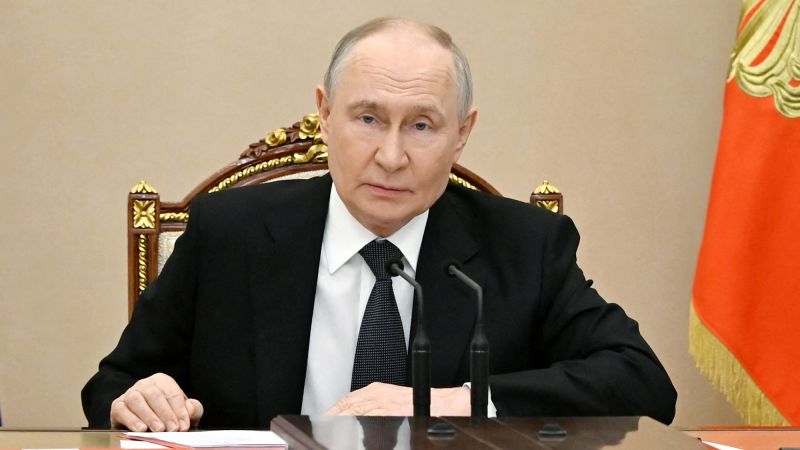
As NATO meets Putin is weighing – Russian President Vladimir Putin now faces his most uncertain moment yet. The war in Ukraine, a decision he once framed as a necessary mission, has become a mounting burden on Moscow’s economy and political standing. As NATO gathers in Ankara this week, the question remains: will this be the moment he takes a decisive risk against the alliance? With the conflict entering its fifth year, the toll on Russia’s resources is undeniable, and its leaders are increasingly aware of the consequences of their choices.
The Fragile Balance of Power
The ongoing war has not only strained Russia’s financial reserves but also diminished its strategic flexibility. Kyiv’s bombardments, persistent and evolving, have caused severe energy shortages and disrupted infrastructure across the country. In the distance, Moscow’s skyline still smokes from the destruction, a stark reminder of the war’s impact. Analysts are now questioning whether Putin’s next move will be a calculated escalation or a retreat from the frontlines.
“With your back to the wall, you don’t also bang your head into it.”
This adage seems to echo the current dilemma facing the Russian leader. His invasion, once seen as a swift operation, has stretched into a prolonged stalemate, testing both his military and his public support. Despite the initial optimism, the war has exposed vulnerabilities in Moscow’s capabilities. The United States, meanwhile, has reportedly warned Poland of a possible new front in Europe, where Moscow might launch limited but disruptive strikes using drones or hybrid tactics.
Shadows of Distant Threats
Even as Russia grapples with its immediate challenges, its influence extends beyond Ukraine’s borders. In the Arctic, Norway’s Svalbard archipelago hosts the small Russian settlement of Barentsburg, which has raised concerns among Oslo’s policymakers. The possibility of this outpost becoming a strategic foothold for further expansion looms large. Meanwhile, in Moldova, Putin’s decision to issue Russian passports to residents of Transnistria has sparked speculation about a broader geopolitical strategy.
The situation is compounded by the continued attacks on Kyiv, which have intensified in recent months. These strikes, though not as devastating as earlier phases of the war, indicate a persistent threat from Moscow. Yet, the frequency of these assaults also highlights Russia’s logistical constraints. Munitions are limited, and the need to target new areas has become a pressing challenge. This pattern suggests a careful balancing act between maintaining pressure and conserving resources.
A Split Screen of Weakness and Readiness
Russia’s position can be visualized as a split-screen image: on one side, a picture of decline, and on the other, a portrait of resilience. On the left, the Kremlin struggles with internal and external pressures. The nation, once a hydrocarbon powerhouse, now imports gasoline due to damaged refineries and dwindling reserves. Prisons have emptied as soldiers are conscripted, and the economy is increasingly reliant on foreign support, particularly from Beijing.
On the right, however, the image is of a determined state. Factories have been repurposed to fuel the war effort, and the propaganda machine has become a fixture of daily life. Schoolchildren in Russia now meet veterans who fought in Ukraine, while state media continues to frame the conflict as a defensive necessity. This duality reflects the complexity of Putin’s choices: a nation both weakened and resolute, caught between survival and ambition.
The Cost of War and NATO’s Dilemma
The economic strain of the war is stark. Russia currently spends approximately 7% of its GDP and nearly half of its state budget on military operations, a figure that underscores the financial commitment. In contrast, NATO members remain divided over defense spending targets, with some still debating how to allocate resources for the coming years. This divergence creates an opportunity for Moscow to test the alliance’s unity, particularly as the U.S. under Donald Trump has criticized NATO’s effectiveness.
Europe’s financial exhaustion from the pandemic adds to the volatility. With economies still recovering, the prospect of a wider conflict with NATO could be a strategic gamble. Putin might argue that a broader war is not only justified but necessary to solidify his position as a leader defending the post-Soviet world. Yet, the reality is that Russia’s options are constrained by practical limits. The idea that a weakened Russia can suddenly surge into a new phase of aggression remains a contentious one, even for an autocrat often seen as isolated in a bunker.
The Clock Ticks: What’s Next?
The timing of NATO’s meeting is critical. With the alliance’s unity challenged by internal debates and external pressures, Putin could exploit the moment to assert dominance. However, the fear of escalation persists. If Moscow decides to strike further into NATO territory, it risks a larger conflict that could engulf Europe. The recent attacks on Kyiv, occurring every 10 to 15 days, suggest a pattern of calculated aggression rather than a sudden surge.
Analysts warn that the war’s trajectory is a delicate one. While Russia has shown adaptability, its ability to sustain a full-scale mobilization is questionable. The country’s reliance on support from North Korea and Iran highlights its strategic partnerships. Yet, these alliances may not be enough to offset the growing pressure from Western sanctions and the shifting dynamics within NATO. As the summit in Ankara unfolds, the world watches closely to see whether Putin will take a bold step or choose caution in a world that has changed since 2022.
The War’s Long-Term Implications
The conflict in Ukraine has reshaped Russia’s geopolitical landscape. Once seen as a dominant power, Moscow now faces the challenge of maintaining its influence while dealing with internal strife and external opposition. The war has also altered the perception of Russia among its own citizens, with many viewing it as a necessary struggle to protect national interests. Yet, the cost of this narrative is evident in the growing fatigue of the population and the economic challenges that loom large.
For NATO, the war has been a test of its cohesion and resolve. The alliance’s ability to withstand the pressure has been a source of pride, but it has also revealed cracks in its structure. As the summit in Ankara begins, the focus will be on how to strengthen the alliance’s defense posture while addressing the broader implications of Russia’s actions. The possibility of a wider war, or even a full-scale mobilization, remains a pressing concern for members of the alliance.
Ultimately, the decisions made in the coming weeks could define the next phase of the conflict. Whether Putin chooses to escalate, hold his ground, or pivot toward a new strategy, the stakes have never been higher. The world, watching from both sides of the split screen, awaits the outcome of a battle that has already transformed the landscape of global politics. The Catherine wheel of anxiety spins on, driven by the question: will Moscow’s next move break the alliance or bind it more tightly together?
