
Four-legged heroes: international dog squad helps save lives after Venezuela earthquakes
Four-legged Heroes: International Dog Squad Helps Save Lives After Venezuela Earthquakes
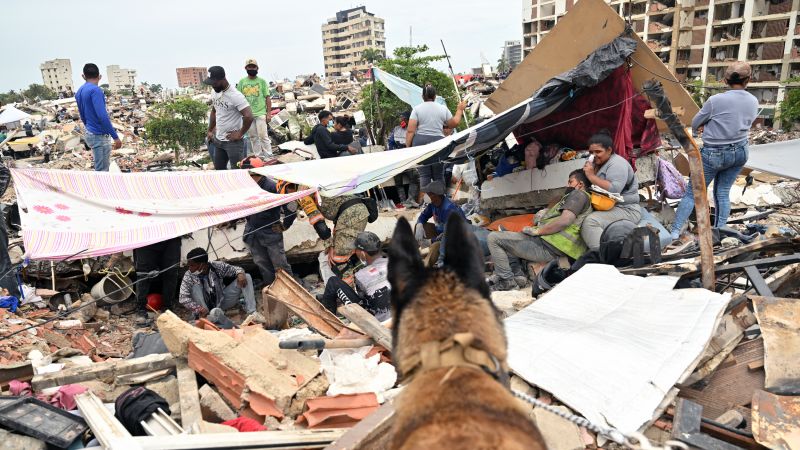
Four legged heroes – In the wake of Venezuela’s catastrophic earthquakes, a team of specially trained canines has become a vital force in the nation’s recovery efforts. These animals, working alongside human rescuers, have navigated collapsed buildings and unstable rubble to locate survivors and recover victims. Their contributions have turned tragedies into tales of resilience, underscoring the critical role animals play in disaster response. Among the standout performers is Tsunami, a mixed-breed border collie whose final mission before retirement has already earned him a place in history.
A Final Mission for Tsunami
Tsunami, known for his distinctive heterochromia—one eye brown, the other blue—has spent the past ten days tirelessly searching for trapped individuals. His work has led to the discovery of multiple survivors, with the Venezuelan government praising his efforts as instrumental in saving 25 lives. “Our four-legged rescuer managed to save 25 people from the rubble of buildings that collapsed in the earthquakes,” a government spokesperson said Thursday. This mission marks Tsunami’s retirement, according to a post by K-SAR ECID, the country’s canine disaster response team. The team highlighted his unwavering dedication, stating, “He retires at the top of his game, proving his courage and giving everything in the field.”
The earthquakes, which struck on June 24, left a trail of destruction across Venezuela. Nearly 200 buildings collapsed, creating a vast network of debris where search efforts were intense. Over 30,000 first responders and more than 3,300 international rescuers have joined the operation, but the dogs’ unique abilities have been indispensable. “We want to extend special recognition to all rescue dogs for their indispensable work,” said Adrián Ravier, a presidential spokesperson, during a news conference. The animals’ capacity to detect human scent has enabled them to work in places where human teams cannot reach, often in life-or-death situations.
International Crack Teams Deployed
The rescue efforts have drawn participation from over 20 countries, with teams bringing their own trained canines to the scene. These dogs are equipped to perform two essential tasks: identifying living individuals and recovering bodies from collapsed structures. For instance, Bart, a Belgian Malinois from Argentina, played a pivotal role in the operation. Deployed as part of a military mission by President Javier Milei’s government, Bart assisted in rescuing two children and recovering six bodies. “Bart is a true hero,” Ravier emphasized, noting his contribution to the rescue efforts.
Another notable canine is Rambo, a Belgian Malinois from El Salvador’s Urban Search and Rescue (USAR) team. His handler, Fernando Portillo, explained that each search begins with Rambo surveying the area for signs of human presence. When he detects a living person, he alerts the team with a loud bark, guiding them toward the survivor. “Rambo’s training, discipline, and search capabilities have made him a key member of the Salvadoran contingent,” said the El Salvador presidential press secretariat. This precision has allowed teams to locate individuals in tight spaces and unstable environments.
Among the dogs’ remarkable feats is the rescue of a fellow canine. Mali, a member of Mexico’s International Topos Rescue Brigade, found a white Maltese dog alive beneath the rubble. “This was a miraculous moment,” said Miguel Ángel García, a rescuer, to CNN. “Mali’s ability to detect a living being, even another dog, shows the depth of their training.” The collaboration between human handlers and animals has been a defining feature of the operation, with teams working in unison to maximize their chances of success.
Global Collaboration in Rescue Operations
The international response has been swift and coordinated. Countries such as Spain, Mexico, and Peru have sent teams to assist in the search, while others have contributed through specialized canine units. For example, the Mexican Red Cross deployed border collies named Orly and Balam, whose agility and keen senses have aided in navigating the rubble. Similarly, the Bogotá Fire Department’s Dastan and rescue teams from Spain, featuring Ivi and Tina, have played critical roles in the ongoing efforts.
Venezuela’s acting president, Delcy Rodríguez, recognized the dogs’ contributions with a ceremony in La Guaira, the coastal state most severely impacted by the quakes. During the event, the president honored the canines with the title “Venezuela’s Canine Heroes,” acknowledging their sacrifices. Among those celebrated were four dogs from Colombia, four from Slovakia, five from Spain, six from Jordan and Portugal, and eight from the Czech Republic. These teams have not only saved lives but also provided hope to communities struggling in the aftermath of the disaster.
The earthquakes, measuring as strong as 7.3 on the Richter scale, have resulted in at least 2,954 fatalities, according to the government’s social media update on Saturday. Despite the devastation, the rescue teams have continued their work around the clock, with some dogs completing multiple missions. “These animals are not just tools; they are partners in survival,” said a statement from the Argentina Ministry of Defense, which emphasized the dogs’ training in complex disaster scenarios. Their ability to work in tandem with rescuers has been a game-changer in the operation, enabling the recovery of numerous survivors in the days following the tremors.
Stories of Survival and Sacrifice
Man pulled from rubble in a ‘miraculous’ rescue eight days after the quakes highlights the dogs’ persistence. In one instance, a trapped individual was found after days of searching, demonstrating the dogs’ capacity to endure harsh conditions. These animals, often working in tandem with human teams, have become symbols of hope and determination. Their actions have not only saved lives but also inspired communities to rally behind the rescue efforts.
The emotional toll on the dogs is evident, yet their dedication remains unshaken. Each mission requires them to navigate through collapsed structures, sometimes under extreme temperatures or in confined spaces. For example, Mali’s discovery of the Maltese dog was a testament to the dogs’ adaptability and training. Such moments underscore the unique bond between rescuers and their canine companions, with the animals often leading the way in finding those in need.
As the recovery continues, the role of these dogs remains central. Their presence has been a reminder of the power of teamwork and the importance of every individual, regardless of species, in times of crisis. The Venezuelan government has expressed gratitude for the international support, with officials highlighting the dogs’ ability to operate in challenging environments. “The collaboration between nations and their canine units has been a beacon of hope,” stated a government representative, emphasizing the global solidarity in the face of disaster.
With the earthquakes having reshaped the landscape of Venezuela, the work of these dogs continues to be a lifeline for survivors. Their efforts have not only saved lives but also reinforced the idea that even in the darkest moments, there is light—and that light can come in the form of a loyal, trained canine. As the number of rescued individuals grows, so does the recognition of these four-legged heroes, whose courage and skill have left an indelible mark on the nation’s recovery journey.
