
DC experiences ‘Code Red’ air quality after massive fireworks display
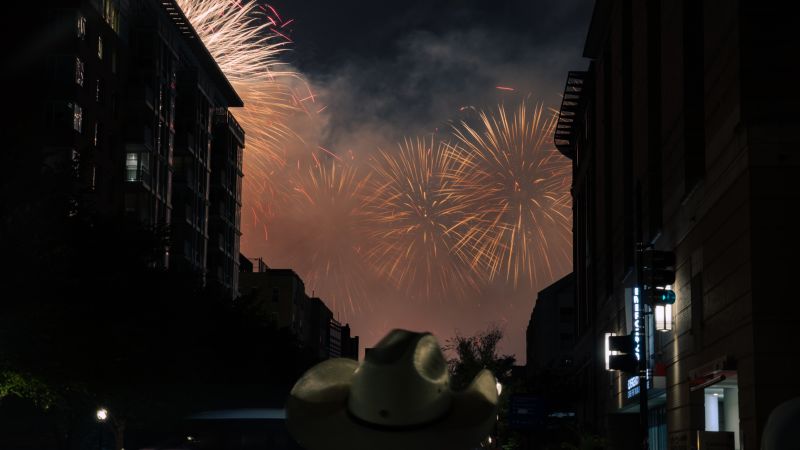
DC Experiences ‘Code Red’ Air Quality After Record-Breaking Fireworks Display
DC experiences Code Red air quality – Washington, DC, briefly ranked as the most polluted major city globally on Sunday, according to IQAir, a global air quality monitoring platform. The city’s air quality deteriorated sharply following a 40-minute Fourth of July fireworks spectacle, prompting officials to issue a Code Red alert. This level of pollution was described as unhealthy for vulnerable groups, including children, seniors, and individuals with preexisting health conditions, with potential effects on the general population. By 5:30 p.m. ET, DC had slipped to No. 26 on the list of major cities, a significant drop from its usual standing.
The Fireworks Display and Environmental Context
The massive fireworks display, organized by Freedom 250—a Trump-backed nonprofit focused on commemorating semiquincentennial events—occurred amid an intense heat wave sweeping across the Northeast. Washington, DC, recorded a triple-digit high temperature on Saturday, creating ideal conditions for thunderstorms that led to the evacuation of the National Mall prior to the event. The fireworks, launched from 10 locations including the Lincoln Memorial Reflecting Pool and Potomac River barges, were expected to set a new Guinness World Record for the largest single-day display. The previous benchmark, 810,904 fireworks, was achieved during a 2016 New Year’s Eve celebration in the Philippines.
Health Impact and Expert Warnings
Dr. Kisha Davis, chief health officer of Montgomery County, Maryland, highlighted the severe environmental conditions before the show. “The air quality today is like running a marathon while smoking a cigarette,” she said, warning that the 850,000-firework display would exacerbate existing pollution levels. While the weather forecast suggested a chance for rain Sunday evening, Davis noted that precipitation could help reduce airborne pollutants by washing them into water systems. “It does push all of those, you know, chemicals and pollutants into the water system, but they are at least out of the air,” she explained, adding that the health risks were heightened by the combination of heat and smoke.
Record-Breaking Scale and Public Reaction
The fireworks event, which spanned multiple locations across the district, was anticipated to surpass the typical scale of Macy’s Fourth of July celebration in New York. With hundreds of thousands of shells launched, the display was projected to be roughly 10 times larger than its New York counterpart. However, as of Sunday, there had been no official confirmation that the event had been officially recognized as a world record. CNN contacted Guinness World Records for clarification, but no statement had been released yet.
Health and Safety Measures
Internal National Park Service documents, obtained by The Washington Post, indicated the fireworks show would create “very unhealthy” air conditions in central DC. The documents advised residents to limit exposure to the pollution and recommended using N95 masks for those watching the display outdoors. Despite these warnings, the Fire and EMS Department reported 96 patient contacts and 40 patient transports from the National Mall between midnight Friday and 9 a.m. Sunday. The National Special Security Event Joint Information Center, which oversees events for the nation’s 250th anniversary, noted the exact number of incidents linked to heat or air quality remained unclear.
Healthcare System Response
George Washington University documented 289 patient contacts related to the National Mall area by 10 p.m. Saturday, underscoring the widespread impact of the event. The Department of Health and Human Services also reported 314 patient interactions, further highlighting the strain on local healthcare resources. While the primary causes of these incidents were not definitively identified, the cumulative effect of high temperatures and air pollution likely contributed to a range of health issues, from respiratory distress to heat-related illnesses.
Political and Public Praise
President Donald Trump, who delivered a 40-minute late-night address preceding the fireworks, took to social media to commend the display. “The Most Spectacular Fireworks Show I have ever seen, and I’ve seen them all,” he wrote, congratulating the organizers on their achievement. This public endorsement came as the city grappled with the aftermath of the event, balancing celebration with environmental concerns.
The fireworks spectacle, while a triumph for event planning, raised questions about the long-term effects of such large-scale displays on urban air quality. With the capital’s population exposed to a mix of heat, smoke, and high levels of particulate matter, officials faced the challenge of mitigating health risks while maintaining the celebratory atmosphere of the Fourth of July. As the city continues to monitor air quality, the event serves as a reminder of the delicate balance between public events and environmental stewardship.
Meanwhile, the National Mall’s transformation into a vibrant backdrop for the fireworks was a testament to the event’s scale. Spectators gathered under the stars, their faces illuminated by the colorful explosions. Yet, the momentary improvement in air quality brought by Sunday’s rain offered a glimmer of hope, as pollutants were temporarily displaced. This natural cleansing effect, however, was short-lived, with the return of dry conditions likely to bring the air quality back to challenging levels.
As the event concluded, the focus shifted to assessing its impact. While the fireworks brought joy and unity, they also underscored the need for stricter pollution controls during large gatherings. The National Park Service, along with local health officials, will review the data from the display to determine future strategies for minimizing environmental harm. For now, the city’s residents remain on alert, with the Code Red alert serving as a stark reminder of the challenges posed by extreme weather and urban celebrations.
Residents and visitors alike will likely remember the night as one of both celebration and consequence. The fireworks, while a marvel of engineering and artistry, highlighted the hidden costs of such events. As the city moves forward, the hope is that lessons learned will lead to more sustainable practices, ensuring that future spectacles can be enjoyed without compromising public health. For now, the air quality remains a topic of conversation, blending pride in the event with concern for its environmental footprint.
The Washington Post’s reporting on the National Park Service documents adds another layer to the discussion, revealing that officials had anticipated the severity of the pollution. This foresight, combined with the public’s reaction, suggests a growing awareness of the need to address environmental challenges in urban settings. While the fireworks show was a success in terms of scale and visibility, it also sparked debates about the trade-offs between spectacle and sustainability. As the nation looks ahead to future celebrations, the question remains: how can we ensure that the light of fireworks does not dim the health of our communities?
CNN’s Kaanita Iyer and Aleena Fayaz contributed to this report, providing in-depth coverage of the event’s impact. Their work, along with that of local health officials, emphasizes the importance of monitoring and addressing environmental factors during public gatherings. The fireworks display in DC, though a moment of shared joy, also serves as a case study in the intersection of celebration, weather, and air quality. It is a reminder that even the most dazzling events can have lasting effects, and that vigilance is key to protecting the health of all who participate in them.
