
When Erling Haaland’s youth coaches realized he was something special
From a Small Norwegian Town to Soccer’s Elite
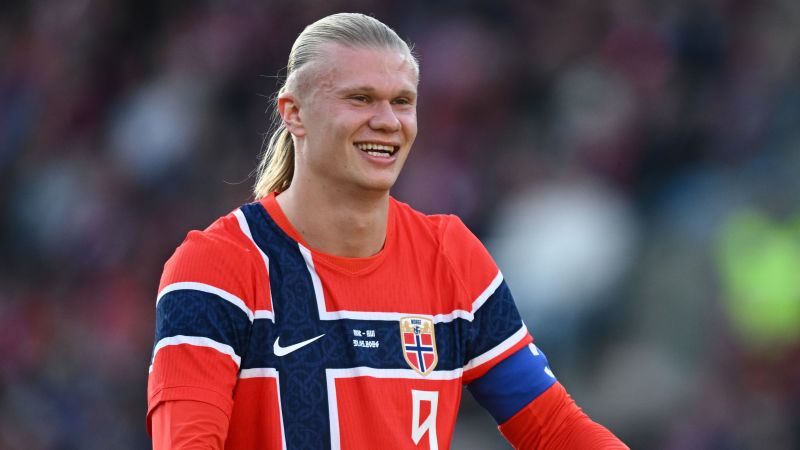
When Erling Haaland s youth coaches – Erling Haaland’s meteoric rise in the world of football has captivated fans and analysts alike. Now a global phenomenon, the 25-year-old striker’s journey to the pinnacle of the sport began in the humble setting of his hometown, where his passion for the game was unmistakable. His youth coaches, particularly Espen Undheim, noticed early signs of a prodigy who would one day redefine the art of scoring. But how did a seemingly unassuming boy from a rural Norwegian community evolve into one of the planet’s most feared goal-scorers?
The Spark of Potential
Undheim, a former youth coach at Bryne FK, still recalls the moments when Haaland first stepped onto the pitch. At the time, the young player was far from the towering figure he is today, but his intensity and drive set him apart. “What was unique about him was his relentless pursuit of goals,” Undheim explained. “Even when he wasn’t in the right position, he’d constantly move, creating opportunities for himself. His celebrations were wild—running across the field, shouting, and throwing himself into the air. It was like he couldn’t contain his excitement, even as a kid.”
“He had an instinct for scoring that was rare to see in a child his age,” Undheim said. “You could tell he wasn’t just playing for fun. He was thinking about how to make things happen.”
Life in the Norwegian Countryside
Before Haaland’s international stardom, his daily routine in Bryne was simple yet demanding. The town, known for its agricultural roots, was a breeding ground for local talent, but Haaland stood out. According to Undheim, the young striker and his friends would spend hours on an indoor pitch, kicking balls and honing their skills. “He was always there, whether it was after school or on weekends. It was like soccer was his second home,” the coach said.
Haaland’s dedication wasn’t limited to the pitch. He’d often be found playing with boys a year older than him, challenging himself to keep up. “Even though he was smaller than his peers, he never backed down,” Undheim noted. “His hunger for the game was something I remember vividly.”
Shaping a Future Star
As Haaland matured, his training regimen became more structured. He joined a program led by Undheim, which focused on both technical and mental development. “At that stage, he was almost entirely a left-footer,” Undheim recalled. “So we worked hard to build his right foot. It wasn’t easy, but his commitment made it possible.”
Undheim also observed Haaland’s fiery temperament. “If he didn’t get the ball, he’d get frustrated with his teammates. And if he missed a chance, he’d be scolding himself. That’s what made him special—he was always pushing himself to improve.”
“His anger was a sign of his drive,” Undheim said. “It wasn’t just about scoring goals. It was about proving himself, no matter the situation.”
The Tipping Point
By the age of 15, Haaland had earned a spot on Bryne’s under-18 team, drawing attention from Norwegian clubs. In 2017, he moved to Molde, one of the country’s top teams, where his talent became impossible to ignore. His goal-scoring prowess in the first team led to European interest, and soon, he was in the spotlight. At 22, Haaland joined Manchester City, where his impact was immediate.
Haaland’s record at City speaks volumes. In just four seasons, he has claimed the Premier League’s top scorer title three times. More impressively, he reached 100 league goals in 111 matches—a feat unmatched in the competition’s history. “It’s incredible how quickly he adapted,” Undheim said. “He brought a level of focus and aggression that few players his age possess.”
World Cup Glory and Family Legacy
Haaland’s achievements extend beyond club success. As a key player for Norway, he played a pivotal role in securing their World Cup qualification, a historic milestone since their last appearance in 1998. On the grandest stage, he shone brightly, netting seven goals in the tournament. His tally tied with Kylian Mbappé and Lionel Messi in the Golden Boot race, cementing his status as one of the tournament’s standout performers.
Despite his fame, Haaland’s roots remain deeply tied to his family. His father, Alf-Inge Haaland, was a professional player for Manchester City, yet the younger Haaland never felt overshadowed. “He played for the love of the game, not for the pressure of expectation,” Undheim said. “That simplicity made him relatable, even as he grew into a legend.”
Mentality and Motivation
Haaland’s mental toughness is as notable as his physical abilities. Even during moments of triumph, his competitive edge is evident. For instance, after winning the FA Cup with City, he was still upset about a missed pass in the final play. “It’s that same drive that carried him from Bryne to the World Cup,” Undheim observed.
The coach credits Haaland’s upbringing for his resilience. Growing up in a community that valued hard work, he learned the importance of perseverance. “The environment here taught him how to handle pressure,” Undheim explained. “It wasn’t just about talent—it was about mindset.”
A Legacy in the Making
Haaland’s journey from a small Norwegian town to global acclaim is a testament to his work ethic and natural ability. His early days, marked by relentless play and a hunger to succeed, laid the foundation for his current success. While his father’s legacy might have provided a backdrop, it was Haaland’s own determination that propelled him forward.
Undheim, reflecting on their time together, said, “He’s still the same boy I knew in Byrne. His personality hasn’t changed, and that’s what makes him such a compelling player.”
As Haaland continues to dominate, his story serves as inspiration for aspiring athletes. It’s a reminder that greatness often begins with a simple passion, nurtured by those who believe in it. Whether on an indoor pitch in Bryne or in a World Cup final, his ability to turn intensity into performance has defined his career. The question now is: How far can this Norwegian phenomenon go?
