
What experts say about the effectiveness of electric muscle stimulation workouts
What experts say about the effectiveness of electric muscle stimulation workouts
What experts say about the effectiveness – Electric muscle stimulation (EMS) has emerged as a popular fitness trend, blending technology with physical activity to promise rapid results. But does it live up to the hype? As more people turn to EMS sessions for muscle building and fat reduction, the science behind the method and its practical applications remain topics of debate among health professionals. A recent surge in demand has led to a rise in EMS studios and classes, yet opinions on its true value vary widely.
A Personal Journey into EMS
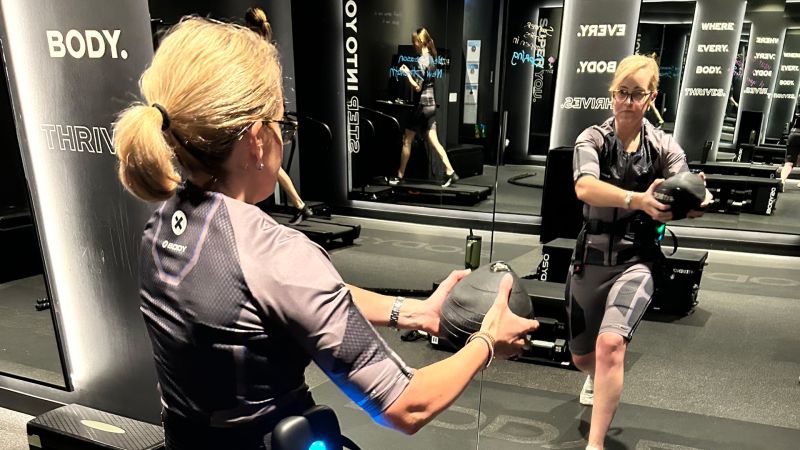
Emily Ferrara, a 43-year-old fitness enthusiast, sought an alternative when traditional workout methods failed to meet her goals. After struggling with body composition changes, she turned to a method that intrigued her: electrical muscle stimulation. “I came across it on Google, and the science behind it made me curious,” she explained. She shared the idea with her former trainer, who endorsed it as a legitimate approach. With a commitment to three weekly sessions at an Atlanta-based EMS studio, Ferrara says she’s witnessed noticeable improvements in her physique.
“My body fat was much higher. And it wasn’t just like a BMI testing, they were able to assess it, and so then I was able to say, ‘OK, my weight has gone down a little bit, but my body composition has changed, so it’s not as much fat, it’s more muscle now,’”
Ferrara’s routine combines EMS with cardio, ensuring a balanced approach to fitness. She notes that while the 20-minute EMS sessions are efficient, they’re complemented by regular treadmill workouts to enhance overall results. “It’s not just about the technology,” she said. “You have to pair it with movement to see the full impact.”
Rising Popularity of EMS
The trend has gained traction on social media and in fitness centers nationwide. According to Playlist, the parent company of the ClassPass app, the number of venues offering EMS workouts increased by over 16% from 2023 to 2025. This growth reflects growing consumer interest, despite mixed scientific consensus. High-profile figures like soccer star Cristiano Ronaldo have embraced EMS as a supplement to their training, citing its ability to target specific muscle groups. Actor Tom Holland also incorporated the technology into his regimen for a “Spider-Man” film, demonstrating its appeal across different fitness disciplines.
EMS works by delivering electrical impulses through electrodes, triggering involuntary muscle contractions. This process is said to activate larger muscle fibers simultaneously, offering a unique way to engage multiple areas at once. However, the method’s efficiency compared to traditional exercises remains a point of contention among experts.
Historical Roots and Modern Applications
Before becoming a mainstream fitness tool, EMS was used in physical therapy and sports science. Its origins trace back to the 1970s, when Soviet athletes employed it to enhance strength and recovery. Over time, the technology transitioned into wellness and fitness spaces, promising accessible muscle training for the general public. Today, it’s marketed as a time-efficient alternative to conventional workouts, with some studies suggesting its potential for targeted muscle growth.
A 2022 meta-analysis compared the effects of EMS against traditional resistance training, revealing mixed outcomes. While the study found that EMS could be effective for individuals with limited mobility or specific muscle targets, it also highlighted the need for further research. For example, the analysis noted that EMS might not replace the full range of benefits provided by varied exercises like functional strength training or weightlifting.
Expert Perspectives on EMS
Dr. Greg Holtzman, a clinical practice director at Washington University PT, offers a critical view of EMS. “It’s not the most efficient tool for general fitness,” he stated. “The literature supports its use for the very weak and the very strong, but as a primary exercise method, it falls short.” He explained that EMS activates larger muscle fibers first, which can lead to quicker fatigue compared to the body’s natural recruitment process.
“The very weak kind of being that post-operative patient, or the very strong, where you’re trying to really target a very specific muscle group for really targeted gains in that particular muscle group,”
According to Holtzman, this simultaneous activation might not be ideal for most users. “You could get similar results with a well-rounded routine that includes compound movements,” he added. He also emphasized that while EMS is not inherently dangerous, individuals with certain conditions—such as active infections, malignant cancers, or pacemakers—should consult a healthcare provider before starting.
Challenges and Considerations
Despite its advantages, EMS is not without drawbacks. Skin irritation and discomfort are common side effects, especially when the intensity of the electrical impulses is too high. Ferrara, who has used EMS for two years, acknowledges these challenges. “You have to be mindful of the settings and how your body reacts,” she said. “It’s a tool, not a magic pill.”
Moreover, the method’s reliance on technology means that proper form is still essential. Holtzman warned that even with the aid of electrical stimulation, users must maintain good posture to avoid injury. “The contractions are strong, but the risk of strain depends on how you execute the movements,” he said. This balance between convenience and caution is a key factor in determining EMS’s place in a fitness program.
A Balanced Approach to Fitness
While EMS can be a valuable addition to a workout routine, experts stress that it should not replace other forms of exercise. Ferrara’s experience underscores the importance of combining EMS with cardio and strength training for optimal results. “It’s about consistency and variety,” she noted. “You don’t want to rely on one method exclusively.”
For those considering EMS, the decision should be informed by individual goals and health conditions. The technology’s ability to target specific muscles is a clear benefit, but its effectiveness for overall fitness requires careful planning. “It’s not a substitute for movement, but it can enhance it,” Holtzman said. “If you’re looking to build muscle in a specific area or aid recovery, EMS has a role. But for general wellness, you need more than just electrical impulses.”
As the fitness industry continues to evolve, EMS stands as a testament to the growing intersection of technology and physical health. Whether it’s a game-changer or a supplemental tool depends on how it’s integrated into a broader approach to exercise. For now, the method remains a popular choice for those seeking quick, targeted results—and a way to push their limits even during the hottest summer days.
