
Man with Tibetan flag dies after setting himself on fire in front of UN’s New York headquarters
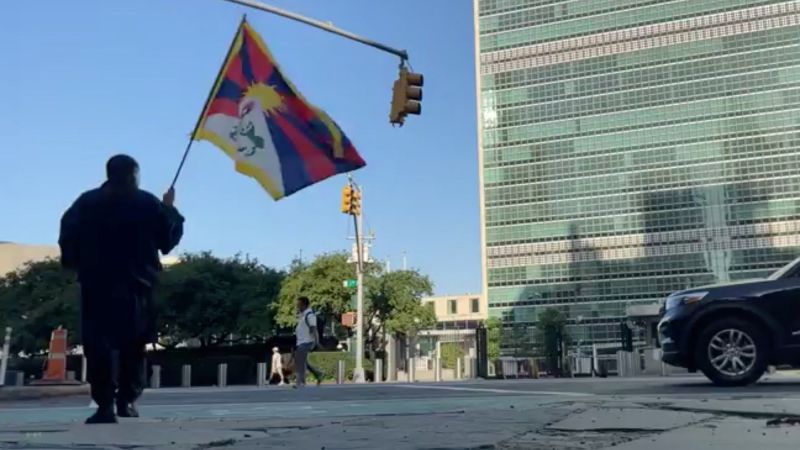
Man with Tibetan Flag Dies After Self-Immolation Near UN Headquarters
Man with Tibetan flag dies after – A 52-year-old Tibetan man lost his life after setting himself ablaze outside the United Nations headquarters in New York City on Thursday, an act interpreted as a protest against China’s governance of Tibet. The incident, which occurred near First Avenue, has sparked global attention, with the Tibetan government-in-exile and a local activist confirming his identity as Lobga Rangzen, also known as Lobsang Palden. The man’s self-immolation, a rare occurrence in the United States, aligns with a history of similar demonstrations targeting Chinese policies in Tibet.
Law enforcement arrived at the scene shortly after 6:30 p.m., responding to a 911 call. A New York City Police Department spokesperson told CNN that they found the man already engulfed in flames, suffering from severe burns across his body. Despite emergency efforts to douse the fire, he was later transported to a hospital and pronounced dead. The spokesperson emphasized that the act was witnessed firsthand, with the flames eventually extinguished by two bystanders using fire extinguishers.
“While we honor his dedication, human life is precious and must be preserved to sustain the long-term fight for Tibet’s freedom.”
Footage from the man’s Facebook account, shared live on Thursday, captured the event in vivid detail. The video shows Lobga standing with the Tibetan flag raised, pausing near the UN building before the flames spread rapidly. As cars passed by, he collapsed to the ground, his body consumed by the fire. A separate clip, posted around the same time, features him delivering a passionate plea for Tibetan independence, urging fellow Tibetans to unite and resist cultural assimilation. In the recording, he accuses the Chinese government of implementing policies designed to “destroy the Tibetan identity, culture, and language,” according to the government-in-exile.
The tragedy occurred just days after China enacted a sweeping ethnic unity law, which mandates the increased use of Mandarin in schools and government institutions in minority regions. The law also promotes the Sinicization of religious practices, a move that has drawn criticism from activists who warn of its potential to erode Tibetan traditions. Beijing, however, asserts that the legislation safeguards the rights of all ethnic groups, including Tibetans, by fostering unity and shared cultural values.
Lobga, who had lived in New York since the 1980s, was described by a Tibetan activist as a community leader and advocate for independence. His journey to exile began decades ago, and he later worked as a cab driver, maintaining ties to his homeland through his activism. The Tibetan government-in-exile, which operates in self-imposed isolation, has linked dozens of self-immolation incidents to protests against Chinese rule over Tibet. While such acts are common in Tibet, they are infrequent in the U.S., making this event particularly striking.
In a statement released Friday, Penpa Tsering, the head of the Tibetan government-in-exile, expressed deep sorrow over the man’s death. He called for a renewed focus on preserving human life as a crucial step in the broader struggle for Tibetan autonomy. “We are devastated by this loss and urge Tibetans to cherish their lives,” Tsering said, adding that the man’s sacrifice should be honored while emphasizing the importance of sustaining the movement through future efforts.
After the self-immolation, a crowd of supporters and protestors gathered outside the UN headquarters, their presence captured in social media videos. One clip, shared by New York-based Tibetan activist groups, includes Jamyang Norbu, a prominent Tibetan writer, who identified Lobga as a dedicated independence activist. Norbu highlighted the man’s role in fostering community resilience and his commitment to defending Tibetan heritage, despite the challenges of living abroad.
“Tibetans face a severe crisis under these policies, and it is critical that we speak out at this moment.”
The ethnic unity law, which expands mandates for Mandarin language use and cultural integration, has intensified concerns among Tibetan and human rights advocates. They argue that the law could accelerate the erosion of Tibetan identity, with critics claiming it imposes a “cultural and linguistic dominance” on ethnic minorities. The Chinese government, however, maintains that the law strengthens national cohesion and ensures the survival of all ethnic traditions within China’s borders.
China has governed Tibet since 1951, with Beijing asserting that the region has been part of Chinese territory for centuries. The Tibetan flag, a symbol of independence, is banned in China, making Lobga’s act a bold statement of defiance. The government-in-exile has long accused Beijing of tightening restrictions on religious practices, cultural expression, and the use of the Tibetan language, all of which the law aims to further regulate.
During a regular press briefing on Friday, a spokesperson for China’s Ministry of Foreign Affairs reiterated the government’s stance on Tibet, stating, “Xizang has always been an unalienable part of China since ancient times.” The UN spokesperson confirmed that the incident occurred after all scheduled meetings for the day had concluded, with no disruption to ongoing international diplomacy. However, the symbolic nature of the protest has drawn attention to the tensions between China and Tibetan activists, even in a foreign capital.
The death of Lobga Rangzen underscores the ongoing conflict over Tibet’s status, with activists in New York and beyond continuing to raise their voices against perceived cultural erasure. His self-immolation, a powerful act of resistance, has reignited discussions about the impact of China’s policies on Tibetan identity. As the UN and global leaders assess the situation, the tragedy serves as a poignant reminder of the sacrifices made in the fight for autonomy and the enduring significance of the Tibetan flag as a symbol of struggle.
Meanwhile, the Tibetan government-in-exile remains committed to amplifying the voices of those resisting assimilation. Tsering’s call to action highlights the need for international solidarity, urging governments and organizations to support Tibetans in their efforts to preserve heritage. The incident has also prompted renewed scrutiny of China’s approach to ethnic unity, with critics arguing that the law prioritizes political control over cultural preservation.
As the man’s legacy continues to inspire, the event near the UN headquarters becomes a focal point for debates on freedom of expression and the rights of ethnic minorities. His death, while tragic, is seen by some as a catalyst for further activism, ensuring that the fight for Tibetan identity remains a central issue in global discourse.
