
Ukraine launches major drone attack on Moscow, hitting a satellite center and killing a baby
Ukraine Launches Major Drone Attack on Moscow, Hitting Satellite Center and Killing a Baby
Ukraine launches major drone attack on Moscow – On Tuesday, Ukraine claimed to have struck Russia’s largest satellite communication hub for the second time in less than a week, escalating its efforts to target the Kremlin through long-range drone strikes. The attack, which focused on the Dubna Satellite Communications Centre located north of Moscow, is believed to be part of Kyiv’s strategy to intensify pressure on Russia’s leadership and disrupt its military operations. The facility, situated approximately 500 km (310 miles) from the Ukrainian border, plays a critical role in intelligence gathering and coordinating Russia’s armed forces deployed in the east and south of the country, according to President Volodymr Zelensky.
Strategic Target Struck Again
Zelensky highlighted the strategic importance of Dubna, stating that the center serves as a key node for Russia’s military communications. He emphasized that the strike aimed to weaken the Russian command structure and create a “breakthrough” in the enemy’s defense systems. While Russia has not officially confirmed the damage, Moscow’s regional governor, Andrey Vorobyov, reported that a drone had hit an administrative building in the town, though no casualties were initially reported. The incident, however, took a tragic turn in a separate location, where a drone crash resulted in the death of a six-month-old baby.
“Civilians are suffering, children are dying,” stated Kremlin spokesman Dmitry Peskov, criticizing Ukraine’s actions during a press briefing on Tuesday. His remarks underscored the growing frustration among Russian officials over the expanding reach of Ukrainian attacks into their territory.
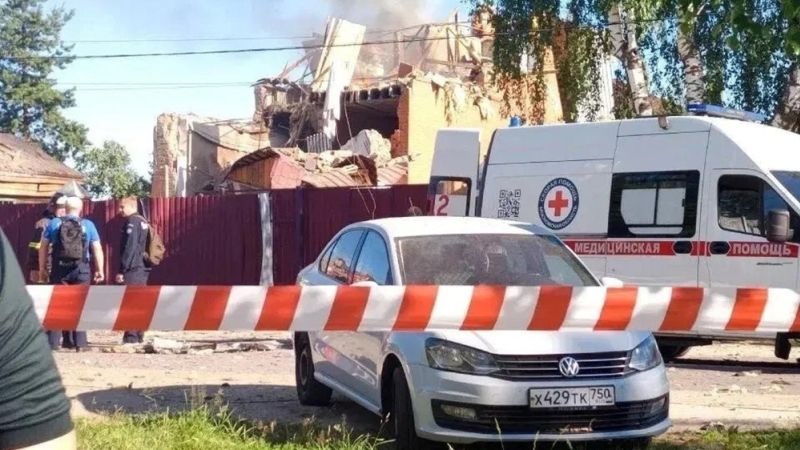
Residents of Yegoryevsk, a town southeast of Moscow, were left in shock after a drone struck a private home, collapsing part of the structure and trapping several individuals under debris. Rescue teams managed to free two adults and two children, but the infant succumbed to injuries en route to the hospital, as reported by Vorobyov on his Telegram channel. This incident marks the second confirmed strike on the Dubna facility, following an earlier attack on June 22. During that event, Russia’s state news agency TASS acknowledged the drone assault but insisted that critical communications and television broadcasts remained unaffected, with no staff injuries reported.
Russian Air Defenses Face Intensified Threat
As the attacks continued, Moscow Mayor Sergey Sobyanin revealed that Russian air defenses had intercepted over 60 drones launched toward the capital since Monday night. The Ministry of Defense claimed a total of 419 drones were neutralized across the week, but analysts suggest the numbers may be inflated due to the high volume of strikes. The Ukrainian military attributed these successes to the creation of an “open corridor” in Russia’s dense air defense network, achieved by systematically targeting radars in the Bryansk border region. These radars monitor airspace near the capital, and their destruction has reportedly left Moscow more vulnerable to drone strikes.
“We are systematically destroying the enemy’s radar systems,” said a Ukrainian military source, explaining how Kyiv had bypassed Russia’s defenses to strike critical infrastructure. “This allows us to conduct operations deeper into Russian territory without significant resistance.”
Despite the successful strikes, Ukraine’s campaign is not limited to Moscow. Recent attacks have targeted oil refineries in southern Russia, as well as major cities like St. Petersburg, demonstrating a broader effort to weaken Russia’s economic and logistical capabilities. The escalation of these attacks comes as Zelensky announced a 40-day operation to “compel” Russia to end the war. This period of sustained strikes is intended to pressure the Kremlin, both militarily and politically, as the conflict continues to spill over into Russian cities.
Growing Discontent in Russia
The impact of these strikes has sparked rising discontent among some Russians, who are increasingly aware of the war’s effects on their homeland. The killing of the infant in Yegoryevsk and the death of a 61-year-old woman in the western Tver region—where a downed drone hit a residential summer home—have highlighted the human cost of the conflict. Regional authorities confirmed the woman’s death, adding to the list of civilian casualties attributed to Ukrainian strikes. These incidents have fueled public debate over the war, with critics questioning whether the attacks are achieving their intended goals or simply causing unnecessary harm.
“Enemy drones have brought destruction to our homes and lives,” said a local resident in Tver, expressing grief over the loss. “It’s hard to believe this is happening so close to our cities.”
Analysts note that Ukraine’s focus on Moscow and its surrounding areas is a calculated move to force Russia into a more defensive posture. By targeting both military and civilian infrastructure, Kyiv seeks to amplify the psychological and logistical strain on Moscow. The dual strikes on the Dubna center, in particular, are seen as a significant blow to Russia’s ability to coordinate its forces effectively. However, the success of these operations depends on the effectiveness of Ukraine’s drone technology and the ongoing disruption of Russian air defense systems.
Ukraine’s Strategy and Russia’s Response
The Ukrainian military has been refining its tactics to maximize the impact of drone strikes, leveraging advancements in technology and coordination. The focus on Moscow is part of a larger effort to shift the war’s narrative, emphasizing that the conflict is no longer confined to Ukraine but has reached Russian soil. This strategy also aims to disrupt the morale of Russian troops and civilians alike, as the war’s frontlines move closer to the capital.
Despite the damage inflicted, Russia has remained defiant, with President Vladimir Putin refusing to acknowledge a shift in the conflict’s momentum. “Russia is burning, but don’t expect Putin to blink,” said a NATO military analyst, noting that the Kremlin is likely prioritizing its own survival over political concessions. The continuation of drone attacks suggests Ukraine is prepared to sustain this pressure, even as it faces challenges in maintaining supply lines and avoiding counterstrikes.
As the war enters its fifth year, the balance of power appears to be shifting. Ukraine’s ability to strike deep into Russian territory demonstrates its growing military capabilities, while the civilian casualties underscore the human toll. With each attack, the pressure on Russia mounts, and the question remains: will these strikes compel the Kremlin to end the war, or will they ignite further resistance and retaliation? The answer may come in the coming weeks as the conflict intensifies.
Meanwhile, the international community continues to monitor the situation, with reports of escalating tensions between the two nations. The Dubna strikes and the Yegoryevsk tragedy have added new layers to the war’s complexity, forcing both sides to adapt their strategies in real time. For now, Ukraine’s drones remain a symbol of its determination to end the conflict, even as the cost of war grows more visible in Russian cities.
