
Desert express: UAE launches first national passenger rail network
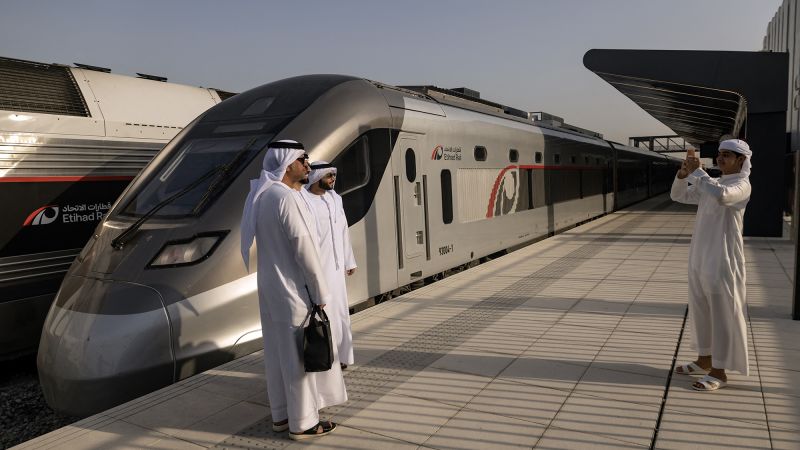
Desert Express: UAE Unveils Nation’s First Passenger Rail Network
Desert express – The United Arab Emirates has taken a historic step by launching its first national passenger rail system, marking the beginning of a transformative shift in regional transportation. The initial phase of the ambitious express network, which aims to link 11 cities across the Middle East, was officially opened to the public on Tuesday, with its first service departing from Fujairah at 5:34 a.m. local time. This early morning departure coincided with a significant moment for the country, as the train reached Mohammed Bin Zayed City Station in Abu Dhabi just over an hour and 45 minutes later, arriving at 7:19 a.m. (11:19 p.m. ET on Monday).
Launch Details and Service Overview
Etihad Rail, the operator of the new network, announced the start of its “introductory operational phase” with a press release shared with CNN. The inaugural day featured six services, offering a glimpse into the potential of this long-awaited mode of transport. Over 10,000 tickets were sold in advance, reflecting public anticipation for the service. The trains, which are part of a broader initiative to reduce the UAE’s carbon footprint and promote sustainable mobility, come equipped with modern amenities such as air conditioning, onboard Wi-Fi, and power outlets for passengers’ convenience.
Etihad Rail also highlighted its “premium class services” as a key feature, promising greater comfort and accessibility for travelers. These options are designed to cater to a range of preferences, from standard seating to more luxurious configurations. The first departure from Fujairah symbolized more than just a new train service; it represented the realization of a national vision that could redefine how people move across the region.
Network Expansion and Future Goals
While the initial phase connects Fujairah to Abu Dhabi, the rail network will undergo significant expansion later this year. Dubai Train Station and Al Dhaid Train Station are set to open on September 30, adding critical links to the system. Following that, stations in Al Dhafra will be introduced three months later, before the overall route is completed by the end of March next year with the inclusion of Sharjah station. This progression will eventually create a seamless connection between the Gulf of Oman and the Persian Gulf, stretching through the emirates to reach Ghuweifat on the Saudi Arabian border.
The integration of these stations into the national transport framework underscores the UAE’s commitment to developing a comprehensive infrastructure. By linking key urban centers and strategic locations, the network aims to streamline travel, reduce reliance on private vehicles, and support economic growth. The government has emphasized that this project is part of a larger strategy to modernize mobility and address environmental concerns.
Public Reaction and Expert Insights
Etihad Rail’s chief operating officer, Azza Alsuwaidi, expressed enthusiasm about the service’s launch, stating in a press release:
“The first departure from Fujairah this morning is the moment a national vision becomes part of everyday life, giving people a new way to connect with one another, with opportunity and with the places that make our country so unique. Years from now, today’s passengers will be able to say they were there at the very beginning.”
Her comments highlight the symbolic importance of the event, positioning the rail network as a catalyst for national development.
The project also addresses a long-standing challenge: the UAE’s culture of car ownership. With many residents relying on personal vehicles for daily commutes, the introduction of rail required innovative solutions to bridge the gap between stations and local destinations. Abdulla Hamad AlGhfeli, acting director general of the Integrated Transport Centre, noted the collaboration between Etihad Rail and government agencies.
“Together, we have integrated passenger rail with Abu Dhabi’s wider public transport network, making it easier than ever for residents and visitors to continue their journeys using buses, taxis and other mobility services,” he said.
This integration is seen as vital for ensuring the rail’s success and maximizing its utility for the public.
Economic Potential and Travel Impacts
Etihad Rail has positioned the network as a cornerstone of the UAE’s economic development. The 900-kilometer (560-mile) system is expected to reduce transportation costs, improve connectivity, and support logistics and tourism. Fares for the service start at AED55 ($15) for Comfort Class and AED120 ($33) for Premium Class, offering a range of options for different budgets and travel needs.
However, the immediate impact on international tourism remains uncertain. Train travel expert Mark Smith, founder of the popular website The Man in Seat 61, offered a cautious perspective.
“To be honest, I’m not sure of the significance myself. At this stage it doesn’t link Abu Dhabi with the outside world, I don’t hear from many people going there, and would anyone want to go where the new train goes?”
His observations suggest that while the rail network is a major domestic achievement, its influence on global travel may take time to materialize.
Challenges and Opportunities Ahead
The success of the UAE’s rail network depends on overcoming logistical hurdles and fostering public adoption. While the initial phase connects Fujairah to Abu Dhabi, the full network’s completion will require sustained investment and coordination. The government has already taken steps to address this, ensuring that stations are strategically placed to complement existing transport routes. This approach is intended to make rail a viable alternative for daily commutes and regional travel.
Moreover, the network’s development aligns with the UAE’s broader goals of sustainability. By reducing the need for car travel, the rail system could lower carbon emissions and ease traffic congestion. However, these benefits will only be realized if the public embraces the service. Etihad Rail’s emphasis on a “modern travel experience” suggests a focus on comfort and efficiency, which may help attract users over time.
Looking to the Future
The opening of the UAE’s first national rail network is a milestone that could reshape the country’s transportation landscape. As more stations come online and the network expands, the potential for long-distance travel within the UAE will grow. For example, the inclusion of Dubai and Sharjah stations will create a more interconnected system, enabling travelers to move between major economic hubs with greater ease.
While the initial phase may be limited in scope, it sets the stage for future growth. The operator has already committed to maintaining and upgrading its fleet of 13 trains, each capable of carrying 400 passengers. This capacity ensures that the network can handle increasing demand as it matures. The UAE’s vision for a rail-based future is ambitious, but its execution will depend on public engagement, infrastructure development, and ongoing support from both government and private sectors.
As the network expands, it may also inspire similar projects in neighboring countries, contributing to a broader regional shift toward sustainable mobility. For now, the first service from Fujairah to Abu Dhabi represents a bold step forward, blending tradition with innovation in a country where the desert and the modern metropolis coexist. Whether this initiative will redefine travel or merely add another option to the UAE’s transport mix remains to be seen, but its launch marks a defining moment in the nation’s history.
