
Skydiving plane crashes in France, killing 11 people
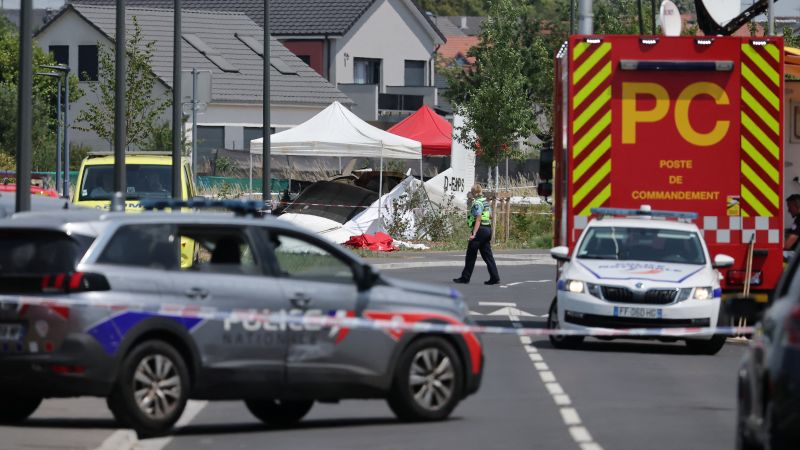
Skydiving Plane Crash in France Claims 11 Lives
Skydiving plane crashes in France killing 11 – On Sunday, a tragic skydiving plane crash in the northeastern French town of Tomblaine left 11 people dead, according to a regional official. The incident occurred at 11 a.m. local time during a routine jump session, as confirmed by Yves Séguy, the prefect of the Meurthe-et-Moselle region where the crash took place. Séguy’s statement highlighted the severity of the event, noting that the aircraft struck the ground “almost vertically” near a residential area adjacent to the airfield. “Many witnesses were present at the scene,” he said, emphasizing the community’s shock and the emotional impact of the tragedy.
Investigation and Casualties
The crash involved a plane carrying 11 individuals, including five skydiving instructors and five independent nurses. The pilot also perished in the incident. Local authorities confirmed that no bystanders were among the casualties, though the exact cause of the accident remains under investigation. “We are awaiting the arrival of the forensic team to conduct the standard inquiry,” Séguy added, underscoring the need for a thorough examination of the crash site to determine what went wrong.
“There were many witnesses at the scene of the accident, including relatives of the victims,” Séguy said, reflecting on the immediate aftermath. “Our thoughts are with the victims and with their loved ones.”
French Transport Minister Philippe Tabarot described the crash as a “terrible tragedy” with a “particularly high” death toll. He confirmed plans to visit the Meurthe-et-Moselle region on Sunday afternoon to show solidarity with the affected families and emergency responders. “We stand together with all involved, emergency services, and elected officials around me,” Tabarot remarked, highlighting the government’s commitment to addressing the crisis.
Emergency Response and Scene Details
A significant emergency operation was launched following the crash, with police units and 50 firefighters deployed to the site. The swift response aimed to contain the situation and rescue any survivors, though the witness account suggested the outcome was grim. A driver who was nearby reported seeing the plane ascend before it abruptly turned right. “Something was clearly wrong,” the unnamed witness told Reuters, as he recounted the moment of impact.
“By the time I reached the roundabout, circled back, and parked near the fire truck, a man was already on the scene trying to put out the flames,” the witness said. “We saw right away that it was over—there was no movement, and it was clear the impact had been too violent for any survivors.”
The crash has reignited discussions about the safety of skydiving planes, particularly in light of a similar incident in western Missouri just weeks prior. That accident, which killed 12 people moments after takeoff, had already raised questions about regulatory standards for such aircraft. The recent event in France adds to the growing concern, prompting calls for stricter oversight and improved safety protocols in the skydiving industry.
Broader Implications and Community Impact
While the immediate focus remains on the victims and their families, the crash has also sparked a national conversation about aviation safety. Séguy noted that the location of the crash—near a housing development—added to the tragedy’s impact, as the plane’s descent was both sudden and catastrophic. “The area is densely populated, and the proximity to homes intensified the shock of the event,” he explained, underscoring the need for better risk assessments in airfield planning.
Local authorities have pledged to provide updates as the investigation progresses. They emphasized the importance of transparency, particularly as the families of the deceased await further information. The prefect’s words reflected both the gravity of the situation and the community’s resolve to support those affected. “This is a moment that will stay with us,” Séguy said, as he addressed the ongoing efforts to uncover the cause of the crash.
A Chronological Overview of Skydiving Incidents
The crash in Tomblaine is not the first of its kind in recent months. Earlier in the year, a series of skydiving-related accidents had drawn attention to the risks associated with these aircraft. Notably, in the United States, four major plane crashes occurred within four days, raising alarm about the frequency and severity of such incidents. While the French crash and the U.S. incidents are separate, they share a common thread: the potential for sudden, fatal accidents during skydiving operations.
“There were many witnesses at the scene of the accident,” Séguy said, adding that the crash had “shocked the entire region.”
Experts are now analyzing whether a pattern is emerging, with factors such as pilot error, mechanical failure, or environmental conditions under scrutiny. The French Ministry of Interior has stated that it will conduct a review of its aviation safety measures, potentially leading to new regulations for skydiving planes. This follows the Missouri crash, which had already prompted similar calls for reform.
Global Concerns and Industry Reflections
The events in France and Missouri have placed the skydiving industry under increased pressure to justify its safety record. Skydiving planes, often smaller and more maneuverable than commercial aircraft, are used in both recreational and professional settings. However, their design and operation have been criticized for lacking the same level of oversight as larger aviation sectors. “These planes are a vital part of the sport, but their safety must be prioritized,” said a spokesperson for the French Civil Aviation Authority, acknowledging the need for enhanced training and maintenance protocols.
Meanwhile, the families of the victims are seeking clarity about the circumstances that led to the crash. Séguy assured them that investigators would work diligently to provide answers. “We are committed to uncovering the truth and ensuring that no stone is left unturned,” he said. The French interior minister’s planned visit to the crash site further signals the government’s recognition of the incident’s significance.
Legacy of the Tragedy
As the investigation continues, the tragedy in Tomblaine serves as a stark reminder of the risks inherent in skydiving. For the 11 individuals who lost their lives, the incident has left a lasting impact on their loved ones and the local community. The prefect’s description of the crash—“right next to a housing development”—highlights the unpredictable nature of such accidents and their potential to affect both the skydivers and nearby residents.
“We are awaiting the arrival of the forensic team to conduct the standard investigation,” Séguy said, as he prepared to address the public with further details.
With the global spotlight on skydiving safety, the French crash is likely to influence policy decisions and public perception. While the exact cause remains unknown, the incident has prompted a renewed focus on the role of safety checks, pilot training, and the design of skydiving planes. As the families of the victims begin to process their loss, the community of Tomblaine continues to rally around those affected, honoring the lives lost and demanding accountability from the aviation sector.
This story has been updated with additional details, including the role of local officials and the broader implications of the crash for skydiving safety regulations. The ongoing investigation aims to shed light on whether this was an isolated incident or part of a larger trend, ensuring that lessons are learned to prevent future tragedies.
