
Again, Trump said nobody left his speech. Again, that wasn’t true
Trump’s Claim of No One Leaving His Speeches Proven False
The 2026 Event and the Discrepancy
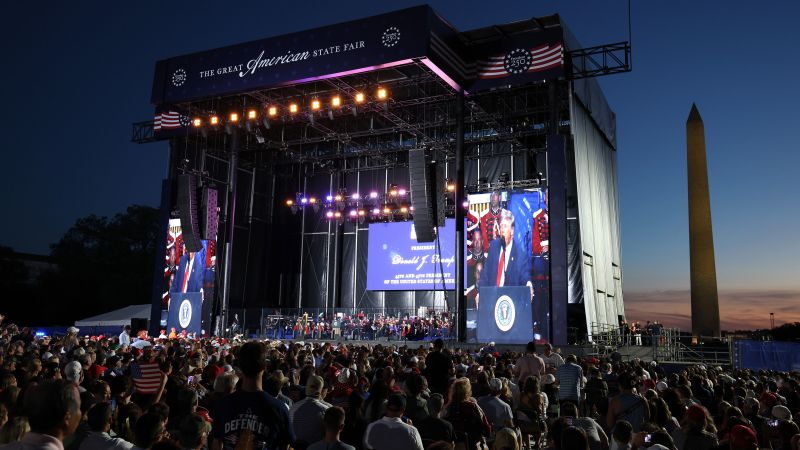
Again Trump said nobody left his speech – On Thursday, President Donald Trump shared a social media post about his speech at the Great American State Fair in Washington, DC, the day before. He asserted, “Everybody stayed right until the end of my Speech because they loved hearing about a truly successful America.” However, this claim was contradicted by footage from The Bulwark, a media outlet critical of Trump, which captured dozens of attendees departing the venue approximately 17 minutes into his 28-minute address. The video provided clear evidence that Trump’s assertion was inaccurate, highlighting the inconsistency between his public statement and the reality observed at the event.
Observations and Context
CNN senior correspondent Donie O’Sullivan, who was present for the speech, noted that hundreds of people began leaving during the address. This suggests that while the majority remained, a notable portion exited before Trump concluded. The event, held on the National Mall—a pedestrian-friendly area in Washington, DC—was part of a nonpartisan celebration marking the nation’s 250th anniversary. Unlike typical Trump rallies in rural areas, this gathering likely attracted a mix of casual observers and supporters, creating a unique dynamic.
Several factors contributed to the early departures. Some attendees mentioned they had come specifically to watch the pre-speech flyovers by military jets, which ended before the speech began. Others cited obligations such as work or family responsibilities, indicating that the crowd was not entirely composed of dedicated Trump followers. These reasons, while mundane, underscore the fact that Trump’s audience, like any public gathering, is subject to practical constraints and personal priorities.
A Pattern of Inaccurate Assertions
Trump’s declaration that “nobody leaves” his events has been a recurring theme throughout his political career. This pattern was evident in his 2024 presidential campaign, where he repeatedly insisted that attendees stayed until the conclusion of his speeches. For instance, after his opponent, then-Vice President Kamala Harris, remarked in a televised debate that “people start leaving his rallies early out of exhaustion and boredom,” Trump responded, “People don’t leave my rallies. We have the biggest rallies, the most incredible rallies in the history of politics.”
Yet, this statement was challenged by reports from multiple news outlets. The Detroit Free Press highlighted that at a fall 2024 event in Michigan, the crowd “grew noticeably thinner” as the 85-minute speech progressed. Similarly, The New York Times noted that at a North Carolina event days before Election Day 2024, “within five minutes of the start of his speech, a stream of audience members began heading for the exit,” with the exodus continuing throughout the address. These accounts demonstrate that Trump’s claim of unwavering attendance is often at odds with the actual experience of his audiences.
Early Departures and Their Implications
The Washington Post further documented that “scores of people” left Trump’s events early in 2024, with some instances involving hundreds or even thousands of attendees. For example, at an Atlanta event, the post cited a significant number of individuals who exited before the speech ended, citing reasons ranging from traffic concerns to a dog waiting at home. The Guardian also reported that “about three out of 10 people” at a Georgia event left before the conclusion, despite Trump’s late arrival at the venue.
These departures, while not universal, reveal a recurring theme in Trump’s public appearances: the tendency to overstate attendance and engagement. The post-speech audience interactions, which Trump often cites as proof of popularity, do not account for those who left mid-speech. This discrepancy highlights the president’s habit of emphasizing numbers while downplaying the nuances of audience behavior.
The Struggle to Maintain the Narrative
Even as evidence mounted against his claims, Trump continued to assert that no one left his events. At a September 2024 rally in Michigan, he initially said, “The people that you see leaving,” but quickly corrected himself, claiming, “Because nobody ever leaves.” His attempt to salvage the narrative led to a slightly more nuanced statement: “And when they do, I finish up quick, believe me.” However, this explanation was met with skepticism, as it implied that those leaving were not truly departing but merely repositioning for a photo op.
Trump’s struggle to reconcile his claims with reality underscores his reputation as a figure who often prioritizes persuasive rhetoric over factual precision. Despite the clear evidence of early exits, he remained steadfast in his assertion, demonstrating a pattern of defending his statements even when contradicted. This behavior has been consistent across his political career, as he frequently downplays or dismisses observations that challenge his image of mass appeal and unwavering support.
Why the Claim Still Holds Weight
While Trump’s assertion that “everybody” stayed until the end of his speech was demonstrably incorrect, the claim still resonates with his base. The narrative of a captive audience aligns with his broader campaign messaging, emphasizing unity and enthusiasm. This is particularly effective in a political landscape where his supporters often perceive his speeches as both energizing and concise. Even as evidence shows otherwise, the power of his rhetoric continues to shape public perception, making it difficult to dislodge the idea of his speeches as universally engaging.
Nevertheless, the fact that people did leave highlights the complexity of political events. While Trump’s speeches may attract large crowds, the composition of that audience varies depending on the location and the event’s nature. The 2026 speech in Washington, DC, for instance, was part of a commemorative celebration rather than a campaign rally, which may have influenced attendance patterns. This context is crucial for understanding why some individuals opted to leave mid-address, even as the majority remained.
In conclusion, Trump’s assertion that nobody left his speech at the 2026 event was a specific example of a broader pattern of overstatement. Whether through strategic omission or a genuine belief in his claims, he has consistently portrayed his events as universally attended, even when data suggests otherwise. This tendency to inflate attendance and enthusiasm is a hallmark of his political style, blending factual inaccuracies with persuasive storytelling to maintain a narrative of overwhelming support.
“People don’t leave my rallies. We have the biggest rallies, the most incredible rallies in the history of politics.”
— President Donald Trump, 2024 presidential campaign
“Within five minutes of the start of his speech, a stream of audience members began heading for the exit, a steady exodus that never quite abated.”
— The New York Times, reporting on a 2024 North Carolina event
“Scores of people” had left early from many Trump events in 2024, with some instances involving hundreds if not thousands.
— The Washington Post, analyzing early departures
As the 2026 speech illustrates, Trump’s ability to recite his claims—despite being debunked—remains a defining trait. Whether or not he noticed the people leaving in real time, his statements continue to shape the public’s understanding of his political presence, even as the evidence points to a more nuanced reality.
