Mamdani defends criticism of AIPAC after being accused of antisemitism

Zohran Mamdani Clarifies Statements on AIPAC Amid Antisemitism Allegations
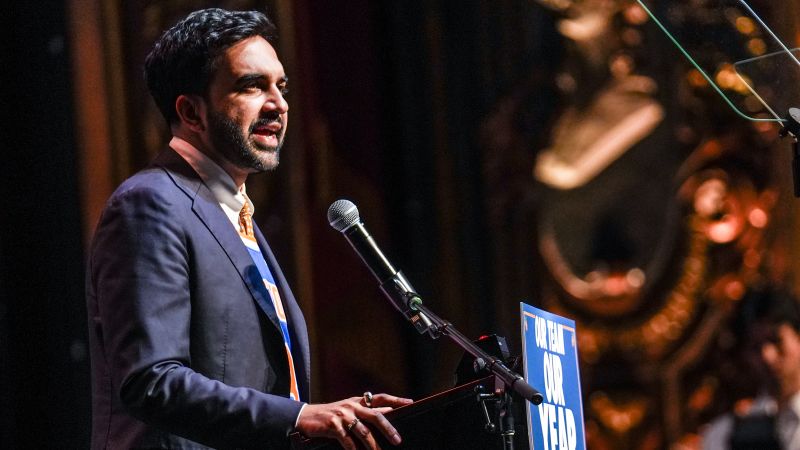
Mamdani defends criticism of AIPAC after – On Monday, New York City Mayor Zohran Mamdani addressed accusations of antisemitism following his recent comments targeting the American Israel Public Affairs Committee (AIPAC). The remarks, which he made last week during a heated critique of the pro-Israel lobby, sparked controversy among Jewish community leaders who claimed he used derogatory language to describe AIPAC. Mamdani, a vocal critic of Israel’s government, defended his position by emphasizing the organization’s role in maintaining the status quo and hindering efforts to achieve regional stability.
Targeting AIPAC’s Influence in New York Politics
“When I speak about AIPAC, I’m referring to an entity that has consistently championed the existing order, often at the expense of genuine progress,” Mamdani stated during a press conference at City Hall. He pointed to Israeli military actions in Gaza as a prime example of the consequences of AIPAC’s policies. “Their support for the status quo has led to moral compromises, and it’s clear that they prioritize power over the well-being of people in Palestine and beyond.”
Mamdani further argued that AIPAC’s tactics in New York’s political landscape involve strategic financial contributions to pro-Israel candidates. “They funnel millions into dark money to support candidates who align with their agenda, even when it means attacking opponents with misleading advertisements,” he said. This strategy, he claimed, diverts public attention from critical foreign policy issues and fosters division within the community.
Backlash from Jewish Advocacy Groups
Soon after Mamdani’s remarks, leaders from the Anti-Defamation League (ADL) and the American Jewish Committee (AJC) issued strong condemnations. They accused the mayor of employing antisemitic rhetoric and warned of the potential fallout from his statements. “Labeling fellow New Yorkers as ‘monsters’ is not only outrageous but also dangerous,” said Ted Deutch, CEO of the AJC, in a post on X. “The impact of these words extends far beyond politics, especially in a city where over a million Jews call home.”
New Jersey Representative Josh Gottheimer, a Jewish Democrat, echoed these concerns. “If we substitute ‘AIPAC’ with ‘Jews,’ it becomes the classic antisemitic conspiracy theory,” he tweeted. “This isn’t just criticism—it’s a platform for antisemitism, and it’s alarming that a mayor of such a diverse city would use such language.”
Context of AIPAC’s Political Spending
AIPAC’s recent financial activities in New York’s congressional races have drawn attention. According to filings with the Federal Election Commission, the group’s super PAC, United Democracy Project, contributed over $600,000 last month to BOLD America. This PAC has been instrumental in funding advertisements supporting Rep. Adriano Espaillat, a candidate Mamdani has openly opposed in the 13th District. The mayor’s allies, including Darializa Avila Chevalier, are challenging Espaillat’s position, which has been bolstered by AIPAC’s campaign spending.
Mamdani highlighted the scale of AIPAC’s influence, noting that their funding often targets specific races to sway outcomes. “These contributions aren’t just about supporting pro-Israel candidates; they’re about ensuring the status quo remains intact, even when it means undermining the efforts of progressive voices,” he explained. The mayor’s critique aligns with his broader stance against the Democratic Party’s perceived alignment with AIPAC’s interests.
Defending the Term ‘Monsters’
When questioned about his use of the term “monsters” to describe AIPAC supporters, Mamdani clarified that he was referencing the philosophy of Antonio Gramsci, the founder of the Italian Communist Party. “I borrowed the term to illustrate the forces that prevent the emergence of a new political order,” he said. “It’s not just AIPAC—it’s all the super PACs that spend millions on deceptive campaigns, turning the public against one another.”
He provided examples of this strategy, noting that similar tactics have been used against candidates like Brad Lander and Claire Valdez. “These ads aren’t about foreign policy; they’re about domestic issues, designed to confuse voters and maintain the power of the establishment,” Mamdani added. He also linked the term to a broader critique of political systems that keep working-class citizens from achieving their goals.
AIPAC’s Response and Continued Debate
Despite the criticism, AIPAC has not yet issued an official response to Mamdani’s remarks. However, the debate over his statements has intensified. The mayor’s supporters argue that his focus on AIPAC’s role in shaping political outcomes is a necessary critique of the pro-Israel lobby’s influence. Meanwhile, opponents insist that the language he used could be interpreted as antisemitic, especially given the city’s significant Jewish population.
Mamdani reiterated his stance by citing the ongoing conflict in Gaza. “Since the ceasefire began in mid-October, Israeli strikes have claimed over 1,000 lives,” he said. “This tragedy highlights the cost of the policies we allow to persist. Naming those who enable such violence is essential to holding them accountable.”
His defense underscores a growing tension between progressive activists and traditional political entities in New York. As the city’s primary elections approach, Mamdani’s rhetoric has become a focal point in discussions about the balance between advocacy for Israel and the need for domestic reform. The mayor’s ability to maintain his position while navigating accusations of bias will be crucial in the coming weeks, as his endorsed candidates vie for representation in Congress.
Broader Implications for Political Discourse
The controversy surrounding Mamdani’s comments reflects a larger debate about how to criticize political groups without resorting to antisemitism. Supporters of the mayor argue that his focus on AIPAC’s actions is a necessary critique of a powerful lobby that shapes national and local policy. Critics, however, warn that such language can perpetuate harmful stereotypes and marginalize Jewish voices in the political arena.
As the New York primaries draw closer, the mayor’s statements have reignited discussions about the role of external funding in shaping electoral outcomes. Whether AIPAC’s strategy is seen as a legitimate form of political influence or as a tool for undermining democratic processes will likely define the tone of the upcoming campaigns. Mamdani’s ability to defend his position while engaging with Jewish community leaders will be a key test of his commitment to inclusive dialogue.