
There’s a new sheriff in town at the Fed. Markets are still learning his rules
There’s a New Sheriff in Town at the Fed. Markets Are Still Learning His Rules
There s a new sheriff in town – Kevin Warsh has swiftly reshaped the Federal Reserve’s approach since taking the helm as chairman, signaling a departure from the established norms of the past eight years. During his first policy meeting, the central bank opted for a more streamlined rate statement, omitting the customary dot plot forecasts that had become a staple of Fed communication. This decision, coupled with the announcement of five new task forces, underscores Warsh’s intent to simplify and prioritize data-driven responses over speculative analysis. The changes, however, have left financial markets in a state of cautious adaptation, as traders grapple with the implications of this new direction.
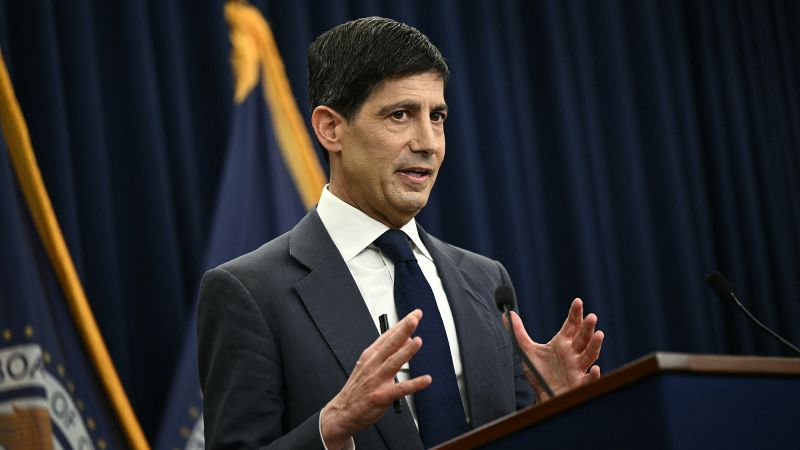
Warsh’s press conference revealed a clear shift in the Fed’s messaging strategy. By refraining from publishing his personal rate forecast, he emphasized a collective decision-making process rather than individual predictions. This move has already sparked questions among market participants about the Fed’s transparency and the potential for more abrupt policy adjustments. The central bank’s new task forces, which include one dedicated to refining its communication framework, are expected to bring about a more agile and targeted approach to policy implementation. “It’s evident that Chair Warsh aims to steer the Fed with a different compass than what Wall Street has relied on under Jerome Powell,” noted Bret Kenwell, a U.S. investment strategist at eToro. “While investors will eventually adapt, there may be some turbulence during this transition.”
Market reactions to the meeting were mixed, reflecting the uncertainty surrounding Warsh’s priorities. Stocks dipped slightly, while short-term bond yields surged, marking a sharp increase in demand for safer assets. The U.S. dollar also saw a notable rise, indicating a renewed focus on inflation control. Notably, the two-year Treasury yield reached its highest level in over a year, driven by the nine Fed officials who endorsed a potential rate hike by year-end. This development has heightened speculation about the central bank’s stance on monetary policy, as traders weigh the impact of Warsh’s strategic changes.
“With the new sheriff in town, markets are scrutinizing every detail, every nuance,” remarked Brett Ryan, a senior U.S. economist at Deutsche Bank. “The Fed’s messaging has become more opaque, and investors are trying to decode the new signals.”
Warsh’s leadership style appears to favor direct, data-centric communication over the more elaborate narrative approaches of his predecessors. He has consistently argued that markets function most efficiently when reacting to real-time economic indicators rather than anticipating Fed responses. “Financial markets perform best when they respond to incoming data, not speculate on how the Fed might interpret it,” he stated. This philosophy has led to a more reactive posture, where the Fed’s statements are now interpreted with greater scrutiny. Analysts suggest that this shift may result in short-term volatility as markets adjust to the new paradigm.
The Fed’s recent actions come amid a backdrop of rising inflation and a stabilizing labor market. In April, the central bank’s preferred inflation gauge hit its highest level since 2023, reigniting concerns about persistent price pressures. Meanwhile, Treasury yields have climbed steadily over the past months, fueled by surging oil prices and expectations of sustained rate hikes to curb inflation. Warsh’s emphasis on less frequent communication aligns with these market dynamics, where investors are increasingly focused on tangible economic signals rather than Fed rhetoric. “The Fed is now operating under a different set of rules,” said Krishna Guha, vice chairman at Evercore ISI. “Markets will have to navigate a challenging transition to this new era.”
As Warsh’s tenure progresses, the central bank’s task forces are expected to play a pivotal role in shaping future policy. These groups, which span various economic domains, aim to streamline decision-making and enhance the Fed’s responsiveness to evolving conditions. However, their impact remains a subject of debate. “Will these task forces mark a fundamental shift in Fed strategy, or will they merely serve as a means to revisit old discussions?” questioned Michael Feroli, chief U.S. economist at JPMorgan Chase. “We may gain clarity in the coming weeks as the Fed refines its approach.”
The transition to Warsh’s leadership has also highlighted the importance of communication in central banking. While his new strategy emphasizes simplicity, it risks alienating markets accustomed to the detailed guidance provided by Powell’s administration. The removal of individual forecasts from the dot plot could lead to increased uncertainty, as investors now rely more on collective signals than individual insights. “The Fed’s messaging has become more concise, but this may complicate the interpretation of its broader policy goals,” remarked one market observer. “The challenge lies in translating these changes into actionable insights for traders.”
Despite the initial adjustments, Warsh’s approach has the potential to modernize the Fed’s operations. By focusing on data and reducing speculative dialogue, he may create a more efficient monetary policy framework. However, the success of this strategy depends on the central bank’s ability to maintain clarity while implementing these reforms. Markets are now on high alert, analyzing every statement and every policy tweak for clues about the Fed’s trajectory. “The new era promises to be dynamic,” said Feroli. “Investors will need to remain agile as the Fed’s communication strategy evolves.”
For now, the financial markets are in a state of flux, balancing the weight of new policies against the lingering effects of past decisions. As the Fed continues to refine its approach, the coming weeks will be critical in determining whether Warsh’s vision for a more streamlined central bank will gain traction or face resistance. The interplay between policy shifts and market reactions will be closely watched, with implications for global economic stability. “This transition is not just about changing communication methods,” Guha added. “It’s about redefining the Fed’s role in the economy.”
