
Americans view Obama far more positively than Trump or Biden, CNN poll finds
Americans View Obama Far More Positively Than Trump or Biden, CNN Poll Finds
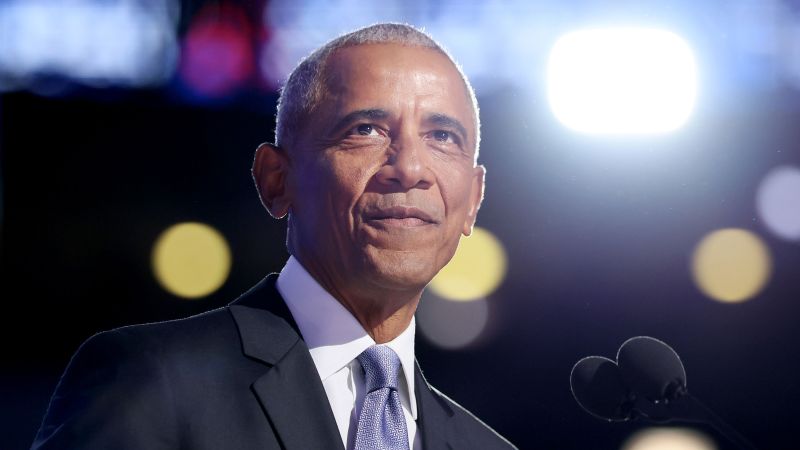
Americans view Obama far more positively – A new CNN survey reveals that 57% of Americans hold a favorable view of Barack Obama, the former president who is now opening his presidential center. This support significantly outpaces the approval ratings of his two successors, Donald Trump and Joe Biden, who are each viewed favorably by only 34% and 30% of respondents, respectively. The poll, conducted by SSRS, highlights a stark contrast in public perception between Obama and the current administration, with his popularity remaining robust even after leaving office.
Party Support and Independent Favorability
Obama’s approval rating among political independents is more than twice that of both Trump and Biden, underscoring his broad appeal across the ideological spectrum. Unlike his successors, who face divided opinions within their own parties, Obama retains near-universal backing from Democrats. While only about one-fifth of Republicans express a positive opinion of him, this still exceeds the cross-party support for Trump and Biden. The data suggests that Obama’s legacy is perceived more favorably than that of his post-2020 predecessors, even as partisan divides widen in contemporary politics.
A Generational Shift in Historical Memory
The poll underscores a growing generational divide in how Americans recall past leaders. A notable portion of the population, particularly younger voters, has limited exposure to the presidencies of leaders before Obama. This phenomenon is reflected in the survey results, where over 40% of adults under 30 report no opinion of George H.W. Bush or Bill Clinton. The shift appears to be driven by the dominance of the Trump era in political discourse, which has overshadowed earlier administrations. The survey also notes that the inclusion of an explicit “no opinion” option in recent polls has revealed a more nuanced picture of historical memory, with many respondents acknowledging familiarity with older leaders but lacking strong opinions about them.
Views of former presidents often change retrospectively, and in many cases improve.
This trend is evident in the evolving perceptions of past leaders. For instance, George W. Bush, who initially left office with deeply negative ratings, has seen a marked improvement in his image over the past decade. His favorability now stands at 42%, with 33% of Americans expressing unfavorable views. Bill Clinton, meanwhile, faces a more balanced assessment, with opinions split nearly evenly between positive and negative. The poll indicates that the public’s view of these leaders is not static, often shifting as time passes and new perspectives emerge.
Comparative Admiration Among Living Presidents
When asked to name the president they most admire, Americans largely favor relatively recent names, with Obama leading at 30%. Trump follows at 19%, while Abraham Lincoln, Ronald Reagan, and John F. Kennedy each receive 9% and 6%, respectively. George Washington rounds out the list with a 5% mention. In contrast, other living presidents are named less frequently: only 2% of respondents cite Bill Clinton, and 1% each name Biden and George W. Bush. Notably, 1% of respondents simply say “Bush” without specifying which of the two presidents they refer to.
Democratic voters, in particular, show a strong preference for Obama. Nearly two-thirds of Democrats (64%) say they most admire him, with 6% favoring Kennedy and 5% each selecting Lincoln or FDR. Republicans, on the other hand, are more evenly divided, with Trump holding the most admiration at 53%—though this majority is smaller than the overall approval rating for Obama. Reagan and Lincoln follow with 18% and 8%, respectively, while Kennedy and Washington each receive 5%. This contrast highlights how party affiliation influences admiration of past leaders, with Democrats tending to view Obama as a unifying figure and Republicans favoring Trump’s tenure despite his lower overall approval.
Survey Methodology and Margin of Error
The poll was conducted from May 7 to May 31 among a sample of 2,480 adults nationwide. SSRS used a combination of online and telephone interviews to gather responses, ensuring a diverse range of voices. The survey samples were drawn from two distinct sources: an address-based sample and a random-digit dial sample targeting prepaid cell phone numbers. These were combined to create a comprehensive dataset. Respondents were contacted via mail, phone, or text, reflecting the evolving methods of political polling in the digital age.
The results for the full sample have a margin of sampling error of plus or minus 2.7 percentage points. This means that the true population percentage could vary by that amount, though the differences between Obama, Trump, and Biden are statistically significant. The methodology also included an open-ended question, allowing participants to express their opinions freely. This approach helped uncover the public’s collective sentiment, revealing that while Obama remains a standout figure, other leaders like Trump and Biden are viewed with more skepticism.
Obama’s favorability has fluctuated during his presidency, but the post-2020 period has seen a sustained level of support. In contrast, Biden’s ratings have declined since his time in office, with his current favorability rating lower than any point during his tenure. This decline is particularly notable given his initial high approval in 2021, which has since eroded. The poll suggests that Biden’s legacy is now more contested, with a growing minority expressing no opinion about him. This mirrors the trend observed in the evaluation of past leaders, where changing perspectives can reshape historical narratives.
Legacy and Long-Term Perception
Obama’s enduring popularity points to the lasting impact of his presidency, especially in contrast to the more polarizing legacies of Trump and Biden. His ability to maintain broad support has made him a symbol of bipartisanship, even as his successors face sharper partisan scrutiny. The poll’s findings also reflect how public memory is shaped by the political climate of the time. For example, Trump’s approval rating increased to 46% just before his second term, only to begin declining afterward. This pattern illustrates how political events can influence how the public perceives leaders, even after they leave office.
Overall, the survey highlights a clear hierarchy of favorability among living presidents, with Obama at the top and Biden trailing. This divergence raises questions about the factors that contribute to a leader’s enduring appeal, such as policy achievements, leadership style, and the historical context in which they operate. As the country continues to navigate political uncertainty, the contrast between Obama’s popularity and the current administration’s ratings may serve as a reminder of the standards that define presidential greatness in American eyes.
