
Dinner at Versailles, alpine air and an Iran agreement: How Trump made it through another G7
A Different Approach at the G7 Summit
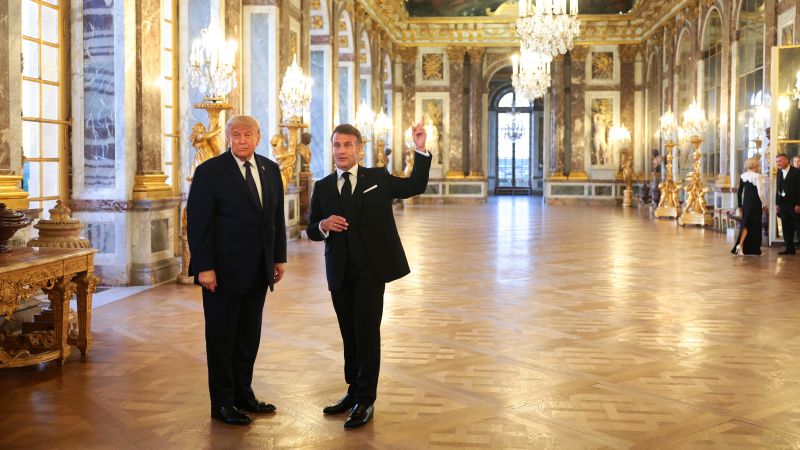
Dinner at Versailles alpine air – This week marked a rare moment for Donald Trump, who managed to attend the Group of 7 summit in France without prematurely exiting. While he had a history of leaving early in past meetings, this time he stayed for the duration, a feat that impressed his host, French President Emmanuel Macron. Despite his usual penchant for drama, Trump’s performance at the Versailles summit was more subdued, with moments of diplomacy that surprised even his critics. The event, held under the shadow of Louis XIV’s iconic palace, offered a backdrop of historical grandeur and a chance for Trump to demonstrate a more measured approach to international relations.
The Climate of Comfort and Criticism
Trump’s attendance was not without its challenges. He griped about the warmth of the meeting room, a detail that underscored his often-commented-on preference for comfort. When he arrived an hour late to a session, he quipped that he was the “boss” of his fellow leaders, a jab that highlighted his trademark self-confidence. Macron, however, took a more candid approach, capturing the atmosphere of the first-night dinner on a hot mic. He referred to the event as a “difficult discussion,” a phrase that hinted at the tension between the American president and his allies. Yet, unlike previous summits where Trump had departed in protest, he remained for the entire program, a sign of the summit’s strategic importance to Macron.
“Brigitte is an amazing woman,” Trump remarked after being greeted with a traditional French kiss by the First Lady.
At the dinner, Trump was met with the kind of royal welcome typically reserved for heads of state. Brigitte Macron, who had recently been criticized by Trump for allegedly mistreating her husband, extended a warm embrace. The scene contrasted with the earlier skepticism surrounding Trump’s ability to engage in meaningful dialogue. His praise for Brigitte and the setting itself, which he called “so beautiful,” suggested a willingness to blend into the French tradition rather than dominate it.
Broader Implications of the Iran Deal
While the summit’s immediate outcomes were notable, the broader context of Trump’s diplomacy loomed large. The Iranian agreement, which he had brokered with European allies, was a key focus of the discussions. Despite lingering concerns about implementation, Trump’s allies hailed the deal as a breakthrough. “This was something very special,” he declared at the summit’s close, a statement that hinted at the political calculus behind his participation. The agreement, aimed at easing a months-long energy crisis, was seen as a potential gamechanger for Europe, which had been disproportionately affected by the energy crunch.
Trump’s ability to maintain his presence at the summit was partly due to the careful planning of Macron, who had inserted a dinner at Versailles into the schedule to ensure the US president remained for the final hours. The event’s name, a nod to the historical significance of the site, was more than symbolic—it provided a setting where Trump could showcase his rapport with leaders. The alpine air and the classical architecture of the palace may have played a role in his renewed focus, but the real catalyst was the progress made on the Iran deal, which Trump framed as a major achievement for both the US and its allies.
“I think it’s a gamechanger,” Canadian Prime Minister Mark Carney told CNN’s Kaitlan Collins, reflecting on the agreement’s potential impact.
The summit also offered Trump a chance to mend fences with leaders who had recently been the targets of his sharp rhetoric. Carney, who had engaged in a months-long diplomatic tug-of-war with Trump, approached him during one meeting to discuss a new trade deal with China that included provisions for electric vehicles. “I thought you’d actually like that,” Carney offered, a gesture that signaled a shift in the tone of their interactions. While Trump’s public persona remained assertive, the private conversations hinted at a more collaborative spirit.
A Shift in Trump’s Global Role
Trump’s attendance at the summit was significant not only for its outcomes but for his evolving role on the world stage. With five G7 meetings under his belt (or six, including the virtual summit during the pandemic), he has become a senior member of the group, a status that carries both weight and responsibility. Most of the other leaders were newly elected, and only Macron had attended as many summits as Trump. This dynamic has influenced the tone of his recent interactions, as he now navigates discussions with a group of leaders who are more evenly matched in terms of experience.
Despite his age, which was evident during his grueling schedule, Trump’s presence was undiminished. After a sleepless night in Washington following his 80th birthday UFC fight, he arrived at the Hôtel Royal with a hoarse voice and an air of determination. Over the next two days, he engaged in lengthy meetings with individual leaders, often fielding questions multiple times a day. By the time he addressed a 70-minute press conference, he was visibly fatigued, a testament to the demands of the event. Yet, his ability to sustain this level of engagement suggested a more strategic approach to diplomacy.
Behind the Scenes: Defending the Iran Agreement
Behind closed doors, Trump was vocal in defending the Iran deal, according to officials who had access to the discussions. He framed the agreement as a major victory for the United States and its allies, emphasizing its role in stabilizing the energy market. While some meetings were tense, particularly the one-on-one with Macron upon his arrival, the overall sentiment was positive. European leaders, who had expressed doubts about the deal’s practicality, praised Trump for his efforts to broker a compromise.
The Iran agreement’s success was a turning point for Trump’s image at the summit. His ability to secure a joint statement with his allies, despite their differences, underscored his diplomatic acumen. The document, which included strong language on Russia’s war in Ukraine, was a departure from his usual style of tough talk. Trump’s endorsement of “unwavering support” for Kyiv signaled a rare moment of consensus among the G7 nations, a contrast to the acrimony that had characterized previous meetings.
As the summit concluded, Trump’s presence at Versailles became a symbol of his continued relevance in global affairs. The historical setting, combined with the practical benefits of the Iran agreement, provided a narrative that transcended his usual theatrics. While the summit may not have resolved all issues, it marked a step toward a more cooperative international posture for Trump, one that balanced his instinct for self-promotion with the realities of multilateral diplomacy.
In the end, the G7 meeting offered Trump a chance to redefine his role as a leader. The alpine air, the architectural grandeur of Versailles, and the political goodwill generated by the Iran deal all contributed to a more polished image. Though his age and fatigue were undeniable, the summit proved that Trump’s influence remains significant, even as he continues to challenge traditional alliances and assert his unique brand of leadership.
