
Japanese city closes nearly 100 schools after bear sightings as post-hibernation attacks rise
Japanese City Closes Nearly 100 Schools After Bear Sightings as Post-Hibernation Attacks Rise
Emergency Measures in Response to Wildlife Encounters
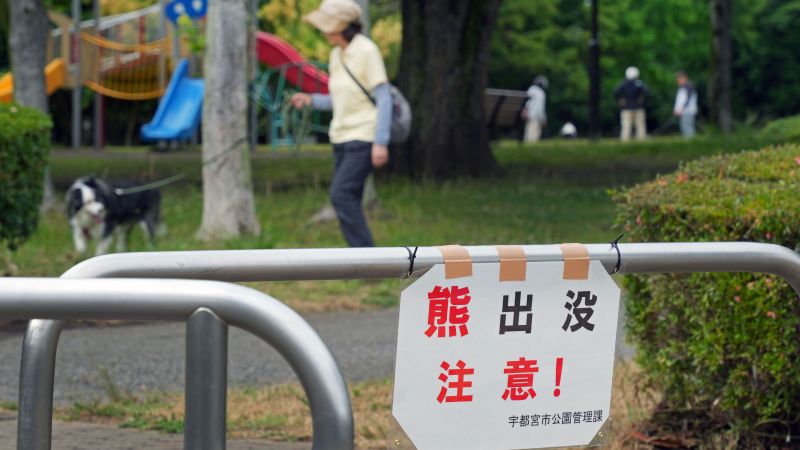
Japanese city closes nearly 100 schools – Following a series of recent bear encounters, the city of Utsunomiya has taken decisive action by shutting down nearly 100 public schools. This decision comes after wildlife officials documented multiple sightings across the region, raising concerns about the growing threat posed by these animals. The closures began on Monday, with the city board of education confirming that all elementary and junior high institutions would remain shut until further notice. While the exact timeline for reopening is still under review, the move underscores the urgency of the situation as bears return to urban areas after their winter hibernation.
The first bear sighting of the week occurred on Saturday, according to the Utsunomiya Wildlife Management Group. A day later, authorities confirmed that a bear had been spotted on the premises of a junior high school, prompting heightened alert levels. The same night, security cameras captured footage of a bear in a downtown shopping district, sparking public anxiety. Since then, additional sightings have been reported in various parts of the city, with police officers reiterating the presence of bears on Monday night. These incidents have led to a citywide search for the animals, as officials and local hunters work together to locate and neutralize the threat.
The closures have disrupted daily routines for students, teachers, and parents, with many families now facing the challenge of finding alternative childcare arrangements. While the schools are temporarily out of commission, the city continues to monitor the situation closely. Police and members of the local hunting association are actively patrolling neighborhoods, equipped with tools and strategies to capture the bears. The exact number of animals involved remains unclear, as it is possible that multiple bears are roaming the area rather than a single one.
Broader Context: A National Bear Crisis
Utsunomiya’s actions are part of a larger pattern of bear-related emergencies across Japan. The country has long grappled with a rising bear population, which has led to an increase in attacks on humans. Last autumn, the number of reported incidents reached a historic high, prompting a nationwide response. Authorities deployed military personnel to regions hardest hit by the surge, while international governments issued travel advisories for Japanese tourists. The situation was so severe that it became a public health concern, with footage of bears rummaging through supermarket aisles and wandering school grounds going viral online.
Experts attribute the recent spike in attacks to a combination of factors. First, the decline in hunting has allowed bear populations to grow significantly. Second, climate change has disrupted natural food sources, forcing bears to venture into human settlements in search of sustenance. Lastly, the reduction in rural populations has created more opportunities for bears to move into urban environments. These conditions have created a perfect storm, leading to a dramatic increase in encounters and incidents. The wildlife management group notes that the trend peaked toward the end of the year but began to subside during early 2026, as bears entered hibernation.
However, with the onset of summer and rising temperatures, bears have once again become active. This transition has brought them closer to populated areas, increasing the risk of conflict. On June 2, a bear attack in Fukushima province injured four people at a steel factory, located approximately 170 kilometers from Utsunomiya. Over the past few weeks, the total number of bear-related incidents has spread across at least nine prefectures, with 20 individuals attacked and three fatalities reported between April and June 2. Some of these incidents occurred in mountainous regions, where foragers were injured while collecting wild plants and vegetables.
Community Efforts to Mitigate Risk
In the wake of these developments, local officials have launched a public awareness campaign to educate residents on how to avoid bear encounters. Key recommendations include securing doors and windows, especially during nighttime hours, and refraining from leaving trash unattended. These measures aim to reduce the likelihood of bears entering homes or attracting them to residential areas. Additionally, the city is working to reinforce safety protocols in public spaces, such as securing trash bins and installing barriers in parks and open lots.
Residents have been urged to remain vigilant and report any bear activity to the wildlife management group. The group, which collaborates with police and hunting associations, is conducting a thorough investigation to determine the extent of the bear population in the region. While the exact number of bears responsible for the sightings is still being assessed, the response has been swift and coordinated. The city is also reviewing its emergency response plans to ensure they are prepared for larger-scale incidents in the future.
As the summer season progresses, the situation remains fluid. While some bears may be temporarily displaced by the city’s efforts, others could continue to explore nearby areas. The Wildlife Management Group has emphasized the importance of continued monitoring and community engagement. “On bear patrol: Inside Japan’s fightback against a surge of deadly bear attacks,” a recent report highlights how the nation is adapting to this new reality. The article underscores the need for a multi-pronged approach, combining traditional hunting methods with modern technology and public education to address the growing challenge.
Historically, Japan’s bear population has been a manageable issue, but recent trends suggest an escalation. With bears becoming more accustomed to human environments, the risk of attacks is expected to remain high until the end of the season. The government is currently evaluating the effectiveness of its current strategies and considering additional measures to curb the spread of bear activity. These include expanding the number of patrols, increasing the use of deterrents, and possibly implementing stricter regulations on food storage in residential areas.
The closures in Utsunomiya and the broader national response reflect a growing recognition of the bear problem’s impact on daily life. As the city works to contain the situation, it serves as a case study for how communities can adapt to wildlife challenges. The combination of natural factors and human activity has created a unique scenario, one that requires both immediate action and long-term planning. Until the bears are safely contained or driven away, the threat remains a constant presence, shaping the way people live, work, and interact with their environment.
“On bear patrol: Inside Japan’s fightback against a surge of deadly bear attacks” highlights the nation’s determination to address the crisis. The article details how authorities are combining traditional hunting methods with modern technology and public education to mitigate the risk of further incidents.
