
Why China’s Xi wants a ‘brighter’ future with North Korea
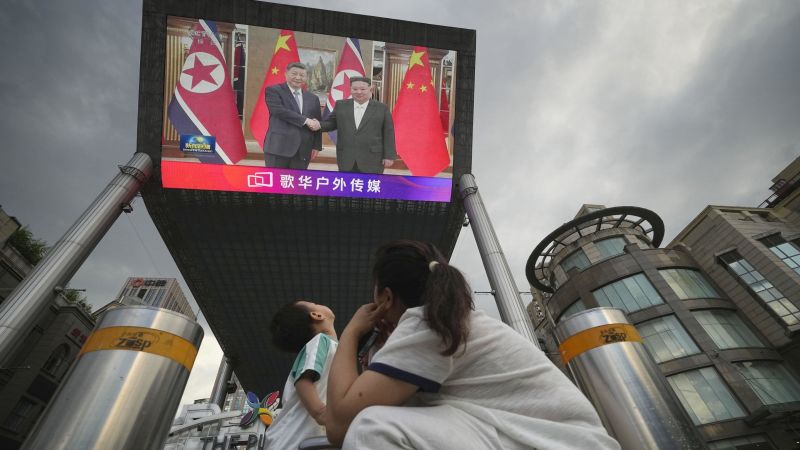
Xi Jinping’s Strategic Reassessment of North Korea Amid Global Shifts
Why China s Xi wants a brighter – Chinese President Xi Jinping’s recent two-day state visit to North Korea marked a pivotal moment in bilateral relations, reflecting a recalibration of China’s approach to its northern neighbor amid evolving international dynamics. Unlike previous diplomatic engagements, this trip emphasized actionable collaboration rather than abstract solidarity, signaling Xi’s intent to anchor North Korea within a broader framework of economic and security partnerships. The visit occurred as China navigates a more assertive role in global affairs, balancing its strategic rivalry with the United States while reinforcing ties with Moscow and other regional powers.
A New Vision for Bilateral Cooperation
During Monday’s meetings in Pyongyang, Xi outlined a forward-looking strategy to enhance China’s alignment with North Korea. He emphasized the importance of “opening up a brighter prospect for the socialist cause of the two countries as well as regional peace and development,” a statement that underscores China’s commitment to fostering shared goals. This vision includes expanding cooperation across multiple sectors, such as trade, agriculture, construction, science, and healthcare, while intensifying diplomatic, military, and law enforcement ties. Such a multifaceted approach suggests a desire to solidify North Korea’s position within China’s geopolitical orbit, moving beyond symbolic gestures to tangible outcomes.
“In the face of the profound changes unseen in a century,” both sides should “open up a brighter prospect for the socialist cause of the two countries as well as regional peace and development,”
Xi’s remarks contrast with his 2019 visit to Pyongyang, where he had previously focused on historical bonds. The 2019 meeting, held at the Kumsusan Guesthouse, centered on mutual respect and the legacy of the Korean War, but this year’s talks introduced a more pragmatic tone. Notably, Xi omitted a key phrase from his earlier statements: “denuclearization of the Korean Peninsula.” This absence may have been deliberate, as it allows North Korea to maintain its nuclear ambitions without direct Chinese criticism. Analysts suggest that this shift could be a boon for Kim Jong Un, who has continued to advance his country’s nuclear program despite U.N. sanctions.
North Korea’s Nuclear Ambitions and China’s Diplomatic Calculus
Under Kim’s leadership, North Korea has steadily escalated its nuclear capabilities, a move that has drawn both support and scrutiny from global powers. The country’s 2023 constitutional amendment enshrined nuclear development as a core policy, reflecting its determination to secure strategic autonomy. This aligns with China’s growing recognition of North Korea as a critical ally in a world increasingly fragmented by ideological divides. As Beijing competes with the United States for influence, Pyongyang’s partnership with Moscow has further complicated the U.S.-led approach to denuclearization, prompting China to adopt a more flexible stance.
Xi’s visit coincided with a period of heightened global competition, particularly between China and the West. The Chinese leader’s recent diplomatic engagements, including hosting U.S. and Russian presidents in Beijing, highlighted his role as a central figure in international negotiations. By welcoming Kim to the capital, Xi not only reinforced bilateral ties but also positioned himself as a mediator capable of navigating complex alliances. This strategic maneuvering appears to be part of a larger effort to project China’s vision of global governance, contrasting with the U.S.’s unilateral policies in regions like the Middle East and the Caribbean.
“At present, Kim sees more risk in diplomacy with Trump than in following a Cold War 2.0 playbook, and Xi sees more risk in pressuring North Korea than from enabling it,”
The U.S. has faced criticism for its aggressive tactics in Venezuela and Iran, which have eroded its credibility as a leader in international diplomacy. In response, China has bolstered its image as a responsible global power, offering a more inclusive alternative to Western dominance. By deepening ties with North Korea, Beijing can leverage its position in negotiations with the U.S. and its allies. This dynamic is particularly evident in discussions about the Korean Peninsula, where China’s support for Kim’s nuclear program provides a counterbalance to American pressures.
China’s Rising Global Influence and Strategic Partnerships
Xi’s visit to Pyongyang came as China’s global standing surged, with leaders from around the world increasingly seeking its guidance. The Chinese leader’s ability to host both U.S. President Donald Trump and Russian President Vladimir Putin within a short span demonstrated his diplomatic versatility. Trump, who had previously championed a hardline approach to North Korea, now appears more open to China’s influence, as evidenced by their discussions during the U.S. president’s mid-May visit to Beijing. This exchange may have subtly shifted the narrative, positioning China as a key player in resolving regional tensions.
North Korea, often seen as a pariah state, has become a strategic asset for China in its quest to reshape global order. The two countries share a historical bond, forged during the Korean War, which Xi described as “the highest demonstration of the importance China attaches to North Korea–China friendship.” Kim’s praise for Xi’s visit underscores the mutual reliance between the nations, with China providing economic support and political backing in exchange for North Korea’s alignment with Beijing’s interests. This relationship is particularly vital as the U.S. continues to view North Korea as a threat to its strategic objectives in Asia.
Reassessing Leverage and Regional Stability
Analysts suggest that Xi’s focus on expanding cooperation with North Korea serves dual purposes. On one hand, it strengthens China’s influence over Pyongyang, ensuring the country remains a reliable partner in the face of U.S. pressure. On the other, it allows Beijing to present itself as a mediator of regional stability, a role that contrasts with the U.S.’s more confrontational approach. Lim Eul-chul, a professor at Kyungnam University in South Korea, notes that China’s efforts to deepen ties with North Korea signal its intent to build a unified economic and security bloc, one that challenges Western hegemony.
“China is the responsible global power with the right vision for how the world should be run,”
Xi’s trip also showcased China’s ability to engage with a diverse array of leaders, from democratic nations to authoritarian regimes. By hosting Kim alongside Trump and Putin, the Chinese leader demonstrated his capacity to navigate geopolitical complexities, reinforcing his image as a shrewd negotiator. This diplomatic balancing act is essential in a world where alliances are fluid, and China seeks to solidify its position as a leader in global affairs. The absence of the denuclearization phrase in Xi’s speech, however, raises questions about China’s willingness to prioritize U.N. resolutions over its strategic interests in North Korea.
As China continues to assert its dominance, the relationship with North Korea becomes a microcosm of its broader foreign policy. The country’s nuclear program, once a focal point of international concern, now serves as a symbol of its resilience and autonomy. For Xi, this partnership offers both leverage and stability, ensuring that North Korea remains aligned with China’s geopolitical goals. Meanwhile, the U.S. faces a growing challenge in maintaining its influence on the Korean Peninsula, particularly as China’s support for Kim provides a bulwark against American pressure.
In an era defined by shifting alliances and competing ideologies, Xi’s vision for North Korea reflects a recalibrated strategy. By prioritizing economic and security cooperation over denuclearization, China positions itself as a key architect of the next global order. This approach not only strengthens its ties with Pyongyang but also solidifies its role as a counterweight to Western powers. As the world watches China’s rise, the relationship with North Korea remains a cornerstone of its ambitions to shape a more multipolar international system.
