
AI devices that see, listen and record: Are we ready for the post-smartphone world?
The Era of AI Wearables: Are We Prepared for Life Beyond Smartphones?
A New Chapter in Personal Technology
Goldlaner.com – Imagine stepping into your workplace on an ordinary Tuesday morning. Colleagues mill about, each wearing miniature recording devices attached to their garments. The eyewear perched on your nose recognizes objects within moments of looking at them. Meanwhile, a wrist accessory captures and processes every conversation you have throughout the day. This scenario represents the vision that technology corporations are building toward—an era where artificial intelligence becomes seamlessly integrated into daily existence, regardless of consumer preference.
Industry giants alongside emerging startups are actively engineering novel wearable technologies capable of visual observation and auditory capture. Meta currently distributes millions of its AI-enhanced glasses, developed in partnership with EssilorLuxottica, featuring integrated optical and audio components. Samsung plans to introduce its own smart eyewear solution before year-end. Donning these accessories grants artificial intelligence systems immediate access to your personal environment and experiences.
Technology executives believe this connectivity will enable AI assistants to deliver personalized guidance and eventually execute tasks autonomously on behalf of users. I recently immersed myself in this emerging reality by incorporating multiple wearable devices into both professional and personal routines. While they proved valuable in specific contexts, I frequently experienced discomfort requesting that companions and colleagues allow their interactions to be captured.
Privacy Concerns in the Age of Constant Observation
Devices equipped with surveillance capabilities introduce significant privacy considerations, according to industry experts. Unlike traditional mobile phones, these wearables operate more discreetly, making them difficult to detect, noted Irina Raicu, who directs the internet ethics program at Santa Clara University’s Marukkula Center for Applied Ethics. “So the whole notion of consent is kind of disintegrating,” she observed.
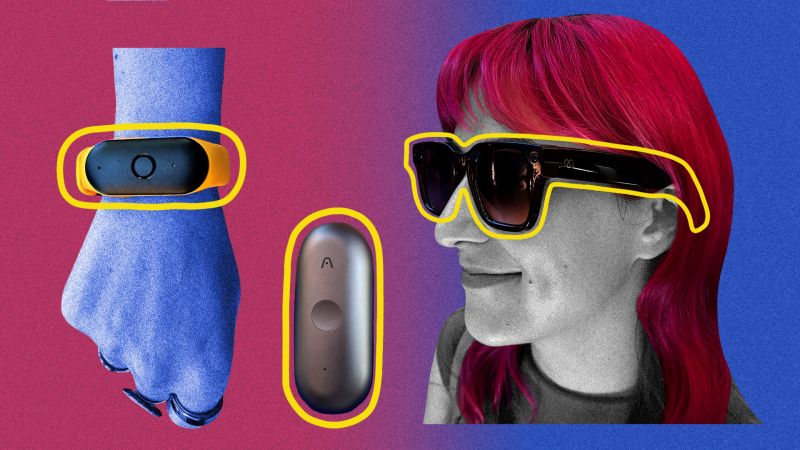
For decades, technology corporations have monitored human behavior through digital footprints including search queries, purchasing patterns, geographic movements, and health metrics. AI-powered wearables now enable the collection of richer data drawn from physical surroundings. During several months of testing, I utilized three distinct devices: Meta’s Ray-Ban smart glasses, Amazon’s Bee Pioneer wristband, and Plaud’s Notepin S—a compact audio recorder designed for clothing attachment. I carried these gadgets to professional settings, business travel, leisure vacations, and social occasions. All participating companies supplied the equipment to CNN for evaluation purposes.
Real-World Testing: Benefits and Awkwardness
Certain moments highlighted the practical advantages of these technologies. During an April visit to Lisbon, I avoided retrieving my smartphone to research details about the Jerónimos Monastery, one of the city’s most celebrated architectural treasures. Meta’s eyewear captured an image (after obtaining my approval), processed the visual data, and delivered relevant information almost immediately.
The Amazon Bee Pioneer wristband, which records audio and provides contextual recommendations, proved particularly useful at professional networking functions. Recording conversations felt more organic than holding a phone, and the companion application recommended specific contacts for follow-up communication. Similarly, Plaud’s Notepin S, which I typically fastened to my shirt collar, offered reliable audio capture capabilities.
However, these gadgets frequently remained unused, tucked away in backpacks or desk compartments. Social interaction while being recorded often felt unnatural. As a journalist, requesting permission to document interviews is routine practice, but doing so during casual board game evenings or individual meetings with colleagues seemed peculiar. Was the social discomfort justified by the potential value of recorded conversations?
AI Making Unexpected Conclusions
At times, the technology produced surprising results. During one board game session, I casually mentioned relocating to a different apartment during autumn. When I subsequently accessed the Bee application, it prompted me to schedule moving services for October—a helpful reminder. The device then interpreted my statement as indicating anxiety regarding “stability” and my “sense of home,” recommending that I photograph “one beloved corner” of my current residence to carry forward.
This moment illustrated a potential challenge: AI assistants drawing conclusions from observation rather than explicit communication. I felt no particular anxiety about my upcoming move and certainly did not intend to communicate such feelings to anyone—neither friends, nor my husband, nor my AI wristband.
Amazon stated that Bee is designed to surface insights and recommendations based on what it learns about a user over time, and that insights can be less precise early on when drawing from limited context. Users can also mark certain Bee insights as inaccurate to help it surface more relevant advice moving forward.
“We’re constantly refining how Grow works, and the experience will continue to improve,” an Amazon spokesperson explained to CNN.
The Future of Personal AI
My personal experience represents merely one perspective on where this technology is heading. “Some of the largest companies in the world right now” are actively engineering gadgets such as AI pendants, pins, and jewelry accessories, according to Qualcomm CEO Cristiano Amon, who shared this observation with CNN and several journalists during a June briefing.
For Amazon, the Bee device holds particular significance as it shapes the evolution of the Alexa assistant platform. Most consumers would prefer a personal assistant possessing comprehensive awareness of their daily activities rather than limited contextual understanding.
As these technologies mature, society must grapple with fundamental questions about consent, privacy boundaries, and the extent to which we allow artificial intelligence to interpret our lives through continuous observation rather than direct communication.
Related Reading
Frequently Asked Questions
What is AI devices that see listen and record?
AI devices that see listen and record is the main topic of this guide. The article explains the context, practical details, and next steps readers should understand.
Why does AI devices that see listen and record matter?
AI devices that see listen and record matters because readers are looking for a useful answer, not just a short summary. Good content should match search intent and help them decide what to do next.
