
Trump says ‘pilots are fine’ after report Apache helicopter went down near Strait of Hormuz
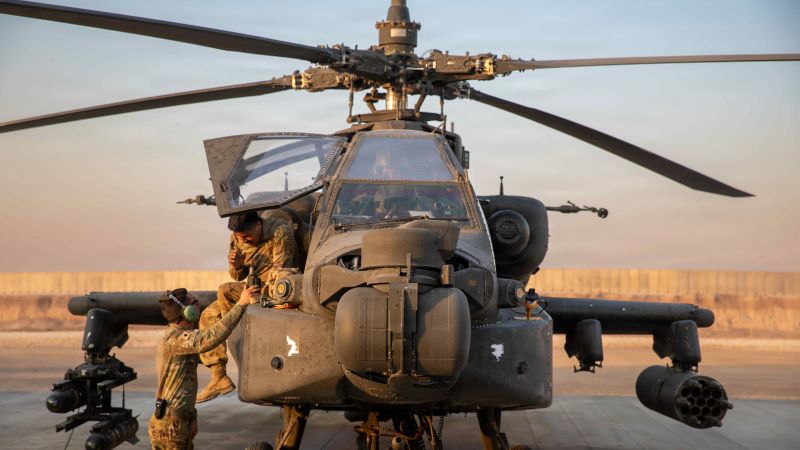
Trump Assures Pilots Are Unharmed After Apache Helicopter Incident Near Hormuz
Trump says pilots are fine after – Following reports of a US Army Apache helicopter crash near the Strait of Hormuz, President Donald Trump addressed the situation with a brief but reassuring statement. During a press conference in New York after the NBA Finals game, he confirmed that “the pilots are fine” and emphasized that “nobody injured.” The incident, which occurred on Monday, has raised questions about the circumstances surrounding the downed aircraft, though Trump promised a detailed report would be released the next day.
Details of the Helicopter Crash
The New York Times reported that a US Army Apache helicopter gunship had crashed near the strategic waterway, requiring the rescue of two crew members. While the cause of the crash remains unclear, the event took place amid escalating tensions in the region. Iranian and Israeli forces had engaged in direct military strikes late Sunday, marking a significant escalation in hostilities. The timing of the incident suggests it may be linked to the heightened activity, though no immediate connection has been confirmed.
“The pilots are fine, nobody injured,” Trump told reporters, his tone calm despite the unfolding situation.
Trump’s comments came as CNN sought clarification from US Central Command, the military branch overseeing operations in the Middle East. The command has yet to provide specific details about the Apache’s mission or the cause of the crash. However, the Central Command’s website notes that Apache helicopters are primarily deployed for precision strikes, close air support, and reconnaissance. Their versatility makes them critical in regional conflicts, including operations targeting Iranian maritime assets.
Regional Tensions and Military Operations
The crash occurred in the context of a broader conflict involving Iran and the United States. Earlier this month, Iran launched strikes against US interests in Saudi Arabia, damaging several aircraft at the base. Meanwhile, US forces have been conducting operations to disrupt Iranian naval activity, including attacks on small boats in the Gulf. These actions have led to a series of incidents, with multiple US aircraft reported lost since the war with Iran began in late February.
According to a Congressional Research Service report published in May, the US military has suffered significant losses, including at least five fighter jets, seven Stratotanker refueling aircraft, a search-and-rescue helicopter, and more than two dozen drones. The Apache crash would mark the first such loss in the conflict since its outbreak, highlighting the risks faced by military assets in the region.
Historical Context of US Aircraft Losses
Recent weeks have seen a pattern of aerial incidents that underscore the intensity of hostilities. In early April, a daring operation was required to rescue a pilot from a downed F-15E Strike Eagle that had been shot down inside Iran. The mission, involving hundreds of American personnel, saw two special operations aircraft destroyed on the ground to facilitate the extraction. This event demonstrated the high stakes of combat operations in the area.
Earlier in March, a KC-135 Stratotanker refueling aircraft crashed in western Iraq, resulting in the deaths of all six crew members onboard. That incident was followed by a separate event in which three US F-15 fighter jets were mistakenly targeted by Kuwaiti air defenses, though all pilots managed to eject safely. These examples illustrate the diverse range of threats faced by US military aviation, from enemy fire to friendly fire.
Iran’s Role in the Conflict
Iran has been a central player in the escalating tensions, with its military actions targeting US interests. The recent direct strikes with Israel have intensified the conflict, creating an environment where even routine operations carry significant risk. Iranian state media released images and video footage of aircraft wreckage in southern Esfahan province, which CNN geolocated. The visuals appear to show the aftermath of the Apache crash, though no further details have been provided.
While the exact cause of the Apache’s crash remains unknown, the helicopter’s role in the conflict has been well-documented. Apaches have been used to conduct precision strikes against Iranian vessels, supporting the US blockade of its ports. The downed aircraft may have been part of such a mission, though this has not been officially confirmed. The loss of the Apache adds to the growing list of US military losses in the region, underscoring the challenges of maintaining operational presence amid heightened threats.
Broader Implications for US Military Operations
The incident near Hormuz has sparked discussions about the effectiveness of US military strategies in the region. With the potential for further losses, commanders are under pressure to balance offensive operations with defensive measures. The US Central Command has been working to provide clarity, but the lack of immediate information has left analysts speculating about the circumstances of the crash.
As tensions continue to rise, the US military faces the dual challenge of protecting its assets while conducting critical operations. The Apache crash serves as a reminder of the risks involved in maintaining a military presence in the Middle East, where the line between combat and accidental loss can blur rapidly. Trump’s assurance that “the pilots are fine” offers some comfort, but the event highlights the precarious nature of these missions.
Meanwhile, the broader conflict between the US and Iran shows no signs of slowing. The exchange of direct strikes between the two nations in recent days has heightened concerns about the potential for larger-scale engagements. As the situation evolves, the role of military aircraft in these operations will remain a focal point for both strategic planning and public perception.
Summary of Recent Aircraft Losses
Since the conflict with Iran began in late February, the US military has reported a number of aircraft losses. In addition to the Apache crash, these include five fighter jets, seven Stratotanker refueling aircraft, and a search-and-rescue helicopter. More than two dozen drones have also been damaged or destroyed, according to the Congressional Research Service report. The cumulative impact of these losses has raised questions about the sustainability of current operations and the need for improved defensive measures.
While the specific cause of the Apache’s crash is still under investigation, the incident adds to a series of events that have tested the resilience of US military assets. The recent downing of the F-15E in April and the KC-135 crash in March demonstrate the variety of threats—both intentional and accidental—that military personnel face. The US Central Command’s efforts to provide updates will be crucial in determining the broader implications of these events for the ongoing conflict.
As the situation develops, the focus will remain on the safety of personnel and the effectiveness of military operations. Trump’s comments, though brief, have been intended to reassure the public and maintain confidence in the administration’s handling of the crisis. The next day’s report is expected to shed more light on the incident, potentially revealing new insights into the challenges of operating in this volatile region.
