
She was a first lady at 19. Now she’s making her fourth attempt to win Peru’s presidency
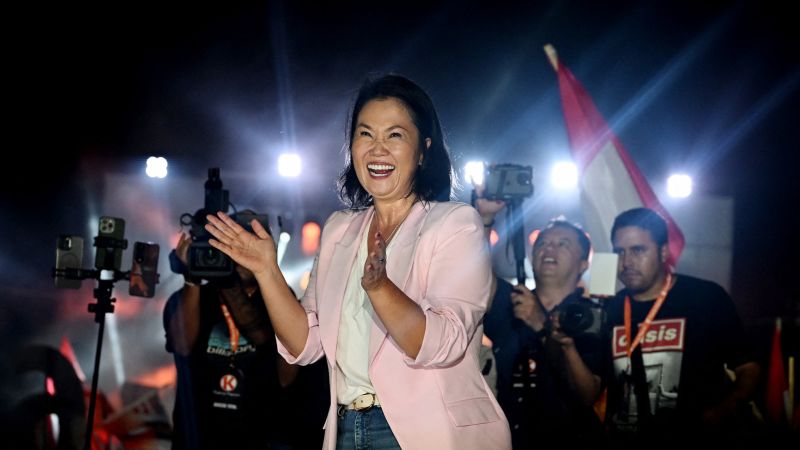
Keiko Fujimori’s Fourth Bid for Peru’s Presidency
She was a first lady at 19 – At the age of 19, Keiko Fujimori stepped into the spotlight as Peru’s first lady during a pivotal international gathering in 1994. Dressed in black, she appeared poised yet reserved as she stood beside her father, President Alberto Fujimori, at the inaugural Summit of the Americas hosted by U.S. President Bill Clinton. The moment marked her early entry into the political sphere, a transition spurred by her mother, Susana Higuchi, who left her husband after publicly accusing him of corruption in the management of international donations. This event set the stage for Fujimori’s eventual rise to the presidency, as she would later inherit the political mantle of her family’s legacy.
A Legacy of Resilience and Controversy
Keiko Fujimori’s political career has been defined by both determination and scrutiny. After her mother’s departure, she became a key figure in her father’s administration, eventually stepping into the spotlight as a congresswoman in 2000. That year, she founded the Fuerza Popular (Popular Force) party, which would become a cornerstone of her political identity. Her journey, however, was not without challenges. In 2011, she faced her first presidential defeat, followed by another in 2016 and a third in 2021. Despite these setbacks, she remains undeterred, launching a fourth campaign in the 2026 runoff election. This time, she faces Roberto Sánchez, a leftist candidate from the Juntos por el Perú (Together for Peru) coalition, with some polls suggesting she holds a slight advantage.
“This election isn’t about me alone—it’s about the kind of leadership we need for the next five years,” Fujimori asserted during a recent debate. Her message centers on restoring stability and security to a nation grappling with deep political and institutional turmoil. Over the past decade, Peru has seen eight different presidents, a testament to the fragility of its governance. Fujimori attributes this chaos to systemic corruption, rising crime rates, and a perceived threat to democratic institutions. She argues that her approach offers a stark contrast to the turmoil that has plagued the country, emphasizing the need for “order to live, order to invest, and order to work.”
A Political Image in Flux
Fujimori’s campaign has evolved significantly since the 2021 runoff election, which was marred by accusations of irregularities. While her father’s presidency was often associated with authoritarianism, Fujimori has sought to distance herself from that reputation. In interviews, she has acknowledged a shift in her political strategy, presenting a more measured image than in previous years. “We were once known for our confrontational style, but we’ve refined our message to reflect a broader vision,” she explained, aiming to appeal to a wider electorate.
Julio Carrión, a political science professor at the University of Delaware, noted that Fujimori’s current campaign represents a strategic pivot. “She’s rebranding herself as a leader who prioritizes order over ideological confrontation,” Carrión said. “This approach could help her overcome the stigma that followed her in 2021, when she framed her candidacy as a battle between communism and democracy.” The professor highlighted how Fujimori’s focus on stability has softened her image, making her more relatable to voters concerned about economic security and public safety.
Following the January 2026 election, Fujimori has maintained a calm demeanor, avoiding immediate alignment with allegations of fraud by the Popular Renewal candidate, Rafael López Aliaga. This calculated stance has allowed her to consolidate support, particularly among voters disillusioned with the status quo. Her ability to navigate political criticism while maintaining a coherent platform underscores her resilience, a trait she has repeatedly emphasized as a defining characteristic of her leadership.
The Shadow of Her Father’s Legacy
Alberto Fujimori’s political legacy remains a double-edged sword for his daughter. As president from 1990 to 2000, he oversaw economic reforms that stabilized Peru’s economy and led the country to victory against the Shining Path and MRTA terrorist groups, which had caused widespread devastation. A truth and reconciliation commission estimated that over 60,000 people lost their lives in the conflict. Yet, his tenure was shadowed by allegations of human rights abuses and corruption, culminating in his conviction for crimes including aggravated homicide and bodily injury in 2009. That year, he received a 25-year prison sentence for his role in the Barrios Altos and La Cantuta cases, which involved the disappearance of political prisoners and their subsequent deaths.
Fujimori has often been viewed as a continuation of her father’s authoritarianism, a perception that fueled opposition during her earlier campaigns. However, she has worked to reframe her narrative, positioning herself as a reformer rather than a successor to past excesses. “I am not the same person as my father,” she stated, striving to distinguish her policies from his. Her efforts to redefine her political brand have been met with mixed reactions, as some voters still associate her with the controversies of the Fujimori era.
Despite her father’s legal troubles, Fujimori has capitalized on his economic achievements and the stability he provided. The 2026 election, therefore, is not just a personal milestone but also a chance to revive the Fujimori legacy. Her campaign has focused on themes of national pride and recovery, leveraging her family’s historical prominence while addressing contemporary challenges such as corruption and insecurity. The former president, who died in 2024, continues to loom over the political landscape, with his name invoked both as a symbol of past successes and a reminder of unresolved issues.
A Pivotal Moment in Peru’s Political Landscape
Fujimori’s fourth attempt at the presidency comes at a critical juncture for Peru. The country has faced a constant cycle of political crises, with frequent changes in leadership and persistent public distrust in institutions. Her campaign, which began in earnest after the first round of the 2026 election, has sought to address these concerns by emphasizing transparency and accountability. While her past legal troubles—specifically, the alleged connection to the Odebrecht construction company—have been a point of contention, a court ruling in January 2025 declared the case against her null and void. Fujimori claims this decision validated her innocence and marked the end of a decade-long political persecution.
“I have always fought for the people of Peru,” she said during the final presidential debate, vowing to “build a government that works for all citizens.” Her remarks reflect a broader attempt to unite the electorate under a common goal: restoring public confidence in leadership. This message resonates with voters who have grown weary of political gridlock and corruption, making Fujimori’s candidacy a compelling choice for some. Yet, her path has been fraught with challenges, requiring her to balance her family’s historical influence with a vision for a new era of governance.
As the runoff election approaches, Fujimori’s strategy has become increasingly focused on her personal appeal and the promise of stability. Her ability to adapt her messaging while maintaining a strong connection to her father’s legacy highlights her political acumen. Whether she succeeds or not, her campaign underscores the enduring influence of the Fujimori name in Peru’s ever-evolving political narrative. For a nation in search of direction, her fourth bid represents both an opportunity and a test of her ability to redefine her family’s impact on the country’s future.
“We need order — order to live, order to invest, order to work,” Fujimori reiterated during the presidential debate. “I know that this election is not about me, but about the kind of government and the direction we want for the next five years. Either we want chaos and disorder, or we restore order and work for the future of our country.”
Fujimori’s journey from a young first lady to a presidential contender is a testament to her perseverance. While her father’s rule left an indelible mark on Peru’s history, she has positioned herself as a leader who can bridge the gap between past and present. The 2026 election may yet determine whether her vision for a more stable Peru will take root—or if the nation will continue to search for its next guiding hand.
