
One killed, several wounded in suspected terror attack in central Israel
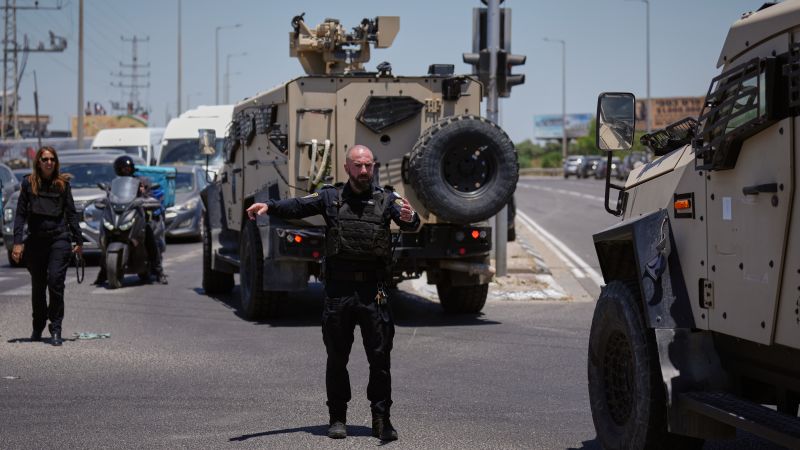
One Killed, Several Injured in Central Israel Shooting
One killed several wounded in suspected – Emergency services confirmed that a man in his 30s was fatally shot at a gas station in Kochav Yair, a town located along the Green Line separating Israel from the occupied West Bank. The incident, which unfolded on Sunday, left at least five others wounded across multiple locations, according to Magen David Adom (MDA), Israel’s national emergency medical service. Two of the injured were reported in critical condition, raising concerns about the severity of the attack.
Investigation into Suspected Terror Attack
Israeli police are currently examining the shooting as a potential act of terrorism. Authorities stated they had identified a vehicle linked to the attack and eliminated the suspect after apprehending him. The term “neutralized” is commonly used by Israeli security forces to describe the elimination of a threat, often through lethal force. The suspect, later confirmed to be a Palestinian citizen of Israel, hailed from Tayibe, an Arab community situated just north of Kochav Yair.
Following the arrest, police conducted additional searches in the surrounding area to uncover any accomplices or evidence of a broader plot. A second individual was detained later that day, accused of participating in the attack. During the arrest, the suspect attempted to attack officers with a glass bottle, prompting a swift response from security personnel.
Government Response and Political Reactions
Prime Minister Benjamin Netanyahu convened an emergency meeting to address the attack. In his remarks, he commended the rapid-response teams and Israel Police for their actions. “The officers acted swiftly to counter the terrorists,” Netanyahu stated, emphasizing the importance of quick action in neutralizing threats. He also praised the apprehension of the suspect’s accomplice, highlighting the collaborative efforts between security forces and law enforcement.
“I praise the rapid-response teams that acted immediately against the terrorists,” Netanyahu said at a government meeting on Sunday. “I praise the officers of the Israel Police who neutralized the terrorist and apprehended his accomplice.”
In the aftermath, far-right Finance Minister Bezalel Smotrich issued a strong statement, calling for “profound change” among Israel’s Arab communities. “The equation is simple: whoever accepts the state’s sovereignty will live here in peace,” Smotrich declared. “Whoever chooses the path of terror will have their blood on their own head.” His remarks reflect a broader sentiment among some Israeli political factions to tighten security measures and address perceived threats from within the Arab population.
Hamas’ Endorsement of the Attack
Hamas, the militant group based in Gaza, claimed responsibility for the shooting, framing it as retaliation against the occupation’s continued aggression in the West Bank and Gaza Strip. In a statement released shortly after the incident, the group asserted that the attack targeted Israeli forces and aimed to disrupt ongoing military operations. “This assault is a direct response to the occupation’s relentless attacks on our people in Jerusalem and the West Bank,” a Hamas spokesperson said.
The attack also aligns with Hamas’ strategy of using targeted violence to escalate tensions and draw international attention to its cause. While the group has not explicitly linked the incident to its broader goals, its endorsement underscores the regional dynamics at play. The shooting comes amid a period of heightened conflict, with both Israel and Palestinian groups engaging in sporadic clashes and acts of retaliation.
Historical Context and Regional Implications
Similar attacks have occurred in the past, often involving Palestinian citizens of Israel targeting Israeli civilians. These incidents frequently spark debates about the balance between security and civil rights within the country. Kochav Yair, where the shooting took place, is a predominantly Arab community that has seen sporadic violence, including previous attacks on Israeli security forces.
The Green Line, which demarcates Israel from the West Bank, has long been a focal point for tensions. While the town itself is within Israeli territory, its proximity to Palestinian areas means it is often a target for cross-border attacks. This incident highlights the complex security challenges faced by Israeli authorities, as threats can originate from both external and internal sources.
Analysts suggest that the attack may have been motivated by a combination of factors, including grievances over land policies, security restrictions, and the broader conflict in Gaza. The involvement of a Palestinian citizen in the attack could signal a shift in tactics, with militants leveraging local ties to launch operations within Israeli-controlled areas. Such events often fuel calls for stricter gun control measures and increased surveillance in Arab communities.
Public and Political Responses
The shooting has prompted a wave of public reactions, with some Israelis condemning the attack as an act of terrorism and others expressing solidarity with the suspect. Social media platforms have seen a surge in posts highlighting the incident, with debates about the role of Palestinian citizens in Israeli security. Meanwhile, the government has reiterated its commitment to safeguarding national security, even as it faces pressure to address the root causes of the conflict.
Security forces have also emphasized the importance of intelligence gathering in preventing such attacks. “We are working tirelessly to identify and dismantle networks that pose a threat to Israeli citizens,” said an official from the Israel Police. The arrest of the second suspect, who used a glass bottle to attack officers, has been cited as a success in containing the situation. However, it has also raised questions about the methods used to apprehend individuals and the potential for escalation in the region.
As the investigation continues, the focus remains on understanding the full scope of the attack. Officials are urging the public to remain vigilant, while also calling for unity in the face of shared security challenges. The incident serves as a reminder of the fragile peace in central Israel, where the line between civilian and militant is often blurred.
The broader implications of the attack extend beyond the immediate casualties. It has reignited discussions about the safety of Arab communities within Israel and the effectiveness of current security measures. With tensions escalating, the situation could set the stage for further confrontations, both within the country and across the Green Line. As the government and security forces work to resolve the incident, the focus remains on preventing future attacks and maintaining stability in the region.
