
Why heat, travel and sleep could challenge teams as much as the opposition at the World Cup
Heat, Travel, and Sleep: Key Challenges for World Cup Teams
Why heat travel and sleep could – The 2026 FIFA World Cup, scheduled to kick off on June 11, is not just a test of skill but also of resilience. With 48 nations competing across the U.S., Canada, and Mexico, the tournament will push athletes to their limits in ways beyond the game itself. While teams like France, Spain, England, and Argentina are expected to dominate, factors such as extreme heat, long-distance travel, and disrupted sleep patterns could prove just as decisive as talent. The focus keyword—why heat travel and sleep—is central to understanding how these invisible pressures might shape the outcome of the competition.
Environmental Stressors and Player Performance
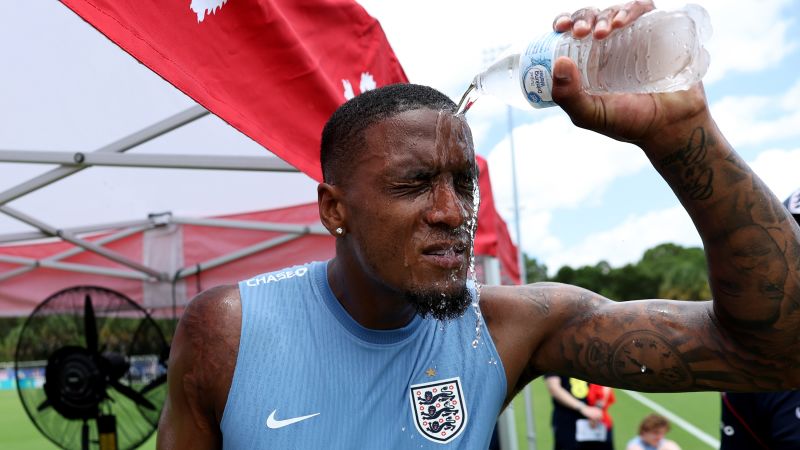
Heat has emerged as a critical concern, particularly in regions experiencing record temperatures. A 2025 report by Football for Future and Common Goal, titled “Pitches in Peril,” highlighted that 10 out of 16 host venues pose a “very high risk” of heat stress. Even in venues not as scorching as Qatar’s, players face challenges from elevated temperatures. FIFA’s current policy, which only triggers match postponements when Wet Bulb Globe Temperature (WBGT) reaches 89.6°F (32°C), has drawn scrutiny. Critics argue that this threshold overlooks the cumulative effects of heat, humidity, and time zone shifts on athlete endurance.
“Heat stress isn’t just about temperature—it’s about how the body adapts to environmental demands,”
said Dominic Rae, a physiotherapist with Al Nasr Football Club. His expertise underscores the need for more nuanced strategies to address the physical toll of extreme conditions. The report warns that WBGT levels just below FIFA’s limit can still create a stifling 113°F (45°C) feeling for players, especially in low-humidity environments, increasing the risk of heat-related injuries.
Global Travel and Sleep Disruption
Traveling across vast distances adds another layer of complexity. Unlike Qatar 2022, where teams operated in a single time zone, the 2026 World Cup spans four different zones. This creates logistical hurdles, from long-haul flights to cross-country transfers, which can exhaust players before they even step onto the pitch. The tournament’s 13 kickoff times further disrupt routines, forcing teams to adjust to new climates and time zones with little recovery. For athletes, this combination of physical and mental strain may lead to performance decline and higher injury risks.
Time zone changes and sleep deprivation are known to impair cognitive function and reaction times. Dominic Rae emphasized that “sleep is the body’s primary recovery tool,” and its disruption can exacerbate fatigue. The 2026 World Cup’s demanding schedule leaves some players with minimal rest between matches, compounding the effects of travel. This multi-faceted challenge could favor teams better equipped to manage these variables, even if they are not the most technically gifted.
FIFA has acknowledged these issues, noting that the tournament’s schedule aims to “minimise travel” and “maximise rest days.” However, critics argue that the logistical design still exposes players to significant strain. For example, teams playing back-to-back games in different regions may struggle to maintain consistency, as jet lag and sleep disruption take their toll. The interplay of why heat travel and sleep becomes a defining factor in determining which teams can sustain peak performance throughout the competition.
As the World Cup approaches, the focus shifts from purely athletic ability to the broader context of how teams adapt to external pressures. Whether it’s the scorching heat of certain venues, the grueling travel between cities, or the disruption of sleep patterns, these factors may play a pivotal role in shaping the tournament’s results. The challenge lies not just in the opposition but in the very conditions that test a team’s ability to endure and recover in a global competition. With why heat travel and sleep at the forefront, the 2026 World Cup could redefine what it means to be a champion in the modern era of soccer.
