
Did the Iran war force peak oil?
Did the Iran War Push the World Toward Peak Oil?
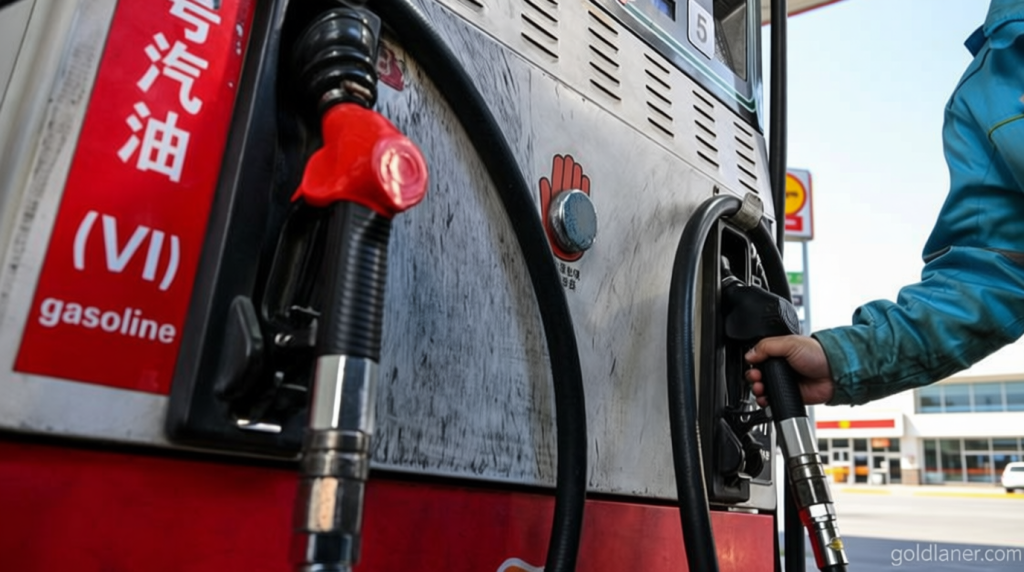
Did the Iran war force peak – China’s energy landscape is undergoing a transformation that seems almost surreal. According to JPMorgan, the country’s oil demand dropped by 9% since the onset of the Iran conflict. This decline, though steep, has not triggered widespread economic turmoil. To put this into perspective, during the 2008 financial crisis, global oil demand fell by 2%, yet China remains resilient. Despite importing 70% of its oil and being Iran’s top customer, the nation’s oil consumption has adjusted swiftly. This shift is not due to government mandates but to a rapid change in how consumers use energy.
A Consumer-Driven Energy Transition
The transformation in China’s energy habits is evident in its transportation sector. Millions of consumers have moved away from gasoline-powered vehicles toward electric cars and public transit. This trend has also affected travel patterns, with a noticeable decline in long-haul trips and a rise in local tourism. The impact is measurable: during the May Day holiday, EV charging on highways increased by 55.6% year-over-year, as reported by China’s Ministry of Transport. Over the holiday, nearly a quarter of vehicles on the roads were electric, a 33% jump from the previous year. Meanwhile, international air travel saw a 5.7% reduction, while regional flights and rail travel grew by 3.5% and 4.6%, respectively.
This shift reflects a broader trend in how people are rethinking their energy consumption. Rising fuel prices have acted as a catalyst, prompting households and businesses to adopt more sustainable alternatives. The result is a noticeable decrease in reliance on fossil fuels, even before the oil supply crisis fully materializes. For instance, China’s ability to withstand the shock is partly due to its massive crude oil stockpiles, a strategic move that predated the war. However, these reserves offer only temporary relief. The real change lies in consumer behavior, which may signal a long-term trend in global oil demand.
Global Implications of the Oil Shock
The ripple effects of the Iran war extend beyond China. Global oil demand has fallen sharply, with March showing a 2.8 million barrel-per-day drop, followed by 4.3 million in April and 5.6 million in May. While this is not yet matching the pandemic’s record 10 million barrel loss, it highlights a critical turning point. Some of these reductions are irreversible, suggesting that the world could be on the cusp of peak oil—the stage where demand begins to decline permanently, even after supply issues ease.
Experts like Natasha Kaneva, head of commodities strategy at JPMorgan, warn that sustained shifts in usage patterns could reshape energy markets. “Past oil shocks often led to lasting declines in gasoline demand, and this episode may prove no different,” she noted. This aligns with historical precedents, such as the 1973 oil embargo, which forced a permanent reevaluation of energy reliance. Countries formed the International Energy Agency to coordinate energy conservation efforts, and the decade saw a surge in nuclear power plants, public transit expansion, and stricter vehicle efficiency standards. The U.S., for example, established the Department of Energy and cut the national speed limit to 55 mph, marking one of the largest reductions in fossil fuel demand in history.
“It was a collective shock to the American system that drove policymakers to push oil out,” said Jason Bordoff, founding director of the Center on Global Energy Policy at Columbia University.
Other crises have similarly accelerated long-term changes. The pandemic, for instance, normalized remote work, permanently reducing the need for daily commutes. This shift has continued to impact energy demand, even as economies reopen. Similarly, the 2022 Russia-Ukraine war prompted the European Union to implement policies favoring renewable energy, cutting dependence on natural gas. These examples underscore how geopolitical tensions and economic pressures can reshape energy consumption habits.
A New Era of Energy Dynamics
The current situation in China and Europe suggests a transition that may outlast the immediate crisis. While the war has disrupted supply chains, the real story is about how demand is adapting. In Europe, falling electricity prices have made electric vehicles more accessible, driven by a decade of investments in wind and solar energy. This affordability is attracting a growing number of buyers, even in the absence of strong government incentives. The U.S., however, has seen a different trajectory, with EV sales stagnating due to policy changes that reduced financial support for these vehicles.
Yet, the cumulative impact of these changes could be significant. If two major economies like China and Europe continue to prioritize electric mobility and public transport, the global demand for oil might never rebound to previous levels. The data from China’s highways during the May Day holiday demonstrates this: the surge in EV usage indicates a structural shift rather than a temporary trend. Such changes could redefine the energy market, making peak oil a reality even without a full-scale supply crisis.
While the immediate effects of the Iran war are still unfolding, the long-term consequences are already visible. The combination of economic pressures, technological advancements, and consumer choices is driving a renaissance in sustainable energy. This could mark a pivotal moment in the world’s energy history, where reliance on crude oil begins to wane. As countries adapt to these new dynamics, the path toward peak oil becomes clearer, reshaping the global economy in ways that may be irreversible.
