Political gravity is coming for some of Trump’s most jarring ideas


Political gravity is coming for some of Trump’s most jarring ideas
Political gravity is coming for some – President Donald Trump continues to challenge conventional norms, yet recent developments suggest that his influence is beginning to wane. The appointment of a contentious housing official as acting director of national intelligence on Tuesday highlights his ongoing effort to shape policy through unconventional means. However, this move has also exposed the limits of his political power. While Trump’s agenda remains bold, it is now encountering resistance from within his own party, signaling that the administration’s dominance of Washington is no longer assured.
The Anti-Weaponization Fund and Its Controversies
One of the most notable examples of this shift is the administration’s decision to abandon its $1.776 billion “anti-weaponization fund.” This initiative, intended to reimburse Trump allies who alleged they were unfairly targeted by the Biden administration’s justice system, faced immediate legal pushback. A court ruling on Monday prompted the White House to signal its intent to drop the fund, a move that had previously sparked internal dissent among Republicans. The Justice Department’s acting attorney general, Todd Blanche, confirmed this withdrawal on Tuesday, stating that the agency would no longer pursue the program. This marks a significant departure from the administration’s earlier stance, which had framed the fund as a necessary tool to counter what it called a “weaponized” judicial system.
“We are not moving forward with the fund,” Blanche told lawmakers, acknowledging the administration’s retreat from the controversial initiative.
The fund’s legal issues were evident from the start. It was created as part of a settlement for Trump’s $10 billion lawsuit against the IRS, which had been triggered by a leaked tax return years prior. While the agreement was meant to resolve disputes over the tax authority’s practices, it also included provisions that extended benefits to third parties unrelated to the case. This lack of transparency and oversight raised eyebrows, particularly after a judge questioned whether the settlement’s terms reflected genuine negotiations or an effort to shield Trump’s allies. The administration initially defended the fund as a broad program for anyone harmed by the justice system during the Biden era, but critics argued it was essentially a slush fund designed to reward loyalists.
Public Backlash and Congressional Concerns
Despite Trump’s attempts to justify the fund, public sentiment has turned against it. Recent polls revealed that a majority of Americans, including many Republicans, disapprove of pardoning individuals who committed violent crimes. A Washington Post-Ipsos survey and a Pew Research Center study both found that at least 74% of voters oppose the pardons of January 6 defendants, a figure that underscores the growing political fallout. This disapproval has put the White House in a difficult position, as it now faces pressure to distance itself from funding those who were involved in the Capitol riot.
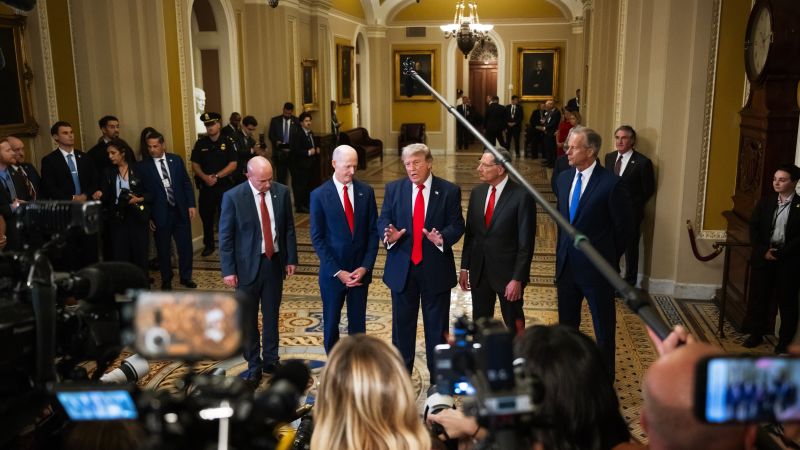
Senators have responded with sharp criticism, emphasizing the need for clarity. Senate Majority Leader John Thune called for the administration to “shut it down themselves,” while others like Senator Chuck Grassley of Iowa and Senator John Kennedy of Louisiana demanded that the White House explicitly rule out reviving the fund in the future. These calls reflect a broader concern that Trump’s actions could undermine the party’s legislative priorities and alienate the public. The administration’s qualified statement on the matter has not satisfied all Republicans, with some arguing that the fund’s abandonment is a necessary concession rather than a complete reversal of policy.
Symbolic Concessions and Unfinished Business
Trump’s decision to transfer control of the Kennedy Center to Congress after a court blocked his name from being affixed to the building is another instance of his shifting approach. The center, a tribute to the late President John F. Kennedy, became a flashpoint when Trump sought to rename it in his honor. Initially, he claimed surprise at the board’s decision, but this was quickly overshadowed by evidence that he had long planned to assert his presence on the memorial. The administration had previously replaced board members with loyalists, ensuring the name change would align with his interests. This symbolic gesture, however, has now been reversed, with Trump seemingly conceding to judicial pressure.
The Kennedy Center incident highlights the political risks of Trump’s bold assertions. While naming a building after a living president is relatively uncommon, the act of adding his name to a memorial for a deceased leader has drawn sharp criticism. The move was seen as a way to immortalize his legacy, but the court’s intervention has forced him to acknowledge the legitimacy of his opponents’ concerns. This, in turn, raises questions about the extent of his capitulation. Does abandoning the fund and stepping back from the Kennedy Center signal a broader retreat, or is it a tactical adjustment to maintain influence?
As the administration navigates these challenges, it is clear that Trump’s most radical ideas are no longer immune to scrutiny. The legal and political hurdles he has faced in recent weeks have demonstrated that even his staunchest allies are beginning to question his strategies. While the White House has not officially terminated the fund, the decision to withdraw it represents a critical turning point. This shift underscores a growing realization that Trump’s agenda, though ambitious, must now contend with the forces of political gravity. The question remains: how far will he be willing to go to preserve his vision, and how much of it will be reshaped by the realities of governance?