
Man killed in shooting outside White House had previously tried to get inside, had mental health concerns
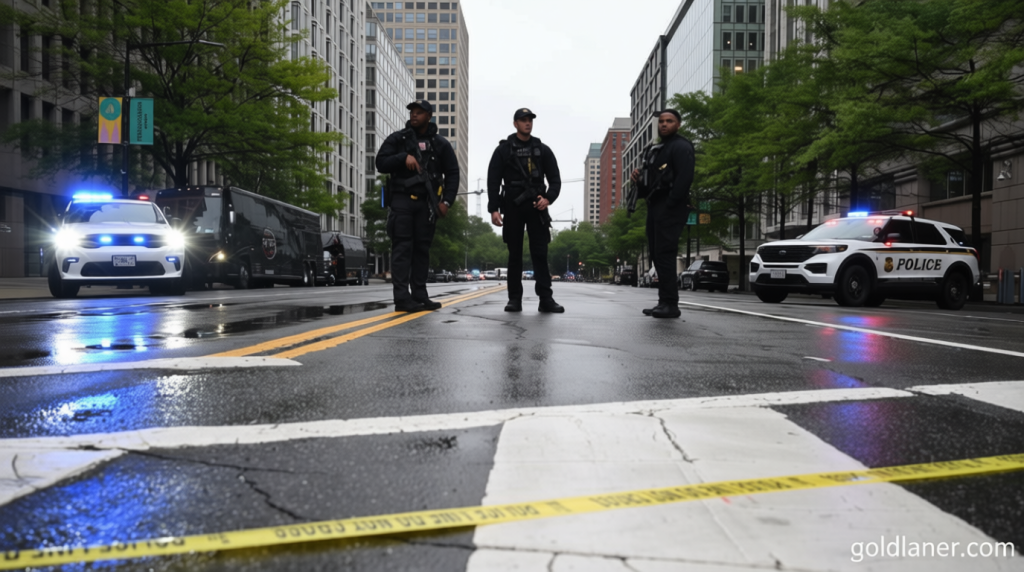
A 21-Year-Old Man Killed During a Shooting Incident Near the White House Had a History of Attempting to Enter the Complex and Exhibited Mental Health Issues
Man killed in shooting outside White – On Saturday, agents from the Secret Service fired upon a man near the White House, resulting in his death. The victim, identified as Nasire Best, was 21 years old. Law enforcement sources confirmed to CNN that Best was shot after he approached a checkpoint and began targeting officers with gunfire. A bystander was also injured during the confrontation, though President Donald Trump remained unharmed while inside the White House.
Background on Nasire Best
Court records reveal that Best had a prior relationship with the Secret Service, marked by several interactions over the past year. These encounters included instances where he was involuntarily admitted to a psychiatric facility and moments when he was detained by local police for making extraordinary claims. One notable event occurred when Best asserted that he was Jesus Christ, a statement that raised questions about his mental state and intentions.
“He was known to the Secret Service for walking around the White House complex inquiring how to gain access at various entry points,” stated a court affidavit. The document also noted that Best had a history of “ignoring warning signs and entering restricted areas” without authorization.
Best’s mental health concerns were documented in official records. On June 26, 2025, he was admitted to a psychiatric hospital against his will for obstructing vehicle entry into a part of the White House grounds. This incident highlighted his pattern of behavior around the presidential estate, where he often sought to bypass security measures. His actions during this time were described as “unpredictable and potentially threatening” by authorities.
Social Media Activity Suggests Possible Tension
Analysis of Best’s social media accounts indicates he expressed ideas that could be interpreted as hostile toward the president. One post appeared to directly threaten violence, while another declared, “I’m actually the son of God.” These statements, combined with his previous attempts to enter the White House, prompted security teams to monitor him closely. The content of his posts was reviewed by investigators as part of the broader context of the shooting incident.
“He claimed to be Jesus and said that he wanted to get arrested,” noted the report. This self-identification as a divine figure, paired with his aggressive behavior toward security, suggested a mix of delusional thinking and a desire to confront officials.
Best’s interactions with law enforcement were not limited to the psychiatric commitment. In July 2025, he walked into a restricted area outside the White House, disregarding multiple warnings from officers. The incident was recorded and later cited in court documents as evidence of his familiarity with the presidential compound and his willingness to challenge its security protocols. His actions during this encounter were described as “reckless” but not necessarily violent at the time.
Security Response and Aftermath
The shooting occurred shortly after Best reached the White House perimeter, where he had been seen wandering for days. Secret Service agents, stationed at the checkpoint, responded swiftly when he began firing at them. According to witnesses, Best was seen “determined” in his approach, with no signs of hesitation as he moved toward the officers. The exchange of gunfire left one man dead and another wounded, underscoring the urgency of the situation.
Following the incident, authorities reviewed Best’s mental health history and his recent social media activity to determine if there were any warning signs. His claims of being Jesus Christ, coupled with his tendency to challenge security, were deemed significant by investigators. The Secret Service emphasized that Best had been “closely monitored” due to his repeated attempts to access the White House and his unstable psychological state.
Lawmakers and experts have since called for a deeper examination of how mental health concerns intersect with presidential security. “The case highlights the need for a more comprehensive approach to identifying individuals who may pose a risk,” said one congressional representative. This includes evaluating both behavioral patterns and public statements as part of threat assessments.
Best’s story has also sparked discussions about the role of social media in shaping public perception of potential threats. His posts, which combined religious claims with a desire for confrontation, were seen as both symbolic and practical. “He used his online presence to reinforce his identity as a figure of significance,” explained a cybersecurity analyst. This dual narrative may have influenced his actions on the day of the shooting.
Legacy of the Incident
As the investigation into Best’s motives continues, the incident serves as a reminder of the complexities involved in securing high-profile locations. While the Secret Service maintains that their response was appropriate, the case has raised questions about the balance between preparedness and the potential for overreaction. “We must ensure that security measures are effective without being overly aggressive,” said a White House spokesperson.
Best’s death has also prompted a reevaluation of how mental health conditions are assessed in individuals who frequent the White House area. “There’s a growing recognition that psychological factors can play a critical role in security risks,” noted a psychologist specializing in crisis intervention. This perspective may lead to changes in how such cases are handled in the future.
In the wake of the shooting, Best’s family has released statements expressing their grief and support for his actions. “He believed he was doing what was right,” said his mother, who described him as “passionate” about his faith and his views on leadership. These personal accounts add depth to the official narrative, offering insight into the motivations behind a man who sought to enter the White House and challenge its authority.
As the nation reflects on the tragedy, the case of Nasire Best underscores the intersection of personal belief, mental health, and national security. His journey from wandering the White House grounds to becoming a target of agents highlights the unpredictable nature of threats in public spaces. The incident will likely shape discussions about how to better integrate mental health evaluations into security protocols moving forward.
