
A hardline general wanted by Interpol emerges as a key player in Iran war
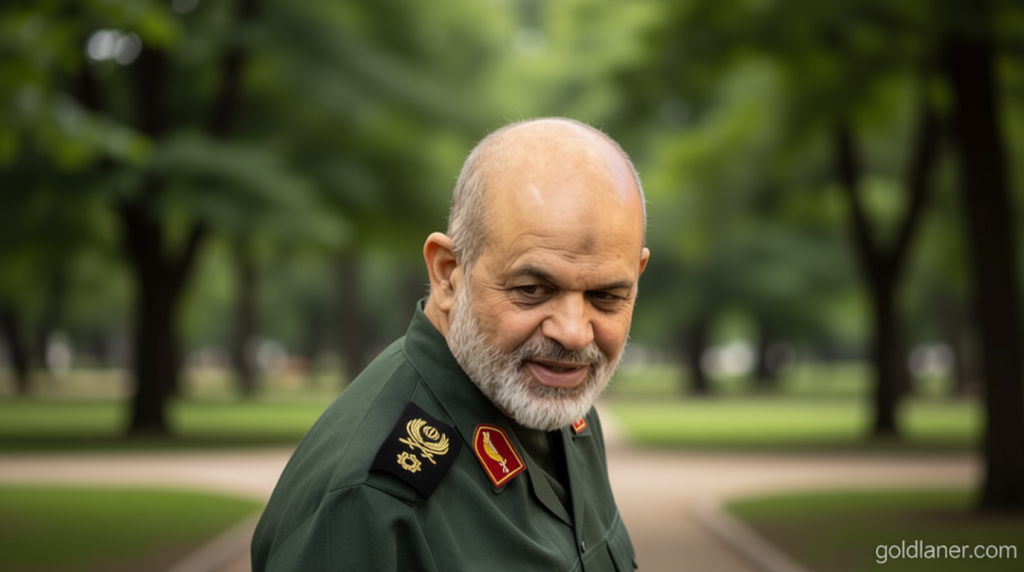
A Hardline General Wanted by Interpol Emerges as a Key Player in Iran War
A hardline general wanted by Interpol – With diplomatic talks over Iran’s escalating conflict at a crossroads, Brig. Gen. Ahmad Vahidi, a high-ranking Iranian commander sanctioned by the United States and listed as a wanted individual by Interpol, has taken a central role in shaping Tehran’s strategic direction. His ascent follows the death of his predecessor, Mohammad Pakpour, in a joint US-Israeli airstrike on February 28—the opening day of the war. Vahidi’s tenure as commander-in-chief of the Islamic Revolutionary Guard Corps (IRGC) has positioned him as a pivotal figure in Iran’s military and political decision-making.
The Shadow Commander
Vahidi, a staunch advocate for confrontation with Western powers, has been sanctioned by the US for his involvement in suppressing domestic dissent. Additionally, he is sought by Interpol for alleged ties to a bombing in Argentina over three decades ago. These credentials have solidified his reputation as one of Iran’s most uncompromising leaders, with experts suggesting his radical stance surpasses even that of Pakpour. “He is influential, but (he is) part of a system,” remarked Ali Vaez, Iran project director at the International Crisis Group. “Decisions are made in a consensual manner, and undoubtedly Vahidi has a very loud voice in the room.”
Despite his prominence, Vahidi rarely appears in public. However, recent images circulating in media outlets showed him meeting with Pakistan’s interior minister, a gesture that raised eyebrows. Iranian state media quickly refuted the claim, stating that the meeting had taken place in 2024 and that Vahidi was not present. This inconsistency highlights the challenges of tracking his activities, which are often conducted behind closed doors. While officials like Mohammad Bagher Ghalibaf, the parliament speaker, and foreign minister Abbas Araghchi serve as Iran’s public representatives, Vahidi is believed to be steering the nation’s hardline policies from the shadows.
Iran’s refusal to concede on major demands has kept negotiations in a stalemate. The latest proposal from Tehran, according to a confidential source, does not signal significant concessions on nuclear enrichment—a sticking point that has defined the conflict. Vahidi’s leadership has also seen the IRGC exert control over critical oil infrastructure, effectively blocking global supply chains. This move underscores his strategic importance in the ongoing war effort.
The Radical Ideology
Vahidi’s ideological foundation was forged through years of conflict and Western hostility. Born in 1958 in Shiraz, he joined the IRGC during the Iran-Iraq War, a period that shaped his commitment to revolutionary principles. Experts note that he is part of a small faction within the IRGC, a group that has remained resilient since the 1980s and continues to drive Iran’s militant policies. “He became a very important actor but within the systemic limitations the Islamic Republic has,” Vaez added, emphasizing that his influence is most pronounced during times of war.
Trump’s assessment of Iran’s internal divisions has been challenged by analysts. While the former president claimed the regime was fractured, the reality appears more complex. Vahidi, described as a “very dominant” and “radical” leader, is deeply invested in maintaining the principles of the Islamic Revolution. “You cannot agree on something without passing (it by) him,” said Danny Citrinowicz, former head of the Iran branch of Israel’s military intelligence. “He is among the people saying if we don’t get what we want, if Trump wants to go back to war, welcome.”
Trump’s recent statements suggest a looming decision. The US leader claimed to be on the brink of striking Iran again this week, warning that further aggression would reignite the conflict unless a deal is reached. Though he expressed willingness to await progress, the pressure to act remains intense. “We’re in the final stages of Iran. We’ll see what happens,” Trump told reporters on Wednesday. “We’ll either have a deal or we’re going to do some things that are a little bit nasty,” he continued. “But hopefully that won’t happen.”
Vahidi’s warnings echo Trump’s urgency. In a statement released on Wednesday, he declared, “If any further aggression is committed against the soil of Iran, that fire whose promise was previously given and remained confined within the framework of a limited regional war, this time will erupt into flames and transcend every border and domain.” On X, he added, “You will receive devastating blows,” according to Iranian media. These remarks reflect his determination to escalate the conflict if diplomatic efforts falter.
The IRGC’s role in the war has been central to Iran’s strategy. Since the conflict began, the organization has been at the forefront of military operations, with Vahidi as a key architect. His leadership has allowed Tehran to maintain a hardline approach, even as negotiations continue. The persistence of the IRGC’s influence suggests that decapitating Iran’s leadership through US-Israeli strikes has not yielded a more moderate regime. Instead, it has reinforced the dominance of a faction deeply rooted in revolutionary ideology.
The Uncertain Path Forward
While Vahidi’s radicalism is well-documented, his impact on the current negotiations remains unclear. The Institute for the Study of War (ISW) in Washington, DC, noted in April that Vahidi’s readiness to abandon talks implies his willingness to resume the war. However, Vaez argues there is no definitive evidence that Vahidi is obstructing progress. “How much of an obstacle he may be to reaching a deal with the US remains unclear,” he said, underscoring the need for further analysis.
Iran’s latest offer, according to insiders, maintains its core demands, particularly regarding nuclear enrichment. This position reflects the country’s resolve to avoid perceived concessions. Vahidi’s role in this stance is critical, as his influence extends beyond military operations to shaping the broader strategic narrative. His presence in the highest echelons of power suggests that the IRGC’s leadership is as formidable as ever, even in the face of international pressure.
As the war intensifies, Vahidi’s trajectory offers insight into Iran’s future. His actions, both in the battlefield and behind closed doors, highlight the enduring role of the IRGC in steering the nation’s policies. Whether this will lead to further escalation or a breakthrough in negotiations depends on the balance of forces within Iran and the effectiveness of external pressures. For now, Vahidi stands as a symbol of the country’s unyielding stance, a figure whose radical vision continues to shape the conflict’s direction.
