
Trump’s Beijing visit was more vibes than details. And Xi set the tone
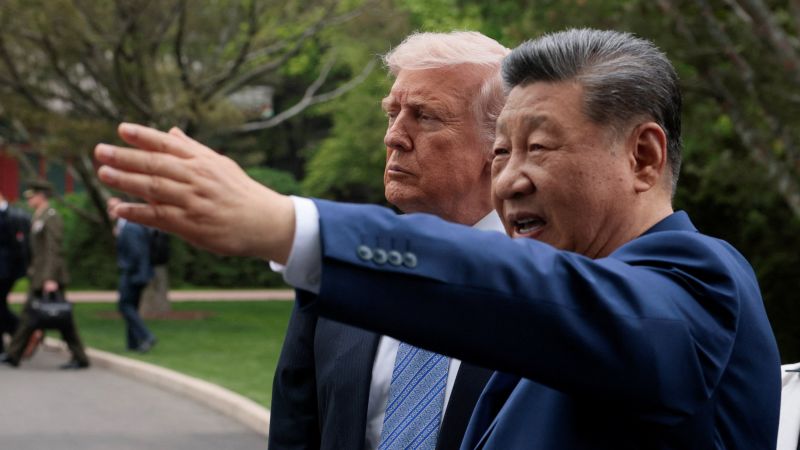
Trump’s Beijing visit was more vibes than details. And Xi set the tone
The diplomatic dance of power
Trump s Beijing visit was more – During his recent three-day trip to China, U.S. President Donald Trump’s interactions with Chinese leader Xi Jinping emphasized a strategic alignment over concrete agreements. While the visit lacked immediate breakthroughs on contentious issues like technology and trade, it served as a symbolic platform for Beijing to assert its global standing. Xi Jinping, who had anticipated a strong rapport, emerged as the clear beneficiary of the engagement, leveraging the moment to reinforce China’s position as a peer to the United States. The focus was less on tangible outcomes and more on cultivating a sense of mutual respect and partnership.
Trump’s arrival in Beijing was marked by a blend of optimism and diplomacy. He expressed confidence in the future of U.S.-China relations, stating that the partnership would shape “the most consequential” chapter in world history. This sentiment echoed during the state banquet, where both leaders exchanged praise, setting the stage for a collaborative tone. The event was meticulously orchestrated to highlight China’s cultural and political significance, with a military salute and a rare tour of Zhongnanhai, the Communist Party’s inner sanctum, underscoring the grandeur of the occasion.
Blending cooperation and competition
Despite the lack of binding agreements, the visit marked a shift toward a more cooperative dynamic. Beijing’s announcement of a new era of “constructive strategic stability” signaled a willingness to manage differences rather than escalate them. This concept, which Trump and Xi both endorsed, aims to balance collaboration with competition, fostering a framework where mutual interests prevail over friction. The phrase, though not directly repeated in the White House’s official summary, resonated with American diplomats who emphasized its importance in avoiding misunderstandings that could spark broader conflicts.
Xi Jinping’s ability to steer the narrative was evident. During their meetings, he made it clear that Taiwan remains a critical issue, a red line that could jeopardize the U.S.-China relationship. On the visit’s opening day, Xi warned Trump that poor handling of the Taiwan matter could put the entire partnership “in great jeopardy.” This message was reinforced by Trump’s public acknowledgment of the importance of the topic, as he told reporters aboard Air Force One that the discussion on arms sales to Taiwan had been “in great detail.” The American president pledged to “make a determination” on the issue soon, suggesting he had absorbed Xi’s concerns.
“Trump told reporters that the conversation about Taiwan was thorough, and he would soon decide on the arms sales to the island.”
Domestic and international calculus
For Xi Jinping, the visit was a calculated move to bolster China’s image as a global leader. By welcoming Trump with a display of prestige—featuring high-profile American CEOs and a ceremonial welcome—the Chinese leadership aimed to project a sense of equality. The presence of these CEOs, whom Trump described as being there to “pay their respect,” highlighted Beijing’s strategic positioning to influence U.S. policy. This deference from the world’s most powerful nation underscored China’s growing economic and political weight.
Internationally, the trip reinforced Xi’s vision of a multipolar world where China can challenge U.S. dominance. Domestically, it aligned with the Communist Party’s goal of portraying the nation as a stable, formidable force. The emphasis on cooperation over confrontation also played into China’s broader strategy to maintain momentum in its technological and geopolitical ascent. By avoiding a showdown on trade and tech issues, Beijing gained time to consolidate its influence without facing immediate retaliation.
Supply chains and strategic leverage
The U.S.-China trade war last year demonstrated the extent of Beijing’s leverage over global supply chains. China’s control of processed rare earths, a vital resource for high-tech industries, allowed it to exert pressure on the United States. This power was evident when the country tightened its exports of these materials to counter U.S. tariffs, showcasing how economic ties can be both a bridge and a battleground. While Trump’s visit did not resolve these tensions, it hinted at a more stable relationship, one where both sides recognize the importance of mutual benefit.
Strategic stability, as defined by Beijing, means a balance of power where cooperation is prioritized but competition is allowed. This framework could enable China to challenge U.S. actions in areas like trade and technology without immediate escalation. For instance, if the U.S. imposes new tariffs or restricts access to critical technologies, China might view these as disruptions to its vision of stability. However, the emphasis on dialogue could also prevent such moves from triggering full-scale conflict.
Looking ahead to the next chapter
As Trump’s visit concludes, attention turns to the upcoming visit by Russian President Vladimir Putin, which is scheduled for the coming days. This event will likely deepen the strategic alignment between Beijing and Moscow, further solidifying China’s role as a key player in global affairs. The U.S., meanwhile, must navigate the delicate balance between maintaining its alliances and engaging with China on terms that align with its own interests.
The visit’s legacy will depend on how the two leaders define their shared goals. While Xi Jinping’s vision of stability prioritizes China’s territorial integrity and economic dominance, Trump’s approach reflects a pragmatic desire to stabilize trade and avoid unnecessary confrontation. This dynamic could lead to a period of calm, but it also sets the stage for future disputes. The success of the trip will be measured not only by the agreements reached but by the long-term alignment of their strategic priorities.
For the United States, the trip highlighted the need to adapt its approach to China. The focus on Taiwan as a central issue suggests that Washington must tread carefully to avoid provoking Beijing. Meanwhile, China’s ability to host Trump with such grandeur and precision reinforces its confidence in its global standing. The visit may have been short on specifics, but it delivered a clear message: the U.S.-China relationship is evolving into one of managed cooperation, where the stakes are high but the dialogue remains open.
As the world watches, the outcomes of this visit will shape the next phase of the U.S.-China dynamic. The balance between competition and collaboration is precarious, but the mutual acknowledgment of strategic stability offers a path forward. Whether this will lead to lasting peace or new tensions depends on how both nations define their roles in the global order—a question that will be debated for years to come.
