
Parents released from Arizona DHS facility reunite with their teen son dying of cancer
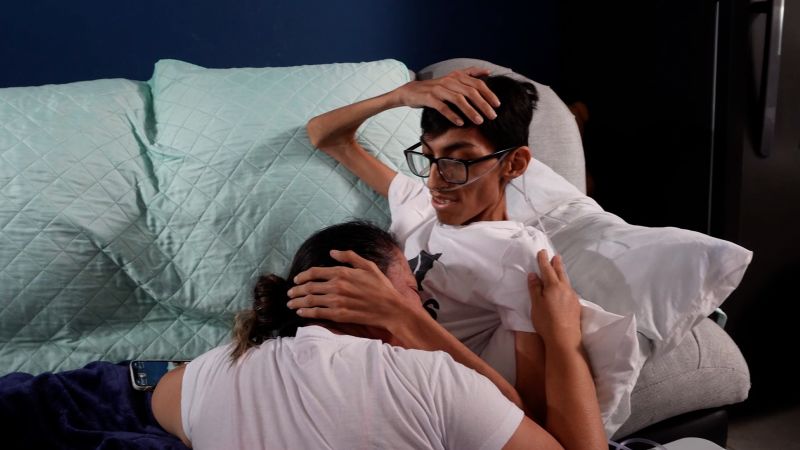
Parents released from Arizona DHS facility reunite with their teen son dying of cancer
Parents released from Arizona DHS facility – Kevin González, an 18-year-old U.S. citizen with terminal colon cancer, was finally reunited with his parents after they were released from a Department of Homeland Security detention facility in Arizona. The emotional meeting took place in Durango, Mexico, just hours after the couple, Isidoro González Avilés and Norma Anabel Ramírez Amaya, were freed by a U.S. district judge. Their son, who was born in the United States but raised in Mexico, had fallen ill while visiting family in Chicago during the holiday season, according to reports from CNN affiliate WLS.
A journey of separation and hope
Kevin’s illness was discovered during a brief visit to his relatives in the Midwest, where he had traveled for Christmas. Diagnosed with stage 4 colon cancer, he has been undergoing treatment in Chicago, a city far from his family’s home in Mexico. The parents, Mexican nationals, had previously faced deportation from the U.S. after entering the country unlawfully. Their efforts to reunite with Kevin began in April, when they attempted to reenter the United States, only to be arrested near Douglas, Arizona, on April 14, as confirmed by the Department of Homeland Security.
After weeks of detention, the couple was deported back to Mexico, cutting off their son’s access to his parents during a critical period of his illness. Yet, their determination to see him again led to a breakthrough. A U.S. district judge in Tucson ordered their release on Thursday, allowing them to cross into Mexico and spend what could be their final days together. Kevin, who has been fighting for his life, flew to Durango around a week prior, hoping to reunite with his family before his death.
“What I want to say to people is thank you for helping my family to be able to have the choice,” the 18-year-old, with a gaunt appearance, told CNN in Durango shortly after reuniting with his parents.
Avilés and Amaya, who had been separated for months, embraced tightly upon their arrival in Mexico. “These tears are from emotion, from seeing him again, from touching him again, from telling him how much I love him,” Amaya said, holding her son close. The parents described the experience of being detained as a cruel test of their will. During their time in custody, Avilés said they were treated “like criminals” and physically restrained with chains at their hands and feet for court appearances.
Kevin’s parents had also been denied humanitarian visas, a decision the Department of Homeland Security attributed to their prior unlawful presence in the U.S. They had applied for B1/B2 visas, temporary nonimmigrant permits, but were rejected due to their previous entries into the country. Avilés, who works as a taxi and truck driver in Durango, shared his frustration: “We sought every option. They denied us visas. They detained us at the border.”
Legal challenges and emotional stakes
According to DHS records, Avilés was first deported in 2011 after being charged with multiple offenses, ranging from minor to serious. The details of these charges remain unclear, as the agency did not specify when or where they occurred. Similarly, Amaya had entered the U.S. illegally in 2005 and was later removed back to Mexico. Despite these past infractions, the couple believed their bond with Kevin justified their return to the United States.
During their time in Arizona, the family faced immense emotional strain. Kevin’s father, Avilés, showed his tattoos, which bore the names of his son and Saint Jude, the patron saint of lost causes. “I have a lot of faith in him, and I know he is going to heal from this and from many more things,” he added, expressing confidence in his son’s resilience. Kevin, in turn, expressed gratitude for the opportunity to be with his parents, stating he would celebrate Mother’s Day Sunday with “lots of hugs, over and over.”
“We managed to make my son’s dream come true: to be with him again, to love him, to give him the love we could not give him during these months when he was not with us,” said Avilés after the reunion.
The couple’s experience highlights the complexities of U.S. immigration policy, particularly for families with ties to both countries. Their son’s condition, which has progressed to an advanced stage, underscores the urgency of their situation. While the DHS has defended its actions, critics argue that separating families during a time of crisis exacerbates their suffering. Rep. Delia Ramirez, representing the district where Kevin receives treatment, condemned the agency’s decision in a statement Thursday.
“Rejecting visas to Kevin’s family did not protect our communities,” Ramirez said. “Putting families through the pain, stress, and fear of separation is not making our loved ones safer. Detaining immigrants for months in for-profit, inhumane detentions is not securing our nation.”
Kevin’s case has also drawn attention to the broader issue of deportations affecting families with members in dire medical need. An exclusive report by CNN revealed that the Trump administration had moved to expedite the removal of migrant children in U.S. custody, a policy that has intensified scrutiny on the treatment of families during immigration processes. The González family’s story serves as a poignant reminder of the human cost of such measures.
As Kevin’s condition worsens, the reunion with his parents offers a rare moment of comfort. The couple’s journey—from deportation to detention to eventual release—has been marked by hardship, but their determination has allowed them to share these final days. Their emotional relief was evident as they reunited, with Avilés expressing pride in his son’s strength. “Kevin is very strong,” he said, his voice trembling with emotion.
The case has sparked discussions about the balance between immigration enforcement and humanitarian considerations. While the DHS maintains that its actions are necessary to uphold border security, the family’s plight illustrates the personal toll of such policies. Kevin’s parents, now free to be with him, are focusing on creating memories that will last beyond his illness. As they prepare for Mother’s Day, their son’s words echo the hope they’ve clung to during this challenging time.
Ever Hernandez and CNN’s José Álvarez, Graham Hurley, and Sarah Dewberry contributed to this report.
