
Ahead of US-China summit, Taiwan’s opposition leader says island can embrace both powers
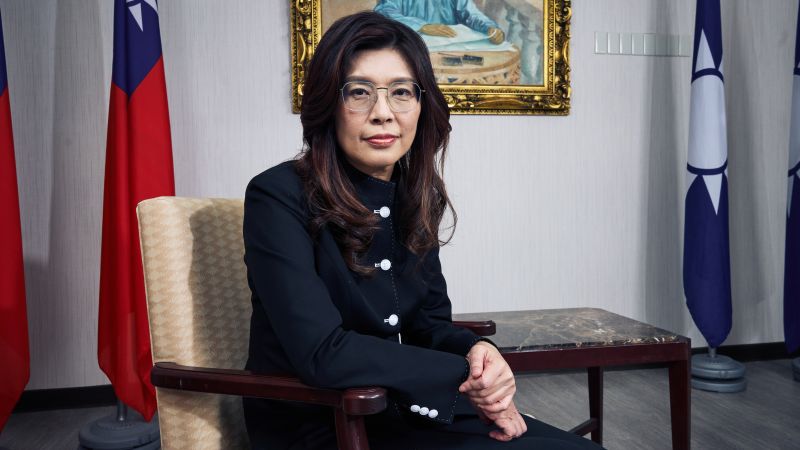
Ahead of US-China Summit, Taiwan’s Opposition Leader Pushes for Balanced Approach
Ahead of US China summit Taiwan – As the US-China summit draws near, Taiwan’s opposition leader has proposed a strategic shift that seeks to reconcile the island’s ties with both global superpowers. In a recent statement, she highlighted the importance of maintaining a dual engagement model that allows Taiwan to strengthen its alliances with the United States while also fostering stability with China. This vision comes amid growing discussions about how Taiwan should position itself in the face of rising geopolitical tensions, with the summit serving as a critical juncture for shaping the island’s future role in regional security and diplomacy.
Cheng Li-wun’s Diplomatic Strategy
Cheng Li-wun, a key figure in the Kuomintang (KMT), has long advocated for a more pragmatic approach to Taiwan’s relationship with China. Her recent remarks, shared during a CNN interview, reflect a growing consensus among some political factions that military expansion alone cannot secure Taiwan’s sovereignty. “Engagement with China is vital,” she explained, “but it should complement, not replace, our commitment to self-defense.” The KMT’s recent legislative decision to trim defense spending by a third underscores the delicate balance between aligning with US strategic priorities and avoiding perceived overdependence on Washington.
While the revised defense package retains significant US arms procurement, it reduces funding for local military programs, including advancements in the drone industry. This compromise has sparked debate about Taiwan’s long-term security, with critics warning that the cuts could weaken its ability to deter a Chinese attack. Cheng, however, argues that the summit offers a unique opportunity to demonstrate Taiwan’s capacity to serve as a stabilizing force in the Indo-Pacific, rather than a pawn in a US-China rivalry. “The US-China summit is not just about military readiness,” she said, “but about building trust and shared goals.”
Historical Shifts and Political Realignment
Cheng’s evolving stance marks a departure from the KMT’s traditional stance of one-China policy. Her recent meeting with Chinese President Xi Jinping in Beijing, the first high-level dialogue between the KMT and Beijing’s Communist Party in over a decade, highlights this transformation. The encounter, held near the bronze statue of Chiang Kai-shek, symbolizes a bridge between Taiwan’s democratic aspirations and China’s diplomatic ambitions. “Our differences remain profound,” Cheng acknowledged, “but dialogue is the only path to lasting peace.”
This political realignment has significant implications for Taiwan’s foreign relations. While the KMT continues to champion Taiwan’s sovereignty, its recent actions suggest a willingness to embrace economic and strategic cooperation with China, provided it aligns with broader international interests. The US-China summit, therefore, represents a pivotal moment for the island to assert its role as a key player in the region, balancing its aspirations for independence with the need for diplomatic flexibility.
Global Geopolitical Implications
The US-China summit is poised to reshape Taiwan’s strategic position in the Indo-Pacific, with the island’s defense posture being a central topic of discussion. Analysts note that the summit could determine whether Taiwan is viewed as an independent entity or a strategic asset for the United States in its rivalry with China. Cheng Li-wun’s emphasis on a balanced approach aims to position Taiwan as a cooperative partner rather than a frontline opponent. “The summit is a chance to redefine Taiwan’s role,” she said, “as a bridge between two great powers rather than a battleground.”
As the summit approaches, the debate over Taiwan’s future intensifies. While the US pushes for increased defense commitments, China seeks to reinforce its claims over the island through economic and political pressure. Cheng’s leadership provides a framework for navigating this complexity, offering a vision that prioritizes dialogue, mutual respect, and long-term stability. Her strategy, though controversial, reflects a broader effort to ensure Taiwan remains a vital player in the region without becoming a flashpoint in the US-China rivalry.
