
Election Officials Say They Can’t Comply With New Mail Ballot Rules
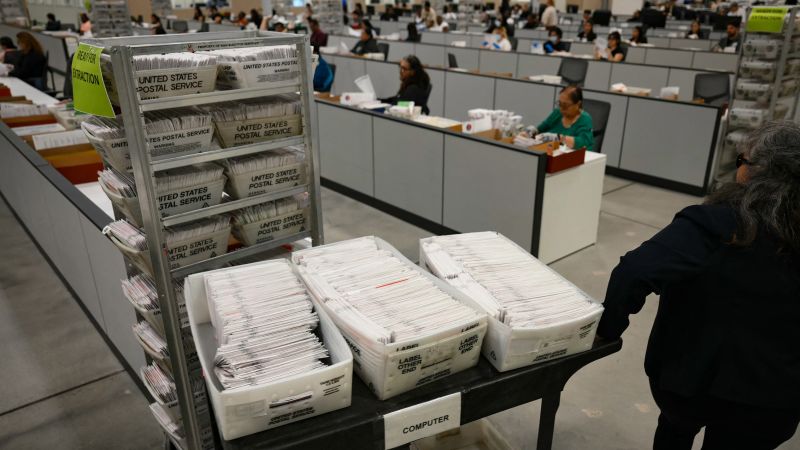
Goldlaner.com – Election officials say they can’t meet the deadlines embedded in the Postal Service’s finalized ballot-handling rule, and the warning is coming from the very counties that must physically mail ballots within weeks. In Jefferson County, Colorado, clerk Amanda Gonzalez oversees the dispatch of roughly 433,000 mail ballots to registered voters. She reports that USPS has failed to answer fundamental operational questions about how the new requirements would function on the ground, leaving county staff with no executable plan for the remaining days before envelopes leave the building.
Why the Timeline Has Collapsed
Court filings and direct testimony from election administrators describe a situation in which no realistic implementation schedule exists. Even if states could source the multi-million-dollar expenditures the agency anticipates, the operational window has effectively shut. Ballot-envelope manufacturers have told county and state offices that there is not enough time to print the millions of redesigned envelopes the rule mandates. Filings go further, noting that adequate paper stock may simply not exist in the required quantities.
“We’re weeks away from ballots going out and USPS still can’t answer basic questions about how this is going to work. Clearly they don’t even know,” Gonzalez said. “These aren’t minor implementation details – they determine whether millions of eligible voters get their ballots.”
Gonzalez, who is also running as a Democratic candidate for Colorado secretary of state, cautioned that the uncertainty itself constitutes an election risk even if courts ultimately block the rule. Election officials say they can’t absorb that kind of ambiguity days before ballots must be in the mail.
What the Finalized Rule Demands
The Postal Service’s plan, released last month, would require states and local jurisdictions to route mail-voter lists through a newly created digital platform called the U.S. Federal Ballot Mail Portal. Local administrators would need individual authorization and training on a system never used in an election cycle. Staffing estimates project thousands of training hours per jurisdiction. The agency has stated that any state or local program failing to meet portal requirements will not have its ballots delivered. The practical consequence, as county clerks frame it, is mass disenfranchisement touching tens of thousands of voters in affected areas.
The administration has described the change as “modest.” County-level administrators describe it as a structural overhaul of a decades-old process, compressed into a timeline with zero margin for error.
A Whistleblower Report Adds Uncertainty
A whistleblower report released Tuesday from within the Postal Service deepened the confusion. According to the report, the agency allotted only a handful of days to test a system assembled in a haphazard fashion for ingesting the voter data the plan demands. The report also alleged that the agency intended to reject entire batches of ballots if even a single envelope failed to match portal-uploaded information. In jurisdictions where batches contain thousands of ballots, that design choice could strip ballot access from tens of thousands of voters over one mismatched envelope.
A Postal Service spokesperson told reporters Tuesday that the agency is “carefully reviewing” the whistleblower’s concerns and reiterated that the portal was built over months to give election officials “a simple, wecure, and efficient way to share lists of individuals receiving ballots by mail.” The spokesperson added that the work has been conducted consistently with court orders and that the agency shares a common interest in protecting voters regardless of political affiliation.
The Legal Landscape
The mandates are currently suspended under a temporary federal court order, which the administration is appealing. The dispute has already reached the Supreme Court once; the justices granted the administration permission to finalize its rule. Now that the final plan is public, election officials expect another trip to the Court. The original Executive Order was signed in March, during the primary season, when most state and county election offices were focused on administering those contests rather than parsing postal regulations.
Frequently Asked Questions
What exactly does the new USPS rule require of local election offices? It requires jurisdictions to upload mail-voter lists through the U.S. Federal Ballot Mail Portal, train staff on the platform, and use redesigned ballot envelopes. Failure to comply means USPS will not deliver that jurisdiction’s ballots.
Is the rule currently in effect? No. A temporary federal court order has suspended the mandates while the administration appeals. The final rule text is public, but its operational requirements are not yet enforceable.
How many voters could be affected if the rule takes effect without adequate preparation? Election officials estimate the risk touches tens of thousands of voters in affected areas, depending on batch sizes and the number of jurisdictions that fail to meet portal requirements in time.
What is the status of the Supreme Court involvement? The Court previously granted the administration permission to finalize the rule. With the final plan now public, election officials anticipate another petition for review if lower courts again block implementation.