
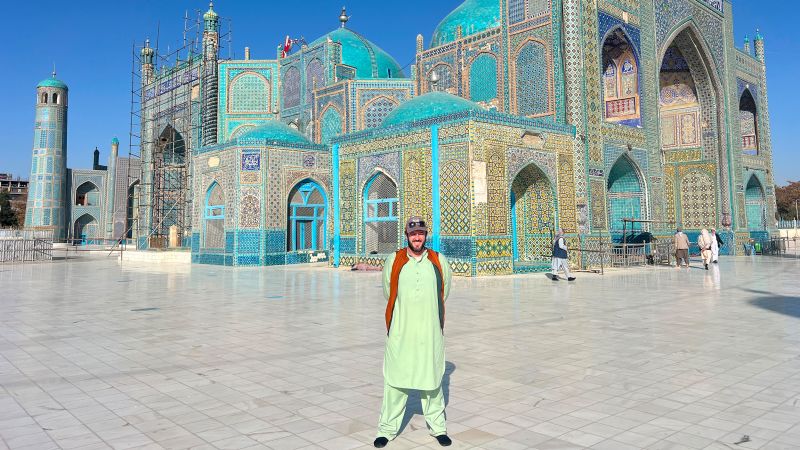
When Vacation Means Visiting a War Zone: The Quiet Boom of Dark Tourism
Goldlaner.com – Scroll through any travel feed today and you will find sun-bleached pool shots, mountain summits, and coastal sunsets. But tucked between those polished images is a growing stream of posts taken in places most people associate with conflict bulletins and travel advisories. A traveler snaps a photo outside a crumbling checkpoint in Syria. Another shares a sunset from a border town in a country the State Department has flagged with its highest warning. These are not stunts or dare clips. They are the latest expression of what the travel world now calls dark tourism — a practice that has quietly shifted from Victorian parlor curiosity to a full-fledged niche industry.
A Victorian Picnic That Became a Travel Category
The roots of the phenomenon stretch back further than most modern tourists realize. In July 1861, hundreds of Washington residents loaded their carriages with picnic baskets and opera glasses, then drove out to the Virginia countryside to watch the first major engagement of the American Civil War unfold at Manassas. One contemporary writer later labeled the outing “the worst picnic in history.” The spectacle never caught on as a regular pastime. Yet the impulse behind it — the desire to witness danger firsthand, to stand close to history’s most violent chapters — has resurfaced in a very different cultural moment.
Two Distinct Flavors of the Same Impulse
Travel researchers and industry observers generally split dark tourism into two categories. The first involves visiting countries that are, by current metrics, genuinely hazardous. North Korea, Afghanistan, and Haiti all carry “do not travel” designations from the US Department of State, yet each draws a steady trickle of independent travelers who want to see those places with their own eyes. The second category centers on locations where a specific notorious event took place: the compound at Jonestown in Guyana, where a mass murder-suicide unfolded in 1978, or the execution grounds scattered across Cambodia’s Killing Fields, where hundreds of thousands were killed during the Khmer Rouge regime of the late 1970s.
For a younger cohort of travelers, these grim destinations also function as high-impact content for social platforms. A carefully framed photograph from a radiation-affected landscape or a border checkpoint becomes curated material for Instagram and Facebook feeds, converting historical trauma into scroll-stopping imagery. The line between genuine engagement and performative spectacle is, predictably, contested.
History, Authenticity, and the Chad Encounter
Not every traveler drawn to these destinations is chasing a viral post. Arnaud Kirby, a frequent independent traveler based in Luxembourg, frames his motivation primarily through the lens of historical inquiry.
“For me, the main motivation to visit places that are often considered dangerous — such as Syria, Libya or Sudan — is largely connected to my interest in history. Many of these countries have incredibly rich and complex historical backgrounds, and being able to see those places in person gives a completely different perspective compared to simply reading about them.”
Kirby adds that cultural curiosity and the appeal of low-traffic destinations play a role. Fewer fellow tourists, he argues, means more unmediated contact with local residents and a less packaged experience of daily life.
One recent itinerary took him to Chad, a landlocked nation in central Africa that receives only a small number of visitors annually. Both the US State Department and the British Foreign, Commonwealth and Development Office advise against all travel to the country, citing terrorism, civil unrest, crime, kidnapping, and unexploded ordnance. Kirby nonetheless spent time in the capital, N’Djamena, and in Zakouma National Park, and reports that he encountered none of the cited hazards.
“Chad was an amazing experience. What really stood out to me was how friendly the people were. The locals were incredibly kind and welcoming.”
The wildlife proved equally memorable. At Zakouma, animals had not grown accustomed to tourist vehicles the way they have in more heavily visited parks. Kirby recalls a lone elephant approaching his car and pressing its trunk against the windshield, as though trying to decipher the machine.
Pushing Back Against the Narrative
Will Aswell, a British globetrotter who requested a pseudonym because of concerns about future travel permissions, has visited Iran, North Korea, Ukraine, and Iraq without ever feeling genuinely unsafe.
“You’re much more likely to be attacked in a big US city than you are in any obscure authoritarian country. The murder rates show this over and over again.”
For Aswell, the pull is partly intellectual: he wants to understand what lies behind the headlines and to push back against what he sees as dehumanizing portrayals of nations whose perspectives differ from those of the UK and the US.
“For example, realizing the depth of kindness and hospitality in the Islamic world, having been told my whole life how bad and evil these countries are, was something that resonated deeply with me. Travel is about understanding and experiencing differences and allowing yourself to be impacted and changed by it.”
The Danger Is Real
Neither traveler disputes that risk exists. Aswell’s 2025 passage through Sinaloa state in Mexico — a region long plagued by cartel violence — turned sharply when members of the Jalisco New Generation Cartel pulled him from a bus at gunpoint in the middle of the night. He says he had to surrender a substantial sum of money before being released.
“I was stupid to be traveling at night,” he concedes.
The episode underscores a point that dark-tourism advocates themselves make: the appeal of these destinations is inseparable from their unpredictability. What draws a traveler to a place the State Department has flagged is precisely the uncertainty that makes the experience feel unscripted, unmediated, and, in the language of the industry, authentic. Whether that trade-off is wise or reckless depends on the traveler, the season, and the particular road taken that night.
Related Reading
Frequently Asked Questions
What is Meet the travelers who vacation?
Meet the travelers who vacation is the main topic of this guide. The article explains the context, practical details, and next steps readers should understand.
Why does Meet the travelers who vacation matter?
Meet the travelers who vacation matters because readers are looking for a useful answer, not just a short summary. Good content should match search intent and help them decide what to do next.