Why did veterans of Israel’s most famous secret operation boycott its commemoration?

Why Did Veterans of Israel Skip Entebbe Commemoration?
Why did veterans of Israel s most – Why did veterans of Israel’s legendary Entebbe operation choose to boycott its 50th anniversary? For Matan Vilnai, the retired general who served as deputy commander of the 1976 raid, the milestone should have been a moment of national pride. Instead, he joined dozens of fellow participants in staying away from the official ceremony. Speaking with CNN, Vilnai questioned the timing: “What exactly is there to celebrate – an operation from 50 years ago? I haven’t celebrated since October 7.” He emphasized the contrast between current struggles and the festivities: “We have thousands of soldiers fighting right now, thousands of reservists serving – and they’re celebrating?”
The Historic Rescue Mission
On July 4, 1976, Israeli commandos undertook an extraordinary journey, flying nearly 2,500 miles through hostile airspace. Under the cover of darkness, they landed at Entebbe airport in Uganda. Within one hour, they freed 102 hostages held by Palestinian and German hijackers who demanded the release of dozens of convicted terrorists. The aircraft had been diverted from its Tel Aviv-to-Paris flight and forced to land in Entebbe.
The daring assault resulted in the deaths of three hostages, including the operation’s 30-year-old leader, Yonatan (Yoni) Netanyahu, who became a beloved national hero after his death. Originally called Operation Thunderbolt, the mission was renamed in Hebrew to honor Yoni: “Operation Yonatan.” Entebbe became a cornerstone of Israel’s national story, symbolizing a nation’s willingness to go anywhere and risk everything to save its people.
Why Did Veterans of Israel Turn Away?
The Entebbe legacy also launched another chapter: that of Benjamin Netanyahu, Yoni’s younger brother, who entered public life after his sibling’s death and eventually became Israel’s longest-serving prime minister. Now, half a century later, this heritage carries new complexity, reflecting Israel’s deep internal divisions.
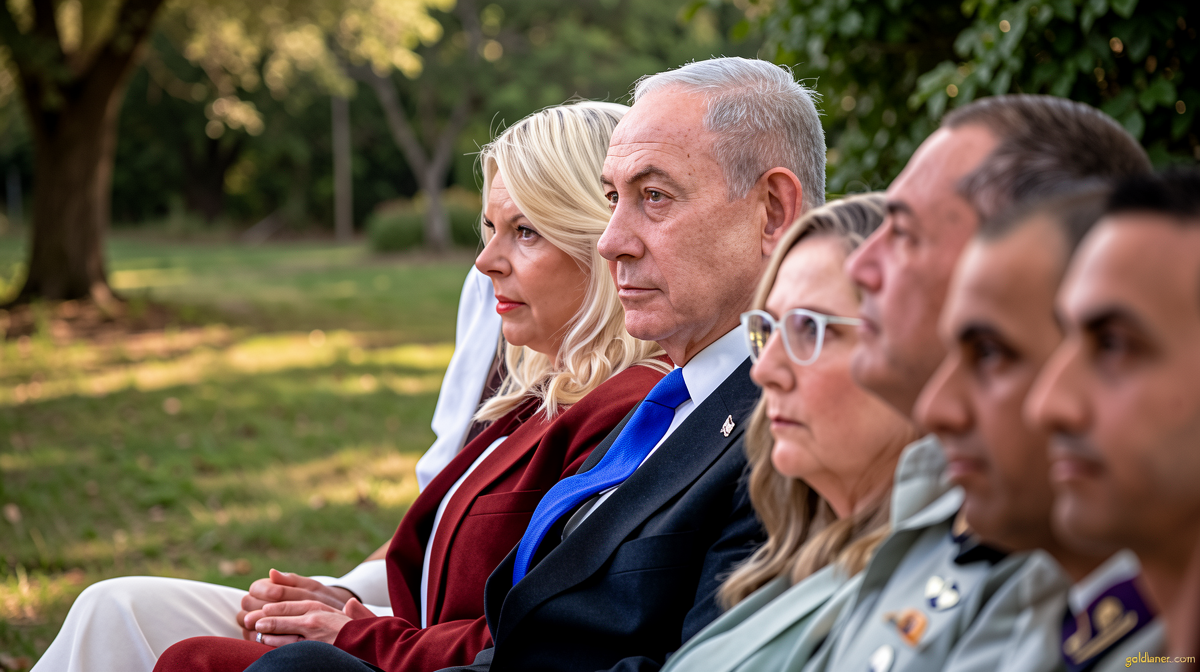
During Sunday’s official ceremony hosted by President Isaac Herzog, dozens of veterans—senior officers and commando troops who stormed the airport that night, plus some rescued hostages—skipped the event. Their absence signaled protest against the guest of honor: Prime Minister Benjamin Netanyahu.
“There isn’t a day I don’t think about Yoni, there isn’t a day that I don’t consult with Yoni,” Netanyahu declared at the ceremony, linking the Entebbe rescue to Israel’s ongoing campaign against Iran.
The 1976 mission, he argued, “turned the impossible into possible” and proved that terrorism requires forceful response. “This is what we are doing. We are systematically crushing the Iranian axis of evil, who tried to advance a plan to destroy Israel.”
Yet most men who once fought alongside his brother remained absent. In an open letter, the veterans stated: “We refuse to serve as a window dressing,” charging Netanyahu with “abandoning” Israeli hostages seized by Hamas on October 7, 2023, and permitting extensive draft exemptions for ultra-Orthodox men while reservists endure repeated combat deployments across several fronts.
Uri Sagi, a former military intelligence chief who led Golani forces during the 1976 raid, explained his decision on social media: “This is a matter of conscience.” Benny Davidson, rescued at age 13 from Entebbe, also declined attendance, calling the ceremony “a display that covers a collapse of values and leadership.” He organized a modest protest outside the presidential residence instead.
The growing divide between Netanyahu and his brother’s former comrades surfaced publicly in 2023. During peak demonstrations against the judicial overhaul, Entebbe squad members demonstrated at Ben Gurion airport, arriving in black Mercedes vehicles similar to those the commandos used on the Entebbe tarmac. “Back then we set out on ‘Operation Yonatan’; today we embark on ‘Operation Benjamin,'” they proclaimed, framing their action as a renewed rescue mission targeting “a prime minister who has been ‘kidnapped’ by extremists, along with an entire country racing toward a dangerous regime change.”
The post-October 7 war intensified these tensions, with several Entebbe veterans participating in weekly rallies urging Netanyahu to conclude hostilities and negotiate a hostage release agreement.
“The Entebbe legacy is far from unified. Each of us has their own reasons, but we,” Vilnai concluded.