
Too ugly, too noisy, too… American? France’s great air con debate
Too Ugly, Too Noisy, Too… American? France’s Great Air Con Debate
Too ugly too noisy too American – France is once again preparing for a heatwave, with scorching temperatures set to return this week. The nation, still reeling from the previous wave of extreme heat, is witnessing a surge in demand for air conditioning as people seek relief from the oppressive heat. This week, scenes of chaos unfolded at several Lidl stores across the Paris region, where customers lined up to secure cooling units. In Aubervilliers, a suburb of the capital, the frenzy led to a dramatic moment when the doors gave way under the pressure of the crowd, sparking disputes among shoppers. One individual recounted the incident to *Le Parisien*, stating, “
I saw people get trampled.
” Another added, “
I was in shock, I got shoved around in every direction, and unfortunately I didn’t leave with an AC unit.
”
Heatwave Escalates Demand for Air Conditioning
The public’s desperation for cooling is evident as stores become battlegrounds for the limited supply of air conditioners. With only around 24% of French households equipped with AC, according to France’s energy transition agency, the situation has grown increasingly dire. This figure has risen from 18% just two years ago, yet it remains significantly lower than the 50% seen in neighboring Italy. For many, the lack of access to cooling systems has forced them to take matters into their own hands, turning shopping into a high-stakes competition for comfort. Alexia, a 26-year-old resident on the outskirts of Paris, described her experience of rushing to purchase an AC unit before they were all sold out. “
All the air conditioners I had seen to potentially buy were out of stock. So I rushed to get another one before there was absolutely none left.
” Her story reflects a growing trend of people prioritizing immediate relief over long-term plans.
Cultural Resistance to Air Conditioning
France’s reluctance to embrace air conditioning is deeply rooted in its cultural identity. For decades, the country has associated the appliance with American influence, viewing it as a symbol of foreign excess. This perception has been reinforced by a longstanding belief that conditioned air can compromise health, with some arguing that it leads to respiratory issues or other ailments. Instead, traditional French architecture relies on thick stone walls and shutters to create natural coolness, a method that sufficed in milder summers. However, as temperatures rise, this approach is being challenged. The June heatwave, which claimed over 2,000 excess deaths in just six days, has forced a reassessment of France’s cooling strategies. Despite this, the debate over air conditioning continues to divide the public, with many questioning whether it’s worth the trade-offs.
Regulatory Hurdles and Urban Challenges
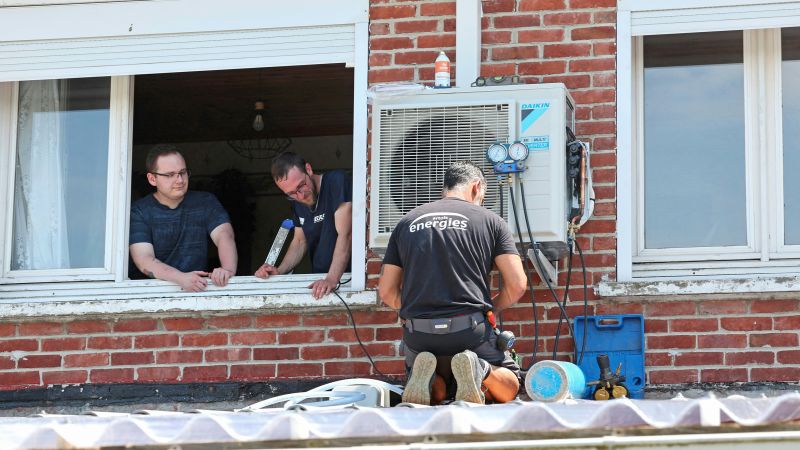
The installation of air conditioning units in France is often complicated by bureaucratic hurdles. Historic buildings, which form the backbone of Paris’s skyline, are particularly resistant to changes. Heritage regulations frequently prevent residents from adding exterior condenser units, as they aim to preserve the city’s uniform architectural aesthetic. Most of these structures were built during the grand transformation led by Georges-Eugène Haussmann under Napoleon III, and their preservation is seen as a priority. In co-owned buildings, approval from the co-ownership body is required before any fixed AC unit can be installed, and unauthorized setups may be dismantled. These rules, while preserving historical charm, have contributed to the slow adoption of air conditioning in the country.
Political Implications of the Cooling Crisis
As the heatwave intensifies, air conditioning has become a key issue in France’s political landscape. With the 2027 presidential election approaching, the debate is gaining momentum. Marine Le Pen’s National Rally has emerged as the most vocal proponent of widespread AC adoption, advocating for a “plan clim” to install units in schools and hospitals. The party also proposes $23 billion in government-backed, interest-free loans to assist 30 to 40 million households in affording cooling systems. On the left, opinions are more divided. The Greens, once staunch critics of air conditioning, are beginning to shift their stance, with party leader Marine Tondelier acknowledging the necessity of cooling in certain public spaces. Meanwhile, Jean-Luc Mélenchon of the hard-left France Unbowed party has cautioned against overreliance on AC, warning that universal installation “means causing more harm.” The government finds itself in a delicate position, approving emergency AC units for hospitals while striving to maintain France’s insulation-first philosophy.
Environmental Concerns and Energy Mix
The environmental impact of air conditioning remains a central point of contention. Critics argue that the appliance contributes directly to climate change through its energy consumption. However, France’s energy mix complicates this argument. Nearly 95% of the nation’s electricity comes from low-carbon sources, with nuclear power supplying approximately two-thirds of the grid. This means that running an air conditioner in France has a much smaller carbon footprint compared to countries like Poland or Germany, where fossil fuels dominate. Despite this, the debate persists, with some advocating for a more sustainable approach to cooling. The Greens, while softening their stance, still emphasize the need to balance energy use with environmental goals. As the heatwave demonstrates the urgency of cooling, the question remains: will France’s cultural and regulatory resistance to air conditioning finally give way to practical necessity?
Public Sentiment and Long-Term Shifts
The recent heatwave has not only exposed the limitations of France’s current cooling infrastructure but also highlighted the growing public sentiment in favor of air conditioning. With thousands of schools closing last week due to unbearable classroom temperatures, the demand for cooling has reached new heights. While the government has approved temporary measures to address the crisis, the long-term debate over air conditioning continues. The Greens’ motion of no confidence against the government’s heatwave response underscores how deeply politicized the issue has become. Yet, as the weather patterns shift and summers grow increasingly severe, the French public is beginning to see the value of air conditioning in everyday life. For many, the choice between comfort and tradition is becoming harder to ignore, especially as the country grapples with the reality of a hotter future.
The heatwave has sparked a broader conversation about France’s relationship with technology and its historical aversion to American-style conveniences. While some view air conditioning as a necessary adaptation, others cling to the idea that it is an unnecessary addition to life. The debate reflects not just a practical struggle for comfort, but also a cultural identity crisis. As temperatures rise, the question of whether France will fully embrace air conditioning—or resist it one more time—remains unanswered. The streets of Paris, now filled with frantic shoppers, serve as a microcosm of this national dilemma, where the clash between tradition and modernity is playing out in real time.
France’s journey toward air conditioning adoption is emblematic of a larger trend in Europe. As record-breaking heatwaves become more frequent, the continent’s traditional reliance on passive cooling methods may soon be tested. The current crisis has exposed vulnerabilities in the French energy grid and urban planning, prompting a reevaluation of long-held beliefs. While the country has made progress in increasing AC access, the pace of change remains slow. For now, the French public continues to balance the need for cooling with the desire to maintain their cultural heritage, a tension that will likely define the next phase of this evolving debate.
