
This city had a flooding problem. So it turned to an animal that had been extinct there for 400 years
This City Faced Flooding. A Bold Idea: Bring Back Beavers
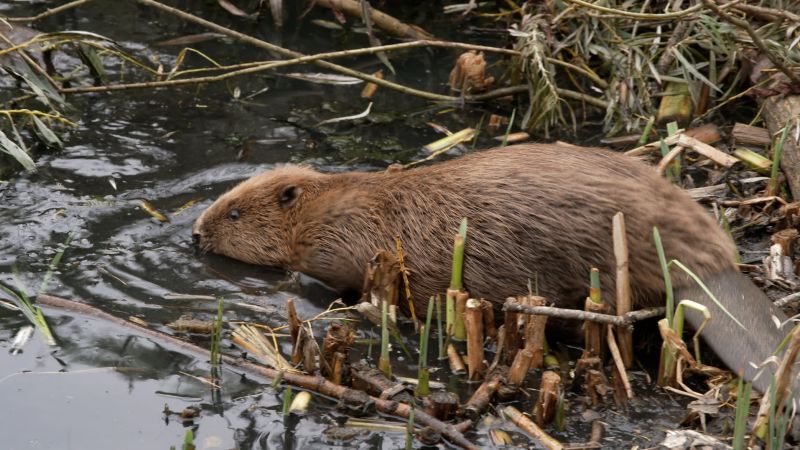
This city had a flooding problem – Nestled near a McDonald’s and a commercial strip, just a short distance from the hum of traffic and the haze of pollution, a quiet transformation is taking place in Ealing, a district of West London. What was once a vulnerable stretch of land prone to flooding during storms is now home to a small but impactful group of beavers. These furry rodents, long absent from the UK for over four centuries, are playing a pivotal role in reshaping the area’s relationship with water.
A Forgotten Space Revived
The Ealing Beaver Project, spearheaded by Sean McCormack—a veterinarian and conservationist—has turned a neglected 24-acre parcel of land called Paradise Fields into a thriving ecosystem. Previously, heavy rains would turn the neighborhood into a waterlogged zone, with streets submerged and the nearby Greenford tube station at risk. For years, local officials had debated traditional solutions, like constructing concrete reservoirs or channeling water through engineered systems. But McCormack and his team proposed a different approach: reintroducing beavers, whose natural abilities could create sustainable, adaptive solutions.
“Why don’t we try a nature-based solution?” McCormack said. “Why don’t we bring back beavers?”
The decision to revive the beaver population was not made lightly. These semi-aquatic creatures, once hunted for their fur, meat, and scent glands—used for flavoring and perfumes—had disappeared from the UK around 400 years ago. Their return, however, has sparked renewed interest in rewilding as a way to combat the growing challenges of climate change. With storms intensifying and extreme weather becoming more frequent, the idea of harnessing natural processes to stabilize landscapes is gaining traction.
The Engineering Power of Beavers
Beavers are often dubbed “nature’s engineers” for their remarkable ability to shape wetlands. Their strong, iron-tinged teeth, which glow with a warm orange hue, allow them to gnaw through trees and logs with precision. Using these materials, they construct dams that create pools and slow water flow, offering dual benefits: protection from predators for themselves and a natural buffer against flooding for humans. Emily Fairfax, a geography professor at the University of Minnesota, explained the broader impact of their work. “These canals function like a spiderweb of water, spreading floodwaters across valley bottoms,” she said. “They reduce the risk of damage by distributing the load over a larger area.”
Their creations also serve as a lifeline during droughts, storing water that can seep into surrounding soil and support plant life. Additionally, the wetlands they build can act as a firebreak, as the constant moisture makes it difficult for flames to spread. While Fairfax joked that “if you’ve got a problem, there’s a beaver for that,” she acknowledged the complexity of the science. “They really do provide a staggering number of ecosystem services,” she noted. “But it’s not a one-size-fits-all fix.”
Success in the Streets
Two years into the project, the results are promising. By the beavers’ second winter, McCormack reported that the target area had remained dry for the first time in a decade. This success has not only alleviated immediate concerns but also fostered a new sense of ecological balance. The beavers’ dams and canals have transformed the landscape into a mosaic of habitats, attracting birds, butterflies, bats, and even freshwater shrimp and fish. Currently, eight beavers inhabit Paradise Fields, along with a new generation of kits that were born in the spring.
The project’s success is a testament to the potential of rewilding. By working with nature rather than against it, the team has demonstrated that beavers can be a powerful ally in managing water. However, the initiative also highlights the importance of careful planning. “There needs to be enough food, water, and space for them to build their wetland home,” Fairfax emphasized. “Humans near the site must also be receptive to the animals and prepared for unexpected outcomes.”
Challenges and Controversies
Not all communities are eager to welcome beavers. In some cases, animals are introduced without proper coordination, leading to disputes with farmers and landowners. George Holmes, a conservation professor at the University of Leeds, pointed out that such methods, often called “beaver bombing,” can cause unintended consequences. “Beavers can create problems when their work interferes with human infrastructure,” he said. “Their tunnels, for instance, can trap cattle or block drainage systems, leading to conflicts.”
Despite these challenges, the Ealing project has been a model of collaboration. By working with local authorities and engaging the community, the team ensured that the beavers’ activities would complement rather than disrupt existing systems. This approach underscores the need for contingency plans and proactive management. “Rewilding is not just about letting nature take its course,” McCormack said. “It’s about understanding how to integrate it into human landscapes.”
A Growing Movement
While the Ealing project is a notable example, beaver rewilding is gaining momentum across the United States as well. From the Pacific Northwest to the Rockies, conservationists are recognizing the value of these animals in restoring ecosystems. However, the success of such initiatives depends on careful site selection and community buy-in. As Fairfax explained, “The key is to choose areas where beavers can thrive without conflicting with human needs.”
Climate change is driving this shift in thinking. With traditional infrastructure struggling to keep pace, natural solutions like beaver dams are being viewed as a viable alternative. These projects not only reduce flood risks but also enhance biodiversity and improve water quality. The Ealing initiative, in particular, has shown how rewilding can revitalize neglected spaces and create resilient environments. As McCormack put it, “We’re not just preventing floods—we’re building a living system that supports life in every form.”
Looking ahead, the team at Paradise Fields will continue to monitor the beavers’ impact. The number of kits, which are expected to emerge from their lodge later this month, will determine the future scale of the project. Yet, the lessons learned here could inspire similar efforts in other cities facing water-related challenges. By embracing the skills of these ancient engineers, urban areas may find a way to coexist with nature while safeguarding against the growing threats of climate change.
In Ealing, the once-ignored wetland is now a symbol of ecological renewal. The beavers’ presence has not only solved a pressing issue but also reignited a conversation about the role of wildlife in shaping resilient landscapes. As the project progresses, it may serve as a blueprint for other communities seeking to balance development with conservation. For now, the water that once threatened to swallow the streets now flows in harmony with the beavers’ work—a quiet but powerful reminder of nature’s capacity to adapt and thrive.
