
Tanker struck near Strait of Hormuz as Trump heads to NATO summit
Tanker struck near Strait of Hormuz as Trump heads to NATO summit
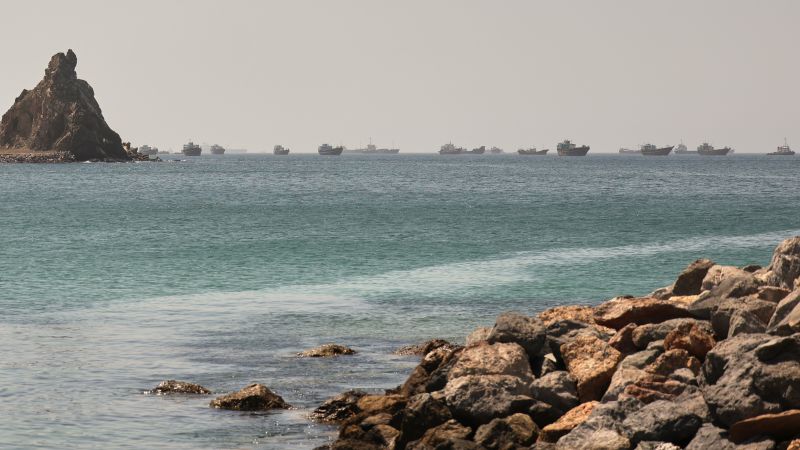
Tanker struck near Strait of Hormuz – On Monday, a commercial tanker reportedly suffered damage from an unidentified projectile while navigating near the Strait of Hormuz, according to the UK Maritime Trade Operations (UKMTO). The incident, which occurred eight nautical miles east of Limah, Oman, left the vessel on fire but with no confirmed casualties or environmental harm reported. The UKMTO stated the ship was struck on its port side, though the exact cause remains under investigation. This event unfolded just hours before U.S. President Donald Trump departed for a pivotal NATO summit in Ankara, Turkey, where global security concerns—particularly those surrounding the strategic waterway—were expected to take center stage.
Iran’s alleged involvement and regional tensions
According to The Wall Street Journal, citing an unnamed U.S. official, Iran’s Islamic Revolutionary Guard Corps (IRGC) targeted two commercial ships near the Strait. Meanwhile, Axios reported that Iranian missiles were fired at vessels transiting the strait, underscoring the growing threat to maritime traffic. The timing of the attack coincided with Iran’s multi-day mourning ceremony for its late supreme leader, Ayatollah Ali Khamenei, who was killed in a U.S.-Israeli strike in February. During this period, Tehran has paused ongoing diplomatic talks with the U.S., aiming to secure a long-term resolution to their conflict.
“No official authority has yet confirmed or denied these reports,” stated the UKMTO, adding that the vessel’s damage was limited to its port side and did not result in any significant harm.
The attack reportedly happened after the ship allegedly ignored repeated warnings from Iranian authorities. Fars News Agency, Iran’s semi-official media outlet, cited unnamed sources to claim the Qatari tanker was targeted while attempting to use the “Omani route,” a path through the strait that has become a focal point of recent tensions. The IRGC’s involvement in the incident was further emphasized by its recent deployment of patrol boats to block this route, as reported by Iranian media and a Telegram channel linked to the organization.
Conditions for negotiations and Iranian leverage
Iran has been using the Strait of Hormuz as a strategic bargaining chip since the signing of the U.S.-Iran Memorandum of Understanding (MoU). Under the agreement, Tehran must meet several conditions before resuming negotiations with the U.S., including halting all hostilities and ensuring the free passage of commercial vessels through the waterway. These requirements have become increasingly relevant as the strait continues to serve as a critical artery for global oil shipments.
“Negotiations on a final deal will not commence if threats continue,” warned Iranian Foreign Minister Abbas Araghchi in a post on X, accompanied by images of mourners honoring Khamenei. He referenced paragraph 13 of the MoU, which stipulates that both sides must fulfill specific obligations before discussions can begin.
The IRGC’s actions reflect its broader strategy to assert control over maritime routes. Before the war, the strait accounted for approximately 20% of global crude oil shipments, but recent disruptions have raised concerns among international shipping companies. Despite Iran’s efforts to influence traffic, the UKMTO noted that vessel movement has remained steady in recent days, albeit without the usual increase seen prior to the conflict.
Security dynamics and ongoing challenges
The UKMTO’s update on Sunday highlighted the persistent risks to ships traversing the strait, even as the number of crossings has stabilized. While the current risk level is lower than during the pre-MoU period, the agency emphasized that Iran’s capacity for deliberate hostile actions remains intact. This has led to heightened vigilance among maritime operators, who are now more cautious about the Omani route, which has been a primary focus of Iranian naval activity.
According to MarineTraffic, 108 boats transited the Strait of Hormuz between Friday and Sunday, a figure that aligns with the pre-war average of over 100 vessels per day. However, the incident on Monday has added a new layer of uncertainty, particularly as the U.S. and Iran remain at an impasse over the terms of their ongoing negotiations. During a press briefing on Monday, Trump reiterated the administration’s stance, stating, “We will either reach a deal with Iran or finish the job.” This declaration has intensified pressure on Tehran to demonstrate its commitment to de-escalation.
The attack on the tanker also coincided with a series of military strikes by Israel in Lebanon, which are part of the broader conflict between Iran and its regional allies. These strikes, reported by Lebanese state media, have raised concerns about the interconnectedness of hostilities in the Middle East. As Iran’s influence extends beyond its borders, the strait has become a symbol of both its strategic importance and its vulnerability to geopolitical tensions.
International response and next steps
CNN has sought comments from the U.S. Central Command, which oversees military operations in the Middle East, Central, and South Asia. The command’s response could provide clarity on whether the attack was an isolated incident or part of a coordinated effort to disrupt trade. Analysts suggest that the incident may serve as a warning to the U.S. and its allies, highlighting the need for continued monitoring of Iranian activities in the region.
The strategic significance of the Strait of Hormuz cannot be overstated. As a vital conduit for global energy supplies, any disruption to its operations has far-reaching economic implications. The recent attack has reignited discussions about the potential for further escalation, with U.S. officials and international observers closely watching the situation. While the UKMTO maintains that risks are currently manageable, the incident underscores the delicate balance between diplomacy and military posturing in the region.
With Trump’s NATO summit approaching, the U.S. is under pressure to address security concerns in the Strait while maintaining momentum in its negotiations with Iran. The incident has also amplified the symbolic weight of Khamenei’s funeral, which has become a platform for Iran to reaffirm its stance against U.S. influence. As the world watches for further developments, the fate of the MoU—and the future of U.S.-Iran relations—remains in flux.
In the aftermath of the attack, the UKMTO issued a statement reaffirming that the environment still warrants careful attention. The agency emphasized that while the current threat level is lower, the potential for Iranian hostility remains a key factor in assessing the security of the region. This sentiment aligns with broader concerns about the stability of the strait, which has seen a significant increase in strategic importance since the outbreak of the war.
As the NATO summit in Ankara draws closer, the U.S. will likely use the incident to highlight the need for a unified front against Iranian aggression. Meanwhile, Iran’s leaders continue to leverage the situation to assert their position in ongoing talks, ensuring that any progress is contingent on the U.S. demonstrating a willingness to compromise. The international community now faces the challenge of navigating these tensions, with the Strait of Hormuz serving as both a battleground and a barometer of global stability.
