
Man blown from 12th-floor apartment as deadly tornado rips through central China
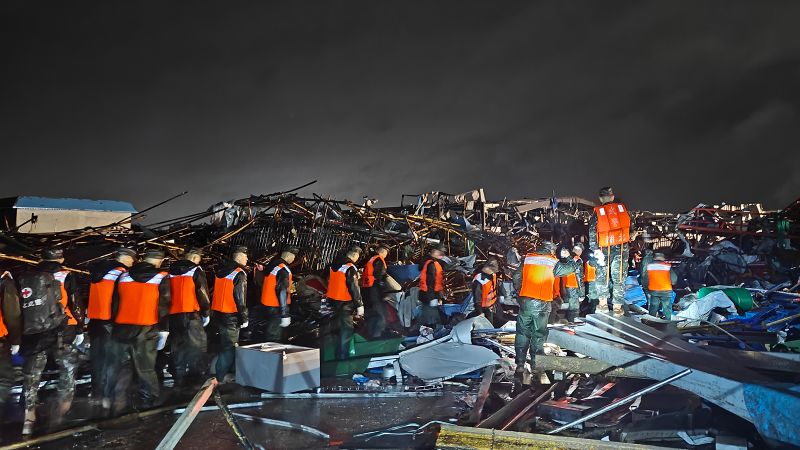
Man Blown from 12th-Floor Apartment in Deadly Tornado Ravaging Central China
Man blown from 12th floor apartment – On Monday evening, a violent tornado tore through central Hubei province, China, causing widespread destruction and claiming at least 11 lives. The storm’s ferocity was highlighted when a 30-year-old man was reportedly sucked out of his 12th-floor apartment, according to local media. This incident, combined with the broader damage, has left authorities scrambling to assess the full scale of the disaster.
Tornado’s Unprecedented Power
The tornado, which reached wind speeds of up to 260 kilometers per hour, ripped through residential and commercial areas, leaving buildings in ruins and vehicles overturned. State news agency Xinhua reported that over 4,855 homes were damaged, with many reduced to rubble. In Huanggang city, the storm’s impact was particularly severe, as it uprooted structures and carried away personal items from the apartment where the man was found floating in the air, according to local accounts.
“The tornado left an indelible mark on the region, with houses shattered and farmland submerged in water,” said Xinhua, citing the devastation witnessed in the area.
The man, whose identity has not been officially disclosed, was pulled from his upper-floor residence by the tornado’s force. He is currently receiving intensive care in a hospital, though his condition remains critical. The event has sparked concern among residents, who described the scene as surreal, with debris scattered across the streets and the sky darkened by the storm’s intensity.
Regional Disasters and Weather Patterns
The tornado’s occurrence is rare for Hubei province, which last experienced such a storm in May 2021. Meteorologists suggest that the extreme weather resulted from the convergence of Typhoon Maysak with the early-summer rainy season. This unusual overlap has created conditions for severe storms, impacting multiple regions across China.
Meanwhile, in Guangxi, the southwest region, Typhoon Maysak has brought relentless flooding since Sunday. Local officials reported that four individuals have been killed, with eight still missing. Over 600 people remain in need of evacuation, as the storm continues to challenge rescue operations. Hengzhou, a key city in the region, has recorded unprecedented rainfall, breaking 24-hour precipitation records and threatening nearby communities with rising water levels.
“The disaster has caused immense losses, and more than 3,000 people are engaged in rescue and relief efforts,” stated local authorities, emphasizing the scale of the operation.
Amid the chaos, a dramatic incident unfolded in Hengzhou’s rural areas when a flood overwhelmed a snake farm, releasing over 800 creatures into the surrounding environment. The event led to a surge in social media activity, with videos showing snakes emerging from the mud, some even reaching villagers. One resident was bitten, requiring hospital treatment, while others volunteered to capture the animals, according to reports from Hongxing, a local news outlet.
Deadly Consequences and Community Response
Authorities confirmed that the tornado’s path included Ezhou city, where five people were reported dead. The storm’s ability to lift heavy trucks 30 meters into the air has drawn attention to its extraordinary strength. In Huanggang, the incident involving the man in the apartment has become a symbol of the tornado’s destructive power, with officials warning of the need for improved disaster preparedness.
Residents described the aftermath as a mix of fear and resilience. “The wind was like a monster, tearing everything apart,” said one witness, reflecting the community’s shock. Despite the devastation, efforts are underway to restore normalcy, with teams working to clear debris and assist those displaced by the storm.
Broader Implications for China’s Climate
Experts are analyzing the event as part of a larger pattern of extreme weather across China. The combination of typhoons and seasonal rains has created a perfect storm of conditions, leading to floods, landslides, and tornadoes in different parts of the country. This has raised questions about climate change’s role in intensifying weather phenomena, particularly in regions unaccustomed to such events.
While the tornado in Hubei is a recent example, the broader context includes a deadly landslide in Gansu province, which occurred earlier in the week. These overlapping disasters highlight the increasing frequency of severe weather events, prompting calls for enhanced infrastructure and emergency response systems. “This is a wake-up call for all of China,” remarked a meteorologist, stressing the need for proactive measures.
Chinese leader Xi Jinping has urged an all-out effort to rescue those affected and provide relief to displaced individuals. His directive underscores the government’s commitment to addressing the crisis, even as local authorities work tirelessly to manage the situation. The incident has also sparked discussions about the importance of early warning systems and community resilience in the face of natural disasters.
Snakes in the Floodwaters
Adding to the chaos, the flooding at a snake farm in Hengzhou has led to a peculiar but dangerous situation. Over 800 snakes, including venomous cobras, have escaped into the environment, creating a hazardous scenario for nearby residents. The farm’s overflow has resulted in snakes surfacing in flooded fields, with some villagers reporting encounters in the murky water.
Local officials confirmed that while many of the snakes are non-venomous, the presence of cobras has raised alarms. “We are monitoring the situation closely to prevent further incidents,” said a statement from Xiaoxiang Daily, highlighting the dual challenge of dealing with the tornado and the snake infestation. The incident has also prompted discussions about the ecological impact of such disasters, particularly on animal habitats.
As the nation grapples with the aftermath, the focus remains on recovery and preparation for future storms. The tornado and typhoon events serve as a reminder of the unpredictable nature of extreme weather, urging a reevaluation of disaster management strategies in China. With the scale of the destruction and the number of people affected, the situation is expected to evolve in the coming days as authorities continue their efforts to stabilize the region.
