
Iran says it hit US targets as tensions over Strait of Hormuz strain agreement
Iran says it hit US targets as tensions over Strait of Hormuz strain agreement
Iran says it hit US targets – Iran has claimed it has carried out strikes on US military installations in the Middle East, responding to American attacks near the strategic Strait of Hormuz. These incidents, reported by Iranian state media, have intensified disputes over the key waterway and cast doubt on a recently signed peace agreement between the two nations. The US military has not officially confirmed the strikes, but the exchange of attacks marks the first escalation since the memorandum of understanding was formalized last week.
Bahrain and the Tanker Strike
Meanwhile, Bahrain reported drone attacks on its territory early Saturday, with the country’s foreign affairs ministry calling the strikes a “clear breach of its sovereignty.” The target of the attacks remained unspecified, and Tehran has yet to issue a detailed response. In a separate development, a tanker in the Strait of Hormuz was damaged by an “unidentified projectile,” according to the United Kingdom Maritime Trade Operations (UKMTO). The vessel sustained minor injuries but all crew members escaped unharmed, prompting UKMTO to advise ships to navigate the area with heightened caution.
The latest incidents follow a pattern of mutual accusations. On Friday, the US military conducted strikes on Iranian military facilities near the Strait of Hormuz, targeting missile and drone storage locations as well as coastal radar sites. CENTCOM described the actions as a necessary response to “unwarranted aggression against commercial shipping.” However, Iran’s Revolutionary Guards asserted that the US had violated the terms of the agreement by attacking their positions.
Strait of Hormuz and the Agreement
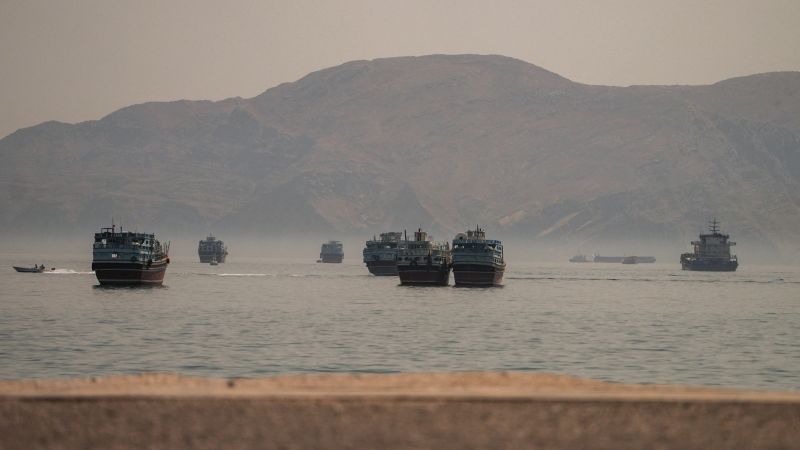
The Strait of Hormuz, a vital artery for global oil trade, has become the focal point of escalating tensions. The joint maritime information center (JMIC), under the US Navy’s oversight, raised the threat level to “substantial” on Saturday, citing recent attacks on merchant vessels. This move signals growing concerns about the security of the waterway, which is already a critical shipping chokepoint.
The peace agreement, signed earlier this month, aims to restore normal maritime traffic in the strait. It requires Iran to make “arrangements using its best efforts” to ensure the safe passage of commercial ships and to return traffic volumes to pre-war levels. However, the document lacks specific provisions on how Iran will balance its security needs with the right to levy fees on passing vessels. This ambiguity has led to conflicting interpretations between the two sides.
Escalation and Diplomatic Signals
Iran’s Saturday attacks came after the US military’s Friday strikes, creating a cycle of retaliation that has destabilized the region. A US official downplayed the likelihood of a full-scale resumption of combat operations, stating the attacks were not indicative of a broader conflict. Nonetheless, Vice President JD Vance, who played a central role in negotiating the agreement, warned that “violence will be met with violence,” reflecting a firm stance from the administration.
President Donald Trump, who initially endorsed the agreement, emphasized that the Strait of Hormuz would remain toll-free under the terms of the pact. Iran, however, has maintained its position that it will have the authority to charge fees for vessels transiting the waterway. This disagreement highlights the challenges in aligning the two nations’ strategic priorities.
Impact on Regional Stability
With the agreement still in its early stages, the recent hostilities have raised questions about its durability. The JMIC’s decision to expand a route near Oman suggests the US is seeking to increase the flow of maritime traffic, potentially undermining Iran’s influence over the strait. The expanded passage could allow for simultaneous movement of ships in both directions, a move that might counterbalance Iran’s control.
Iran’s actions have been framed as a defensive measure against what it perceives as US aggression. The country’s foreign ministry accused the United States of breaching the ceasefire, calling the strikes a violation of the agreement. In contrast, the US has not yet issued a formal statement confirming the attacks, leaving room for diplomatic maneuvering.
These events underscore the fragility of the current peace deal, which relies on mutual restraint. The Strait of Hormuz, a narrow passage through which about 20% of the world’s oil supply passes, has been a flashpoint for decades. Its strategic importance means that any disruption could have significant economic and political repercussions, especially as the world grapples with energy security and geopolitical tensions.
Looking Ahead
CNN has contacted the White House and CENTCOM for further comments, but no official statements have been released yet. The situation remains fluid, with both nations engaging in a delicate balancing act between diplomacy and military action. As the JMIC monitors the strait’s conditions and the two sides continue to negotiate, the path forward will depend on their ability to manage these tensions without triggering a larger conflict.
The Strait of Hormuz continues to be a symbol of the complex relationship between the US and Iran. While the agreement seeks to stabilize the region, the recent strikes reveal lingering distrust and competing interests. The waterway’s fate may now hinge on whether both parties can uphold their commitments or if the cycle of retaliation will escalate further.
