
Investigators pinpoint haunting echoes between Texas child disasters
Investigators Pinpoint Haunting Echoes Between Texas Child Disasters
Investigators pinpoint haunting echoes between Texas – Two years after the Uvalde school shooting, the Texas state government has once again turned to the same pair of investigators to scrutinize another catastrophic event involving children. Casey Garrett and Michael Massengale, both legal professionals with distinct approaches, found themselves tasked with analyzing the failures that led to the deaths of 27 young campers during the July 4, 2025, flood disaster at Camp Mystic. Their collaboration, which began in the aftermath of the Uvalde tragedy, has since become a symbol of how institutional negligence can resurface in unexpected ways.
The Uvalde Tragedy: A Painful Beginning
The Uvalde school massacre, which occurred in May 2022, left 19 children and two teachers dead, with the gunman staying in the school for over an hour. The incident sparked an immediate demand for accountability, and Texas legislators sought a thorough examination of the law enforcement response. Garrett and Massengale were assigned to this task, each bringing their own expertise to the table. Though they had never met before, their partnership began under the weight of public expectation.
“It was a painful investigation, a deeply painful event,” Garrett reflected during a joint interview with CNN. The team spent weeks combing through video evidence, police calls, and firsthand accounts to piece together the sequence of events. Their findings revealed a systemic lack of urgency in the handling of the crisis, a conclusion that resonated with lawmakers eager for answers.
Their report, which highlighted the slow response and communication breakdowns, served as a stark reminder of the gaps in emergency preparedness. Yet, even as they concluded their work on Uvalde, the echoes of that disaster seemed to follow them into the next investigation. The July 4, 2025, flood at Camp Mystic, located in the Texas Hill Country, mirrored the chaos and human error that had characterized the Uvalde incident.
The Camp Mystic Disaster: A Flash Flood with Consequences
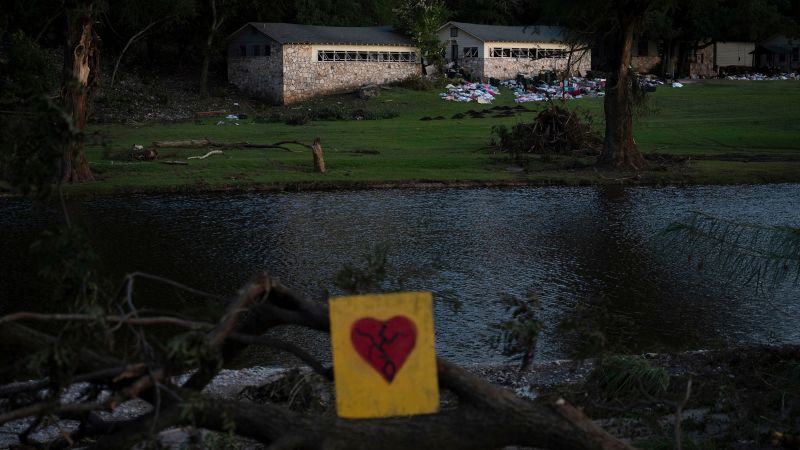
A year after Uvalde, Camp Mystic became the site of another tragedy when sudden flash floods swept through the area, trapping 25 preteen campers, two teenage counselors, and the camp’s patriarch. The floodwaters, which surged without warning, claimed lives and raised questions about the camp’s safety protocols. Unlike the gunfire in Uvalde, the disaster at Camp Mystic was a natural calamity that exposed vulnerabilities in oversight and preparedness.
“I was hearing echoes of Uvalde in the way public officials were descending on the area and making public statements,” Massengale noted during a press conference. He described the immediate tension as state legislators convened to hear from families and survivors of the broader disaster. The emotional toll on the team was palpable, with Garrett often struggling to contain her grief during lengthy testimonies.
The deaths of the 27 children, later referred to as “Heaven’s 27” by their grieving parents, forced a renewed examination of the camp’s operations. The investigation revealed that critical safety measures were overlooked, including a lack of clear evacuation instructions for the cabins. The findings prompted Texas to reassign the same investigators, recognizing the need for a similar level of scrutiny in this new context.
Divergent Paths, Unified Purpose
Garrett and Massengale’s contrasting methodologies have become a focal point of their work. Garrett, known for her vibrant personality and deep empathy, approaches investigations with an open mind and a drive to uncover human stories. Her background in criminal law and later defense work has shaped her ability to connect with victims and their families, often leading her to advocate passionately for those affected.
Massengale, on the other hand, prefers a more analytical and impartial approach. His career in appellate law and international firms has instilled a meticulousness that complements Garrett’s instinctive empathy. The two professionals had never worked together before, but their shared goal of uncovering the truth brought them into a unique collaboration.
“One of the things that has made Michael and I so effective together … is that we have been a real yin and yang in Uvalde and here,” Garrett explained during a hearing. Her words underscored the synergy between their styles: while she ventured into the field to gather stories, he focused on the data, ensuring every detail was scrutinized with precision.
Massengale admitted that their dynamic has been both challenging and rewarding. “While Casey was in Uvalde, really pounding the pavement and interviewing people and surfacing information for us, I spent a lot of my time cloistered in front of my computer with a hard drive of just gigabytes of data: the radio traffic, the video footage, the body cameras …” He emphasized the importance of cross-referencing evidence to build a comprehensive narrative.
Despite their differences, the pair has managed to balance each other’s strengths. Garrett’s ability to humanize the crisis complements Massengale’s methodical analysis, creating a partnership that has been both efficient and thorough. Their work on Uvalde had already set a high standard, and the Camp Mystic investigation has been a test of their resilience and commitment to truth.
Reckoning with the Past and Present
As the Texas state legislature reviews their findings, the team’s dual focus on emotional impact and institutional accountability continues to shape the discourse around child safety. The Uvalde report had laid bare the failures of the system, and the Camp Mystic case has reinforced the need for ongoing vigilance. Garrett’s insistence on examining the licensing and regulation of such facilities highlights the broader implications of these tragedies.
“There’s just no question that when you lose 27 children — it has to be looked at through a microscope as an entity that is being licensed and regulated by the state,” Garrett asserted. Her words have become a rallying cry for reform, echoing the demands that followed Uvalde’s aftermath. Massengale, while less vocal about the emotional aspects, agrees that the failures in both cases reveal a pattern of neglect that must be addressed.
Their work has not only shed light on these specific events but also raised questions about the broader systemic issues in Texas. The state’s rapid response to both disasters, including special legislative sessions, reflects the urgency of the situation. Yet, the path to resolution remains complex, with families and officials still grappling with the consequences of these tragic events.
As the investigation into Camp Mystic unfolds, the lessons from Uvalde remain fresh. The pair’s ability to adapt and collaborate has ensured that the echoes of the past are not forgotten, but rather serve as a foundation for understanding the present and preventing future disasters. Their combined efforts continue to push the boundaries of accountability, proving that even in the face of tragedy, the pursuit of truth can lead to meaningful change.
