High school senior gets over 5 years in prison for setting homeless man on fire on NYC subway

High School Senior Gets Over 5 Years in Prison for Setting Homeless Man on Fire on NYC Subway
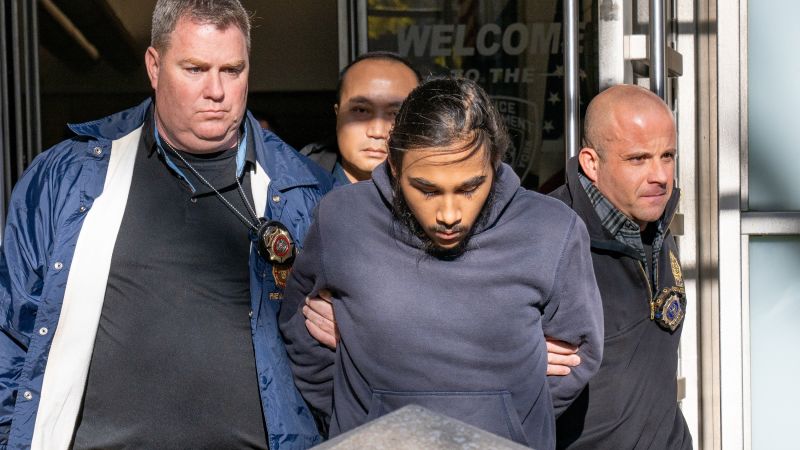
High school senior gets over 5 years – In a dramatic development that has sparked public outcry, a 19-year-old high school senior was sentenced Tuesday in Manhattan federal court to more than five years in prison for igniting a fire that severely injured a homeless man on a New York City subway. The incident, which occurred on December 1, 2025, during an early morning commute, marked one of several recent attacks involving individuals set ablaze on public transportation across the United States. Judge Lewis J. Liman imposed a sentence exceeding the minimum required for arson, citing the severity of the crime and its impact on the victim.
A Brutal Act on a Moving Train
The victim, a homeless man who was asleep when the fire broke out, suffered critical burns and extensive scarring that will likely alter his life permanently. Prosecutors argued that Carrero’s actions were not just reckless but deliberate, aiming to end the man’s life by burning him alive while trapping him on a subway car. The attack occurred as the train was moving between Penn Station at 34th Street and Times Square, leaving the victim with little time to escape before emergency responders arrived.
“Carrero’s heinous actions left the man critically injured, with permanent scarring and disfigurement that will haunt him for years to come,” stated prosecutors in their presentence report. The report emphasized that the victim’s survival was a result of the “mercifully short trip” before help arrived, underscoring the narrow margin between death and rescue.
Carrero pleaded guilty to the charge in March, admitting that he had intentionally set fire to a piece of paper that caused the blaze. According to court documents, the fire was a calculated act, with Carrero aiming to kill the sleeping man by leaving him stranded on the moving train. The prosecution’s submission highlighted the brutality of the incident, noting how the victim’s life was saved only because of the quick response of emergency personnel.
Defense Highlights Troubled Past
Defense attorney Jennifer Brown sought to humanize Carrero in court, presenting a detailed account of his challenging upbringing. She noted that Carrero was born prematurely with drugs in his system and was left at the hospital after his biological parents abandoned him. This early adversity, compounded by intellectual disabilities, contributed to his difficulties in navigating life, especially after the pandemic struck in 2020. Brown argued that the disruption to education and daily routines during the crisis left Carrero “without the stability or support he needed to thrive.”
“Words are inadequate to express the profound shame and remorse that Hiram feels,” Brown said during her arguments. She described Carrero’s actions as a momentary lapse, attributing them to a combination of stress, substance use, and a lack of guidance. “This was not a premeditated act of violence, but a result of circumstances that overwhelmed him,” she explained.
The defense also highlighted Carrero’s history of substance use, including alcohol and marijuana consumption on the day of the incident. While prosecutors criticized this as an excuse, they acknowledged that it might have played a role in his impaired judgment. Brown emphasized the need for a more lenient sentence, citing Carrero’s potential for rehabilitation and his willingness to take responsibility for his actions.
A Pattern of Violence on Public Transit
Carrero’s crime fits into a growing trend of arson attacks on public transportation systems nationwide. In recent months, similar incidents have been reported in cities like Chicago, Los Angeles, and Boston, where individuals have been targeted for their vulnerable positions. These attacks, often carried out in crowded or isolated settings, have raised concerns about the safety of commuters and the psychological impact on victims.
Legal experts have noted that the severity of Carrero’s sentence reflects the court’s determination to send a strong message about such acts. While the mandatory minimum for arson is typically lower, Liman’s decision to hand down a longer term underscores the prosecution’s emphasis on the man’s critical condition and the lasting consequences of the fire. The judge also considered the public’s reaction to the case, which gained significant media attention due to the graphic nature of the crime.
Public Reaction and Broader Implications
Following the sentencing, reactions from the community have been mixed. Some praised the judge’s decision as a necessary step to deter future violence, while others questioned whether Carrero’s sentence was proportionate to the crime. Supporters of the prosecution argued that the fire’s brutality warranted a harsher punishment, emphasizing the victim’s permanent injuries and the fear the act may have instilled in subway riders.
Meanwhile, advocates for Carrero have called for a more compassionate approach, highlighting the systemic challenges he faced. They pointed to the pandemic’s role in disrupting his education and mental health, suggesting that his actions were a product of environmental stressors rather than a lack of intent. However, prosecutors maintained that these factors did not excuse the deliberate harm inflicted on the homeless man.
The case has also prompted discussions about the role of homelessness in criminal acts. While Carrero’s victim was not targeted for his status as a homeless person, the incident has been used to illustrate the vulnerabilities of individuals without stable shelter. Public transportation, often a shared space, has become a symbolic setting for such attacks, with victims left exposed to both physical and emotional harm.
The Path Forward
Carrero’s sentence marks a pivotal moment in his life, as he begins his time in federal prison. The legal proceedings have served as a platform to explore the intersection of personal struggles and criminal behavior, offering insight into the factors that may have led to the act. For the homeless man, the aftermath of the fire will involve long-term medical care and a journey toward recovery, with the incident serving as a lasting reminder of the dangers faced by those without secure housing.
As the case concludes, it leaves broader questions about justice, rehabilitation, and the societal pressures that contribute to violent behavior. Whether Carrero’s sentence will act as a deterrent or a symbol of accountability remains to be seen, but the incident has already captured the attention of legal and social commentators alike. The story of his crime, from the initial act to the final judgment, highlights the complexities of human decision-making in moments of crisis.
In a world where public spaces are increasingly shared among diverse populations, the incident on the NYC subway serves as a stark example of how one act of violence can ripple through communities. The victim’s survival, though miraculous, underscores the fragility of life in such circumstances. For Carrero, the sentence represents not just a punishment but a chance to reflect on his choices and the impact they had on another human being. The case will likely be remembered as a defining moment in the ongoing conversation about crime, compassion, and the conditions that shape both perpetrators and victims.