
Farage left fighting a trash can as the UK populist leader’s election gamble backfires
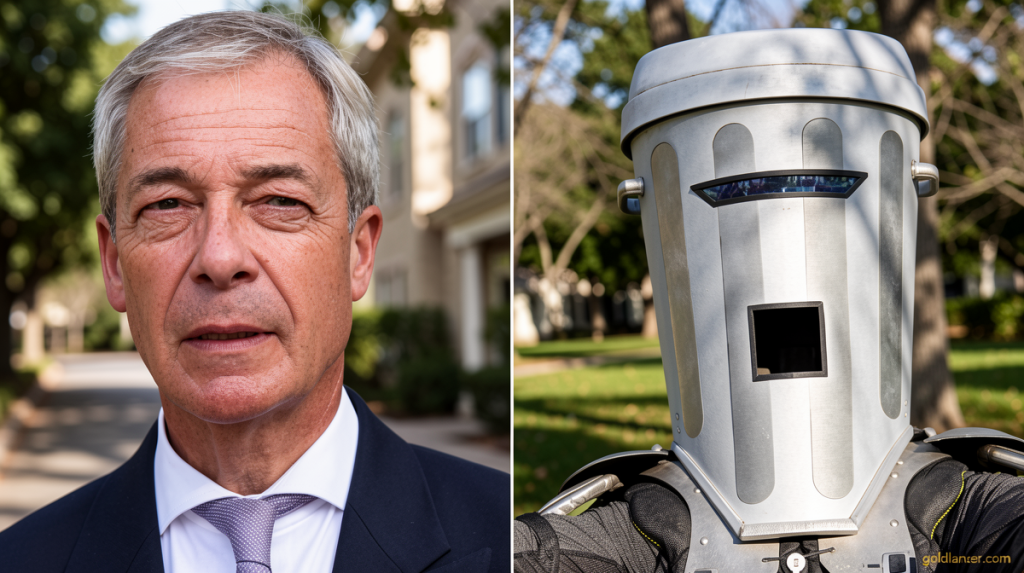
Farage Left Fighting a Trash Can in Dramatic By-Election Showdown
Farage left fighting a trash can in what has become one of the most unusual political contests in recent British history. The Reform UK leader’s bold decision to resign from his parliamentary seat has created an unexpected scenario where voters must choose between a seasoned politician and a comedian wearing a garbage bin costume. Nigel Farage stepped down from his Clacton-on-Sea constituency on Tuesday, hoping that ordinary citizens would validate his actions rather than allowing political establishment figures to pass judgment on him.
The resignation came amid mounting pressure over allegations that Farage failed to properly declare millions of pounds in gifts from wealthy donors. The Parliamentary Standards Commission has opened an investigation into these financial disclosure concerns. Farage has consistently maintained that he has done nothing wrong and believes that the people of Clacton should have the final say on whether he deserves to continue his political career. This gamble has produced a result that few political observers could have anticipated.
I’ve decided the people of Clacton should be the judges of my actions. I will fight to win. I will fight to continue the political revolution that Reform has started.
Establishment Parties Decline the Challenge
The traditional political parties responded with characteristic speed and confidence. Labour, the Conservative Party, and the Liberal Democrats all announced they would not field candidates in the by-election. Prime Minister Keir Starmer described Farage’s resignation as a desperate attempt to escape accountability for his financial practices. Andy Burnham’s office characterized the move as a publicity stunt designed to shift attention away from concerns about Farage’s relationship with wealthy benefactors.
It is a farce and a desperate distraction, and the people of Clacton deserve better. But if he wants to spend the summer arguing with a bin, I won’t stop him.
Chancellor Rachel Reeves formally accepted Farage’s resignation and shared her thoughts on social media, capturing the widespread bewilderment that accompanied the announcement. Her comments reflected the sentiment of many who viewed the situation as both amusing and somewhat concerning for British democracy.
The Man Behind the Bin
With all major parties staying away, Count Binface emerged as Farage’s sole opponent. Jon Harvey, a television scriptwriter and comedian, created this satirical character more than a decade ago as part of Britain’s rich tradition of humorous election candidates. Binface has previously stood against three British prime ministers and now faces the man who helped lead the United Kingdom out of the European Union.
The comedian took to X, where he has accumulated over 200,000 followers, to declare: “Game on, Nige.” His campaign platform includes entertaining policy ideas such as requiring cyclists who violate traffic laws to ride unicycles. Political analysts suggest that while Binface may not win, he could attract a substantial number of protest voters—potentially far exceeding his usual electoral performance.
Are they running scared from old Binny, or do they think that Nigel’s running a cunning stunt?
During a Wednesday appearance on BBC radio, Binface playfully suggested that politicians might fear him more than Farage. The radio host humorously referred to the segment as “the interview of the morning,” highlighting the unusual nature of the contest.
Reform Supporters Push Back
Farage’s political allies have defended his strategy and criticized the establishment boycott. Zia Yusuf, Reform UK’s home affairs spokesperson, called the decision to stay away both cowardly and transparent on social media. He argued that mainstream parties were struggling to counter Farage’s expanding influence, particularly following Reform’s impressive results in recent local elections across the country.
This peculiar situation underscores a transformative moment in British politics. A party leader who played a central role in Brexit now competes against an opponent whose elaborate costume has become increasingly sophisticated over the years. Whether this represents a genuine electoral threat or merely a sideshow remains uncertain. What is certain is that Farage left fighting a trash can in circumstances that have captured public imagination and generated widespread media coverage.
