
Trump’s Iran envoys face scrutiny as diplomacy stalls
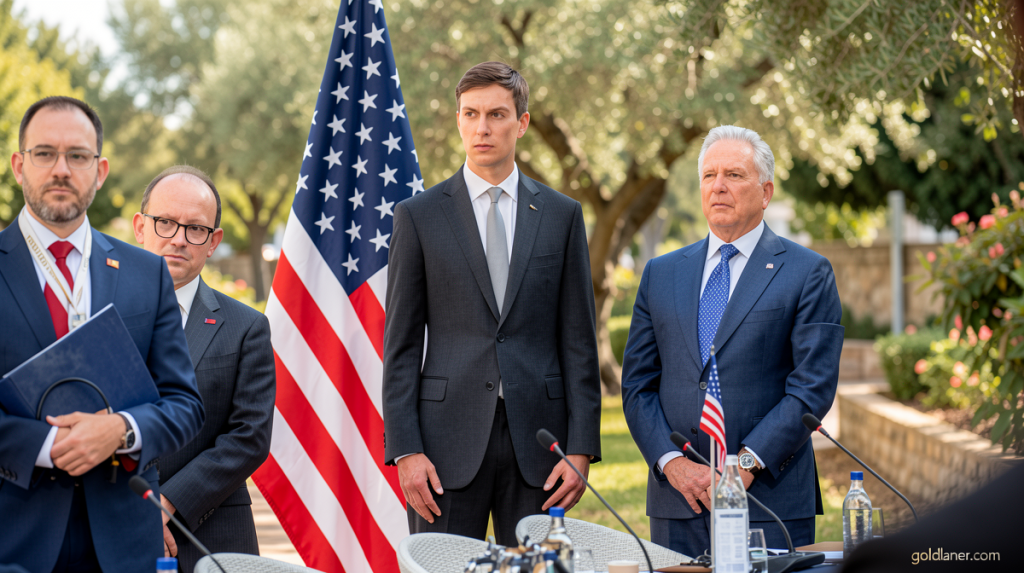
Iran Diplomacy Under Fire as Trump’s Envoys Navigate Growing Crisis
Trump s Iran envoys face scrutiny – Just three weeks after President Donald Trump inked a memorandum of understanding with Iran, the fragile diplomatic framework appears to be collapsing. What began as a hopeful 60-day window for negotiations has devolved into renewed military confrontations, with both nations exchanging strikes and the president publicly questioning whether any agreement is even possible.
The latest escalation centers on the Strait of Hormuz, a critical maritime chokepoint. On Tuesday, Iranian forces targeted commercial vessels navigating the waterway, prompting an immediate American military response. Tehran vowed retaliation, and by Wednesday morning, Washington had launched another wave of strikes following Trump’s public commitment to action. Speaking at the NATO summit in Ankara, the president expressed uncertainty about pursuing further negotiations, remarking, “I’m not sure I want to make a deal with them,” though he maintained confidence that full-scale war would not erupt.
From Optimism to Doubt
The journey from diplomatic breakthrough to potential conflict began the day after the MOU signing. Jared Kushner and Steve Witkoff, serving as Trump’s son-in-law and special envoy respectively, made phone calls to skeptical Republican lawmakers seeking to explain the terms of the 14-point document. The agreement’s language proved sufficiently ambiguous to generate widespread concern across Washington about precisely what concessions had been offered to Tehran.
During these briefing calls, Witkoff pointed to recent developments as evidence of momentum. He referenced a confidential visit he and Kushner had undertaken to the Oak Ridge nuclear facility, where they consulted with technical specialists. According to one individual familiar with the conversation, Witkoff noted that many of these experts remained on standby, prepared to contribute to the broader diplomatic effort. He also indicated that discussions addressing what he termed “the toughest issue”—Iran’s nuclear capabilities—would commence without delay.
“The MOU didn’t actually resolve anything,” said Nate Swanson, a former career State Department official who spent a decade as a senior adviser on Iran policy to successive administrations and worked on the Iran negotiations in spring 2025.
Expert Skepticism Mounts
Now, with technical discussions barely underway and hostilities resuming, critics are raising fundamental questions about the substance of what was accomplished. The administration’s stated objectives, particularly the removal of Iran’s enriched nuclear material, seem increasingly distant from reality, especially within the originally promised 60-day timeframe.
Swanson characterized the agreement as “almost entirely aspirational,” suggesting it lacked concrete mechanisms for implementation. Richard Nephew, who served as director for Iran at the National Security Council from 2011 to 2013, echoed this assessment. He predicted such tensions would emerge “both because (of) misinterpretations of the underlying deal, and because none of the core issues have been resolved.”
“You could even argue the MOU made things worse,” Nephew added, particularly on the Strait of Hormuz.
While the administration has emphasized that Iran must not control the vital waterway, the memorandum itself fails to establish a definitive pathway toward that goal. Swanson told CNN that policymakers remain fixated on a comprehensive Phase 2 agreement when immediate priorities should include clarifying the strait’s status. “They have not done that,” he noted, adding uncertainty about where responsibility lies within the chain of command.
Structural Concerns About the Negotiating Team
Nephew placed direct blame for the agreement’s vagueness on “the inexperience of the US negotiating team.” Throughout their Iran discussions, Kushner and Witkoff maintained a narrow circle of advisors, predominantly relying on political appointees rather than career diplomats. This approach reflects a persistent skepticism within the Trump administration toward professional civil servants.
Multiple former American officials familiar with the process told CNN that many career government employees possessing critical expertise—including specialists in nuclear matters—were consulted sporadically during the months preceding the MOU’s execution. These experienced voices were not meaningfully integrated into early decision-making or the broader diplomatic strategy orchestrated by Kushner and Witkoff. Compounding the problem, numerous career officials have departed from government service entirely.
As oil prices climb and domestic pressure intensifies to conclude the confrontation, questions persist about whether Kushner, Witkoff, and Vice President JD Vance accurately represented the extent of diplomatic progress achieved. The gap between ambitious objectives and achievable outcomes continues to widen, leaving observers to wonder whether the memorandum of understanding represented genuine progress or merely a temporary pause before renewed conflict.
