After another fatal shooting, ICE faces a familiar test of credibility

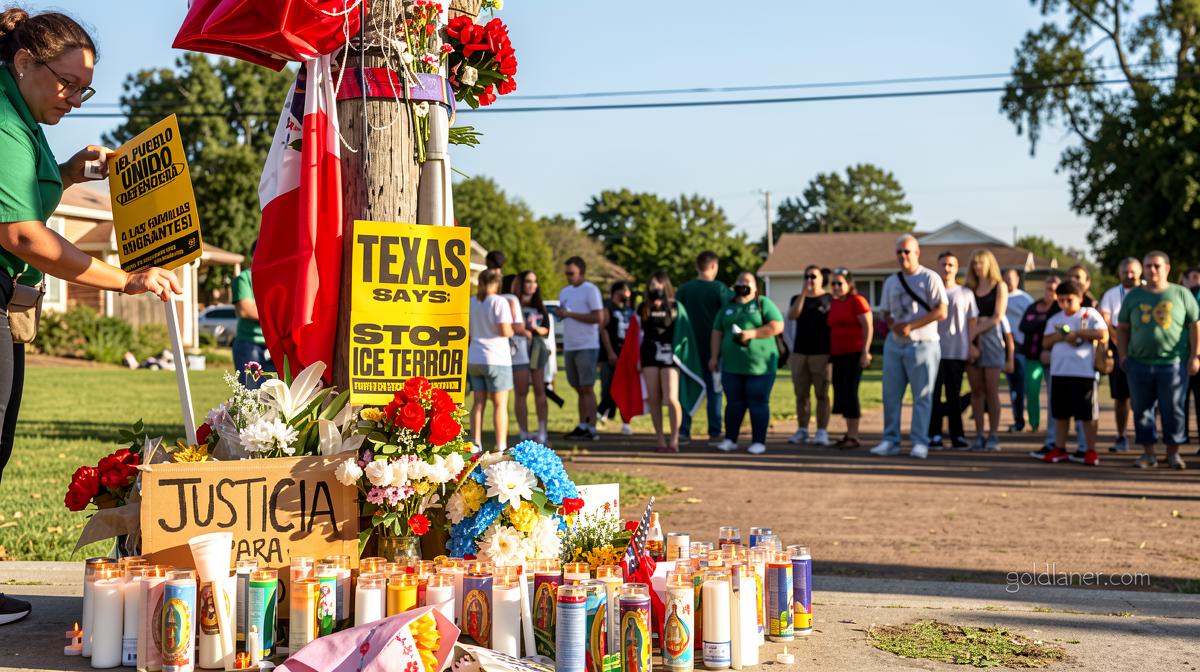
ICE Under Scrutiny Following Houston Shooting of Lorenzo Salgado Araujo
After another fatal shooting ICE faces – The pattern has repeated itself with unsettling regularity. During President Donald Trump’s expansive immigration enforcement campaign across the nation, officers frequently find themselves drawing weapons and firing at individuals, resulting in injuries or fatalities. Within mere hours of these incidents—and often before comprehensive investigations yield definitive conclusions—administration representatives publicly declare that the involved officer was responding to an attack and acted in self-defense. While immigration agents certainly face genuine threats and assaults during their demanding work, certain narratives championed by top officials following major incidents have subsequently fallen apart when confronted with emerging evidence.
This recurring dynamic explains why the recent shooting involving Lorenzo Salgado Araujo has attracted intense examination and doubt regarding Immigration and Customs Enforcement’s hasty defense of its personnel. The 52-year-old man was shot and killed by an immigration officer in Houston on Tuesday. With minimal apparent evidence beyond contradictory eyewitness accounts, this case has emerged as another critical test of public faith in official statements issued by the agency immediately after employing force.
What the Video Footage Reveals
CNN obtained video recordings from the incident that display unmarked sport utility vehicles trailing Salgado Araujo’s van before the fatal exchange. Immigration agents participating in Trump’s countrywide sweep characteristically deploy mobile fleets of unmarked automobiles, which frequently include rental vehicles. The footage does not clarify whether the ICE vehicles had flashing emergency lights attached; without audio, determining whether officers activated sirens while attempting to halt the van remains impossible.
The van appeared to come to a stop, then reversed direction before proceeding slowly along a sidewalk. Officers wearing law enforcement insignias on their vests pursued the vehicle on foot. Videos captured moments leading up to the fatal shooting in Houston, though no footage has yet emerged showing the actual moment the officer fired. According to the Department of Homeland Security, only one officer discharged his weapon, and no other accounts suggest anyone else shot. The medical examiner confirmed that Salgado Araujo succumbed to a gunshot wound to his torso.
Conflicting Narratives Emerge
Hours following the incident, ICE released a public statement declaring that its officers “attempted to conduct a vehicle stop as part of a targeted enforcement operation to arrest an illegal alien” and that Salgado Araujo tried to escape. The agency asserted he “rammed an ICE law enforcement vehicle, refused to follow multiple verbal commands, and weaponized his vehicle in an attempt to run over an ICE law enforcement officer,” subsequently noting that an officer attempting to protect himself, his colleagues and any bystanders “discharged his weapon in self-defense.”
Notably, despite ICE’s general assertion that its officers participated in a “targeted enforcement operation,” Salgado Araujo was not the intended target, a source knowledgeable about the incident later informed CNN. A lawyer representing two passengers inside the van at the time of the shooting denied that Salgado Araujo attempted to ram officers and challenged the assertion that the officers faced danger, though additional evidence supporting these claims has not yet emerged.
ICE said he “rammed an ICE law enforcement vehicle, refused to follow multiple verbal commands, and weaponized his vehicle in an attempt to run over an ICE law enforcement officer.”
A Pattern of Swift Defense
The agency’s most recent rapid defense of an officer while simultaneously alleging criminal conduct by the individual subjected to deadly force mirrors the approach observed in other cases, including the separate killings of activists Renee Good and Alex Pretti by immigration officers earlier this year in Minnesota. In Good’s situation, a 37-year-old mother of three, DHS officials promptly characterized her as a criminal who tried to kill an immigration officer with her vehicle in what they termed “an act of domestic terrorism.” Video subsequently obtained from that incident contradicted this narrative, instead revealing Good pulling away after being surrounded by officers who had ordered her to stop, with one officer at the front of the vehicle moving out of the way and appearing to fire on her from an angle as she drove off.
While federal officers possess authority to employ deadly force to halt an imminent threat of death or serious physical injury, the Department of Homeland Security also instructs its officers to maintain tactical soundness, including avoiding “intentionally and unreasonably placing themselves in positions in which they have no alternative to using deadly force.” In Pretti’s case, a 37-year-old ICU nurse, the initial narrative promoted by DHS and administration leaders—claiming he was a ‘domestic terrorist’ who brandished a firearm and was hellbent on slaughter—also faced challenges as additional details emerged.
As investigations continue into the Houston shooting, the public remains divided in interpreting what truly transpired. The incident serves as yet another moment where official claims must withstand the test of time and evidence, reinforcing concerns about whether ICE’s immediate defenses are based on facts or convenience.