A deadly collapse at a Florida condo happened slowly over several weeks, probe finds

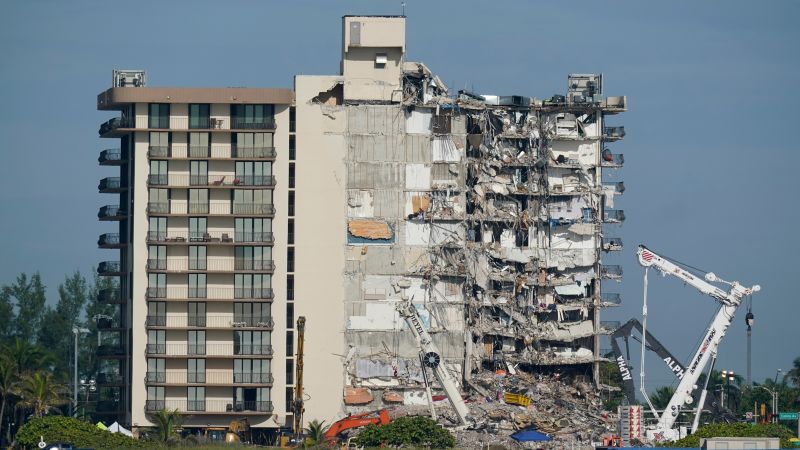
Slow-Motion Disaster: Florida Condo Collapse Unveiled in New Investigation Report
A deadly collapse at a Florida – Less than a year after the tragic collapse of a Florida condominium, federal investigators have revealed that the catastrophic destruction of the building was a gradual process that began weeks prior to the midnight collapse in 2021, which claimed 98 lives. The National Institute of Standards and Technology (NIST) released its final report on Monday, detailing how structural failures in the building’s design and modifications over decades contributed to the disaster. The report highlights the progressive weakening of critical components, which eventually led to the sudden collapse.
Structural Weaknesses Identified
The investigation found that two key structural connections—between the garage columns and the pool deck—began to fail in early June 2021. These connections, which were not designed to handle the additional weight imposed by later renovations, became the starting point of the chain of events that culminated in the disaster. The report emphasizes that the building’s original design did not adhere to the standards in place at the time, and years of alterations further compromised its integrity.
“When structures are designed and built to required codes and standards, they have margins against failure, meaning they should be able to support much more load than expected,” said Judith Mitrani-Reiser, who co-led the NIST investigation. “In the case of Champlain Towers South, these margins against failure were too narrow from the start.”
The NIST report also points to the accumulation of stress on the pool deck over its 40-year lifespan. The combination of the initial design flaws and ongoing modifications—such as the addition of heavy planters, sand, and pavers—reduced the structure’s ability to withstand the load. This slow-motion collapse was exacerbated by long-term corrosion and aging materials, which further weakened the building’s foundation.
Building Distress and Hidden Vulnerabilities
Residents who lived in the building were unaware of the extent of the damage until the night of June 24, 2021. The collapse occurred at 1:22 a.m., when most were asleep, resulting in a massive pile of rubble that buried the structure. Photos taken by onlookers in the weeks before the disaster show visible cracks in the planter wall on the pool deck, as well as fractures where the wall met a planter box. These images, according to the NIST findings, were early indicators of the building’s instability.
Another witness recounted that three weeks before the collapse, a section of the gate near the planter wall had dipped slightly, causing it to jam. This small but significant detail, the report notes, was a harbinger of the larger structural issues that would soon manifest. The slow progression of these problems suggests that the collapse was not an abrupt event but rather the culmination of years of neglect and design compromises.
Legacy of the Collapse
Following the tragedy, state legislators enacted a new law in 2022 to ensure condo associations maintain adequate reserves for major repairs. However, the implementation of this law led to steep fees for residents, who were caught off guard by the financial burden. These costs were necessary to address deferred maintenance and bring buildings up to compliance with the updated standards. The new law, while well-intentioned, sparked additional legislation to provide more flexibility for associations and residents.
The companies responsible for designing and constructing the original building in the late 1970s are no longer in operation, leaving the responsibility of addressing the collapse’s aftermath to current stakeholders. This has raised questions about accountability and the long-term oversight of residential structures. The NIST report serves as a critical reminder of the importance of regular inspections and timely maintenance, even in the absence of immediate signs of distress.
The collapse not only left a profound impact on the families of the victims but also prompted a nationwide reevaluation of building safety protocols. While the immediate cause of the disaster was the failure of those two connections, the broader implications reveal a pattern of systemic issues in structural engineering and maintenance practices. These findings are part of a larger effort to prevent similar tragedies in the future.
Financial and Legal Implications
The Miami judge’s approval of a more than $1 billion settlement for personal injury and wrongful death claims underscores the significant legal and financial repercussions of the collapse. This settlement, which was reached after extensive negotiations, provides compensation to those affected by the disaster. Harley Tropin, the attorney representing the families of victims and survivors in the class-action lawsuit, declined to comment on the new report, though the settlement reflects the gravity of the situation.
The report also highlights how the building’s design and construction choices were not isolated to the immediate incident. The lack of adherence to building codes, combined with the addition of heavy elements over time, created a perfect storm of vulnerabilities. These factors, the NIST states, reduced the structure’s ability to support the load and ultimately led to the collapse. The findings offer a detailed account of how a series of seemingly minor issues can escalate into a catastrophic event.
As the final report is released, it serves as both a technical analysis and a cautionary tale for the construction industry. The slow-motion nature of the collapse means that the dangers were not immediately apparent, and many residents were unaware of the risks until it was too late. The report’s release is expected to influence future building regulations and encourage more rigorous inspections of aging structures. The tragedy in Surfside, Florida, has already reshaped how condominium associations manage their maintenance and repair budgets, ensuring that lessons learned are applied to prevent similar disasters.