
What it’s like to have your nude body auctioned for tens of millions
What it’s like to have your nude body auctioned for tens of millions
Auction Preview: The Artistic Legacy of a Nudist Muse
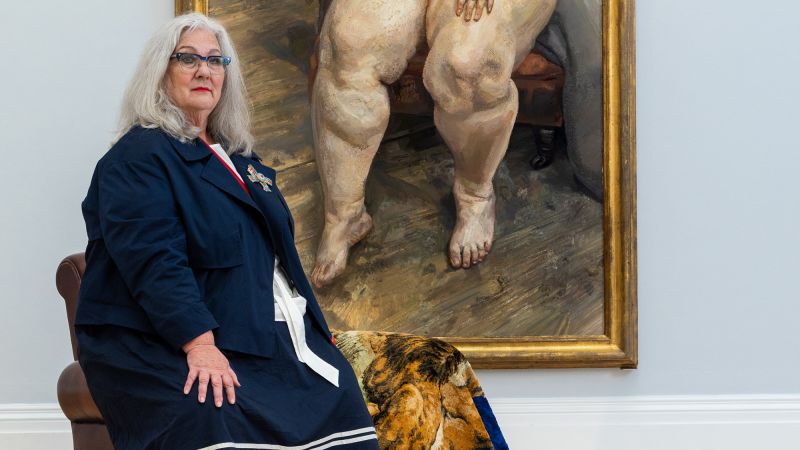
What it s like to have – At the heart of Sotheby’s London gallery, a massive canvas dominates the space, its weight requiring the combined effort of four individuals to mount. The artwork, a striking depiction of a nude figure, rises like a towering sculpture against the muted backdrop of the exhibition. Around five people gather in the room, including assistants and press representatives, who murmur in admiration of the subject’s form. A sharp, cheerful voice interrupts the hushed appreciation: “Hello, I’m here in real life!” Sue Tilley, a retired benefits supervisor from St Leonards-on-Sea, steps forward. She has journeyed from her coastal home to witness the unveiling of Lucian Freud’s “Sleeping by the Lion Carpet” (1996), a piece destined for auction next month. The painting, hailed by Sotheby’s Europe chairman Olivier Barker as “the magnum opus of Lucian’s work,” is expected to sell for between £25-35 million ($33-45 million) at the Lewis Collection sale on 24 June.
The Subject’s Perspective: A Modest Figure in the Spotlight
Sue Tilley, now in her late sixties, finds the situation surreal. “It feels very weird, because I never really got any money,” she remarked while seated in front of her colossal portrait. Her laughter carries a note of disbelief: “I think sometimes I’m probably worth about £100 million. How shocking is that!”
“I think that’s why he liked me,” she said. “I disobeyed him the whole time.”
Tilley posed for Freud multiple times during the 1990s, earning a modest daily fee. The process, she recalls, was far from the dramatic scenes people imagine: “People think I walked in the room and went ‘Wow, let’s work on the most expensive painting in the world.’ It wasn’t like that at all.” Together, they created four masterpieces: “Evening in the Studio” (1993), “Benefits Supervisor Resting” (1994), “Benefits Supervisor Sleeping” (1995), and “Sleeping by the Lion Carpet.” Two of these works have already set records—$33.6 million in 2008 for “Benefits Supervisor Sleeping” at Christie’s in New York, and $56.2 million in 2015 for “Benefits Supervisor Resting.”
From Club Culture to Canvas: The Artist’s Connection
The collaboration between Freud and Tilley began through Leigh Bowery, an Australian performance artist and club kid who moved to London in his teens. Bowery, known for his avant-garde style, became a close friend of Tilley and introduced her to Freud. In 2025, Tilley authored Bowery’s biography, reflecting on his personality: “He made a name for himself as being very outrageous. But deep down he was a very normal person.”
Freud, meanwhile, sought to stay rooted in London’s cutting-edge art scene. “The ticking heart of what was really going on in London at that particular moment in time,” Barker described, “was the avant-garde movement.” The artist’s fascination with Tilley’s presence led to the creation of four portraits, each capturing her essence in different states. “Tilley completed something that Freud needed of his models,” Barker added, emphasizing the significance of her role.
The Posing Process: A Test of Endurance and Confidence
Sitting for Freud was an experience unlike any other for Tilley. At first, she struggled with the idea of being nude on canvas, feeling uncertain about the process. Bowery, ever the provocateur, encouraged her to “strip my clothes off so I could practice.” His instructions, though well-intentioned, instilled a sense of fear in Tilley. “He made me feel the fear of God,” she recalled.
“People think I walked in the room and went ‘Wow, let’s work on the most expensive painting in the world.’ It wasn’t like that at all.”
However, when she met Freud, she found her own rhythm. “I think that’s why he liked me,” she said. “I disobeyed him the whole time.” Despite her rebellious approach, the schedule was unyielding. Tilley would arrive at 7:30 a.m., be served breakfast, and then endure the long sessions. Freud rarely took breaks, so the occasional phone call offered brief respite. “Sometimes, I’d drift off while posing and even dream Freud had given me a few minutes off,” she said. Upon waking, she would often be reprimanded for her slumber.
A Muse in the Making: Beyond the Canvas
Tilley has long been labeled Freud’s muse, a term she finds somewhat misleading. “I always think of a wafty kind of girl in love with the artist, sniffing smelling salts because she was about to pass out,” she joked. This image contrasts with her own experience, where she felt more like a collaborator than a passive figure. The vulnerable nudes Freud painted emerged during a period of extreme thinness, a trend epitomized by models like Kate Moss who embodied the “heroin chic” aesthetic. Tilley, however, resisted this idealization, maintaining her own sense of agency throughout the process.
As the auction approaches, Tilley reflects on the journey. “It’s not just about the money,” she said. “It’s about the art, the time we spent together, and the way he saw me.” The painting, now a symbol of her legacy, stands as a testament to the relationship between artist and model. While the market values her image in the millions, Tilley remains grounded in her personal story, one that transcends the gallery walls. Her presence in Freud’s work, both in the studio and on the auction block, highlights the interplay between individual identity and artistic interpretation. As the world watches the sale, it’s a chance to revisit the life of a woman who, despite her stature in the art world, never truly felt the weight of her own worth.
The Impact of Art: A Lasting Connection
Freud’s portraits, including Tilley’s, have become cultural touchstones, blending raw emotion with technical mastery. The artist’s ability to capture the essence of his subjects—whether through the simplicity of a pose or the complexity of a gesture—has left an indelible mark on the art world. For Tilley, the experience was transformative, not just in terms of exposure but also in how she viewed herself. “It was a fantastic experience,” she said. “We talked about everything from life to friendly gossip to horse racing.” These interactions, both in the studio and beyond, shaped the paintings as much as the artist’s vision.
As the auction date nears, the anticipation is palpable. Collectors and critics alike await the moment when “Sleeping by the Lion Carpet” will be sold, its price tag a reflection of the artist’s genius and the model’s presence. Yet, for Tilley, the true value lies in the memories and the bond she shared with Freud. “He painted the way I looked, not the way I felt,” she said. “But that’s what made it so special.” The sale is more than a transaction—it’s a celebration of a collaboration that captured the spirit of an era, and the enduring impact of a woman who became a canvas for artistic expression.
