
Flashpoints and fury: Inside protests at a New Jersey ICE facility
Flashpoints and fury: Inside protests at a New Jersey ICE facility
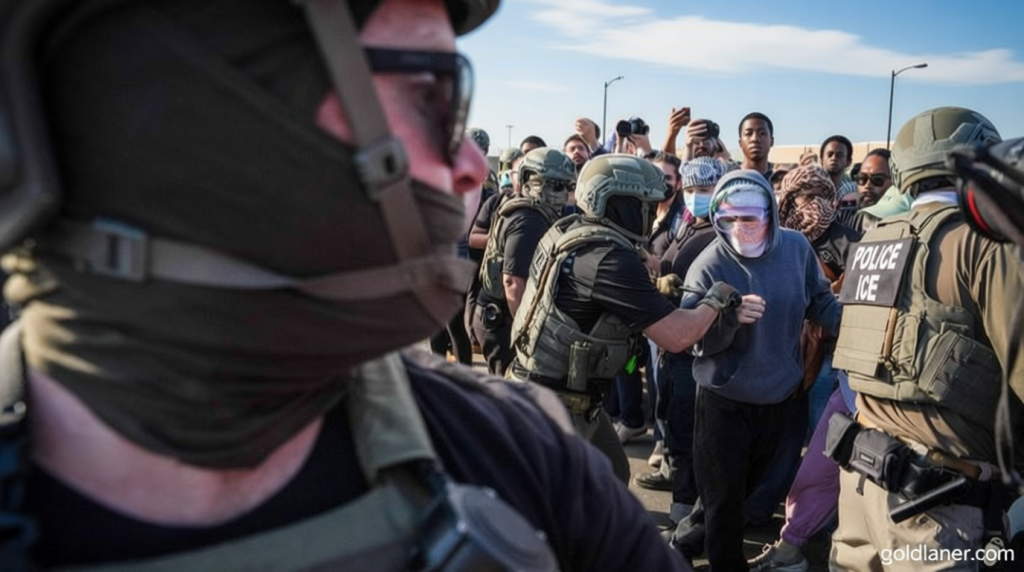
Flashpoints and fury – On the periphery of Newark, New Jersey, a previously quiet industrial zone has become a focal point of public tension this week. For several days, demonstrations have erupted near a federal immigration detention center, where protesters and agents have engaged in confrontations. Lawmakers have also joined the fray, urging federal authorities to conduct thorough evaluations of the facility’s operations. The unfolding events mark another chapter in the ongoing debate over immigration policies under the Trump administration, with attention now centered on the conditions at Delaney Hall, a privately managed detention site housing 1,000 individuals.
Delaney Hall, situated along a bustling highway flanked by heavy commercial traffic, has drawn significant scrutiny as a symbol of the administration’s strict immigration enforcement. The facility, which has seen frequent visits from advocates and critics alike, is reportedly preparing a designated “protest zone” to manage the growing demonstrations. This week’s unrest has intensified, with crowds fluctuating from dozens to hundreds as tensions rise. The presence of both activists and officials has created a volatile environment, raising questions about the balance between security and public accountability.
During the recent holiday weekend, New Jersey Governor Mikie Sherrill attempted to tour the interior of Delaney Hall, but access was initially blocked. According to her office, the decision to deny entry was made before her arrival, though officials later granted permission for a limited inspection. Meanwhile, Senator Andy Kim, a Democrat, entered the facility on Monday to meet with detainees. Upon exiting, he described the scene as a tense standoff between federal agents and protesters, highlighting the emotional weight of the moment. Kim, who aimed to de-escalate the situation, was unexpectedly sprayed with pepper spray, leaving him temporarily incapacitated.
“These images – what happened – it honestly felt very familiar because we’ve seen it online. We’ve seen it on TV. To see it in person is surreal,” said Kim.
The protests have persisted outside the facility’s perimeter, where razor-wire fencing now marks the boundary between detainees and the public. On Friday, the GEO Group, the company overseeing Delaney Hall, took visible steps to reinforce control. Workers painted yellow lines on the sidewalk and erected signs warning of private property and trespassing restrictions. A telecommunications truck also arrived, with staff installing surveillance cameras to monitor activity. These measures signal an effort to manage the demonstrations and document the interactions between protesters and federal agents.
Later that day, New Jersey’s state police announced their takeover of the protest zone, designating it as a “peaceful, protected space” for demonstrators. The move has been praised by the Department of Homeland Security (DHS), which called it “a win for law and order.” However, the governor’s office has emphasized that ICE had initially resisted state police assistance, a stance that has sparked controversy. “Now allowing the New Jersey State Police to cooperate with us is a positive step,” stated a DHS spokesperson Friday.
The state police’s involvement has led to renewed clashes with protesters as they enforced access controls. According to New Jersey Attorney General Jennifer Davenport, officers on horseback encountered resistance during the evening, with some demonstrators refusing to clear the path for vehicles exiting the facility. The agents responded by deploying fireworks and gas canisters, actions that Davenport described as endangering everyone present. The situation escalated, with law enforcement working to maintain order amid the chaos.
Amid the demonstrations, the New Jersey Health Department attempted to inspect Delaney Hall to assess its food safety and public health standards. The agency reported that while entry was permitted, their team could only conduct a partial review, focusing on the dining areas. The limited access has fueled criticism, with advocates arguing that a full inspection is necessary to uncover systemic issues.
DHS has also announced potential adjustments to staffing, including the possibility of pulling Customs and Border Protection officers from Newark Airport to support operations at Delaney Hall. This decision, if implemented, could disrupt air travel schedules and further intensify the debate over resource allocation during the immigration crisis. The agency has maintained that the allegations of inhumane conditions are overstated, but the protests continue to challenge that narrative.
Looking ahead, a planned “Support ICE” rally is set for Saturday, drawing a new wave of participants to the facility. The event aims to counter the recent wave of demonstrations, offering a platform for those advocating stricter immigration measures. As the situation evolves, the interplay between federal agents, local law enforcement, and the public remains a key focus. The protests at Delaney Hall not only reflect immediate concerns about living conditions but also underscore broader tensions over immigration policy in the United States.
With each day bringing new developments, the protests have become a microcosm of the national discourse. The clashes at the facility highlight the growing divide between those who support the administration’s approach and those who demand greater transparency and humane treatment. As the New Jersey State Police take charge of the protest zone, the outcome of these interactions will likely shape the trajectory of the movement and its impact on the detention center’s operations.
Contributors to this report include CNN’s Taylor Romine, Sarah Boxer, Chris Boyette, Sarah Dewberry, and Hanna Park. Their coverage has provided critical insight into the unfolding events, ensuring the public remains informed about the challenges faced by the facility and the broader implications of the protests.
