
A first look inside the $850 million Obama Presidential Center
A First Look Inside the $850 Million Obama Presidential Center
A first look inside the 850 million – On June 19, the long-awaited Obama Presidential Center is set to open its doors to the public, marking a significant milestone for Chicago’s South Side. This sprawling 19.3-acre campus, nestled within the historic Jackson Park, promises to be a multifaceted hub of culture, history, and community engagement. The project, which has taken over a decade to complete, has evolved from a simple archival facility into a dynamic space designed to inspire collective reflection and future possibilities. Its construction, costing an impressive $850 million, has positioned it as the most expensive presidential library in history, a figure that has grown steadily throughout its development.
Design and Aesthetic Vision
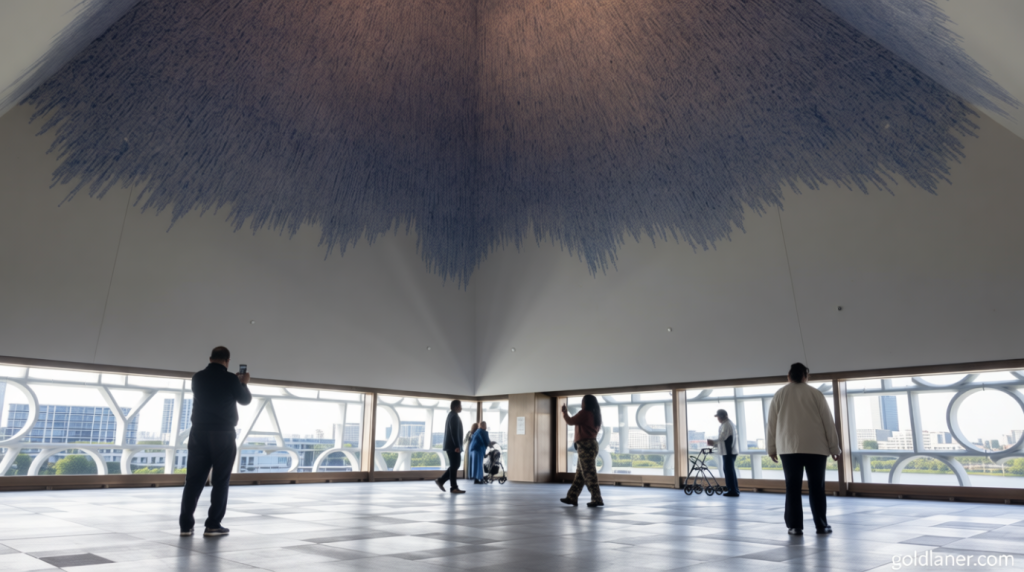
The center’s design, spearheaded by architects Tod Williams and Billie Tsien, reimagines the traditional concept of a presidential library. Instead of a single building, the campus comprises multiple structures, each with its own purpose and aesthetic. One standout feature is the Sky Room, a sunlit observation deck at the top of the main building where visitors are invited to take in the sweeping vistas. The panoramic view captures the neighborhoods of Chicago’s South and West Sides, as well as the shimmering blue expanse of Lake Michigan. This vantage point is not just a physical experience but also a symbolic one, offering a moment of pause after traversing the center’s history-focused exhibits.
Overhead, a monumental artwork by Idris Khan creates an immersive experience. The piece, which resembles a continuous ascent, features words from President Obama’s iconic Selma speech stamped in overlapping patterns that slope upward into a blue gradient. The design choice mirrors Obama’s philosophy of collective shaping of destiny, a theme that permeates the entire facility. As visitors move through the museum, they are guided through a narrative that emphasizes unity and the power of shared vision. The architects described the building’s form as inspired by a visual of four hands coming together, reinforcing the idea that many hands contribute to the creation of a space.
Cultural and Community Impact
The Obama Presidential Center is more than a repository of historical records—it’s a vibrant cultural institution. The campus includes a museum, a public library branch, a community garden, and an NBA regulation-sized basketball court, blending education, recreation, and public engagement. The design team’s goal was to create a “500-year building,” one that feels timeless and durable. “Every decision we made was about making something that lasts,” said Billie Tsien during an interview at the Forum building. The integration of art, such as the 83-foot-tall vertical window by abstract artist Julie Mehretu, further enhances the visitor experience, offering a visual and spatial dialogue between the past and the future.
President Obama has been actively involved in promoting the center, using creative and public-facing gestures to generate excitement. During a soft opening this week, he participated in a Wordle game with comedian Stephen Colbert, subtly addressing the center’s unique features. He also took a moment to celebrate Star Wars Day alongside actor Mark Hamill, who portrayed Luke Skywalker. The playful interaction with the “Death Star” nickname—given to the center due to its imposing granite structure—hinted at a deeper cultural resonance. “I don’t care about the names,” said Tod Williams, the lead architect. “What matters is the purpose and the legacy it will carry.”
Controversy and Public Debate
Despite its grandeur, the center has sparked debate. Some critics have referred to its design as the “Obamalisk,” a term that carries both admiration and skepticism. The decision to position the facility within Jackson Park, a historic public space, led to legal challenges. An environmental group contested the use of public land for the private project, arguing it would accelerate gentrification on the South Side. The lawsuit was eventually dismissed, but concerns remain about the center’s role in reshaping the neighborhood’s landscape.
At the same time, the center’s unique approach to preservation has drawn praise. Unlike traditional presidential libraries managed by the National Archives and Records Administration (NARA), the Obama Foundation operates the facility as a nonprofit. This shift allows for greater flexibility in its programming and design. The presidential archive, however, is still under NARA’s stewardship, with the entire collection being digitized for the first time. This effort involves scanning 30 million pages, ensuring that Obama’s legacy remains accessible to future generations through digital platforms.
During the soft opening, the campus already buzzed with energy. Community members, including school groups, flocked to the space, exploring exhibits and taking in the new installations. The vertical window by Julie Mehretu became a focal point, with visitors marveling at its scale and vibrancy. Billie Tsien reflected on the emotional weight of the moment, noting how people’s reactions to the space spoke volumes about its significance. “You have a sense when people walk in that it belongs to them,” she shared. “It’s theirs, and they feel connected to it.”
The Future of Democracy
As the center prepares to welcome the public, its vision for the future is clear. The Obama Foundation envisions it as a space that fosters dialogue on democracy, storytelling, and societal progress. “I hope visitors come with an open heart,” said Tsien, emphasizing the building’s role in encouraging reflection on collective beliefs. The campus is designed to serve as both a monument to the past and a catalyst for the future, with its layout inviting exploration and interaction across multiple disciplines.
The center’s location within Jackson Park adds historical context to its modern design. The park, once a symbol of the city’s evolving identity, now hosts a facility that blends preservation with innovation. This duality has been a recurring theme in the project’s development, as architects and planners sought to balance the legacy of the former president with the needs of a contemporary audience. The seamless integration of art, architecture, and community spaces reflects this balance, creating an environment that feels both rooted in history and open to new ideas.
While the cost of $850 million has been a point of discussion, the center’s supporters argue that the investment justifies its scope and impact. The Obama Foundation has emphasized the importance of preserving the president’s political legacy in a way that resonates with today’s challenges. The facility’s community-focused features, such as the public library branch and the garden, are intended to serve as inclusive spaces for all Chicagoans, regardless of background or socioeconomic status.
As the opening date approaches, the center stands as a testament to the power of collective action. From the overlapping words in Idris Khan’s artwork to the community events planned for the future, every element is crafted to remind visitors of the shared responsibility in shaping society. The architects’ vision, combined with the center’s multifunctional design, positions it as a landmark that will endure for generations. Whether it’s called the “Death Star” or the “Obamalisk,” the Obama Presidential Center is undeniably a symbol of both historical achievement and forward-thinking ambition.
Legacy and Long-Term Vision
“We think of it as a 500-year building,” Tod Williams reiterated, underscoring the long-term commitment to the center’s mission. The design’s permanence is meant to inspire ongoing dialogue about democracy, equality, and the role of public institutions. The campus’s layout—carefully planned to facilitate both private reflection and communal engagement—encourages visitors to see themselves as part of a larger narrative. This approach aligns with Obama’s philosophy, as seen in his speeches about collective destiny, and is embodied in the space’s every detail.
The Obama Presidential Center is not just a museum; it’s a living archive that evolves with the community. The presence of 28 site-specific installations by contemporary artists adds a layer of cultural relevance, ensuring that the center remains a platform for diverse perspectives. As the first guests explore the space during its soft opening, the campus’s potential begins to take shape. The excitement in the air suggests that this is more than a historical landmark—it’s a new chapter in Chicago’s story, one that invites everyone to participate in its unfolding legacy.
With its blend of history, art, and civic engagement, the Obama Presidential Center is poised to become a major destination for visitors from across the country. The facility’s design, while controversial in its scale and cost, represents a bold statement about the role of presidential legacies in shaping the present. As the final touches to construction and landscaping are completed, the center prepares to welcome a new era of storytelling and community connection. Its opening on Juneteenth, a celebration of freedom and progress, underscores the symbolic importance of the site and the president’s enduring influence on American society.
