
Katherine Legge aims to make history by racing the Indy 500 and Coca-Cola ‘double.’ She’s just looking forward to bedtime
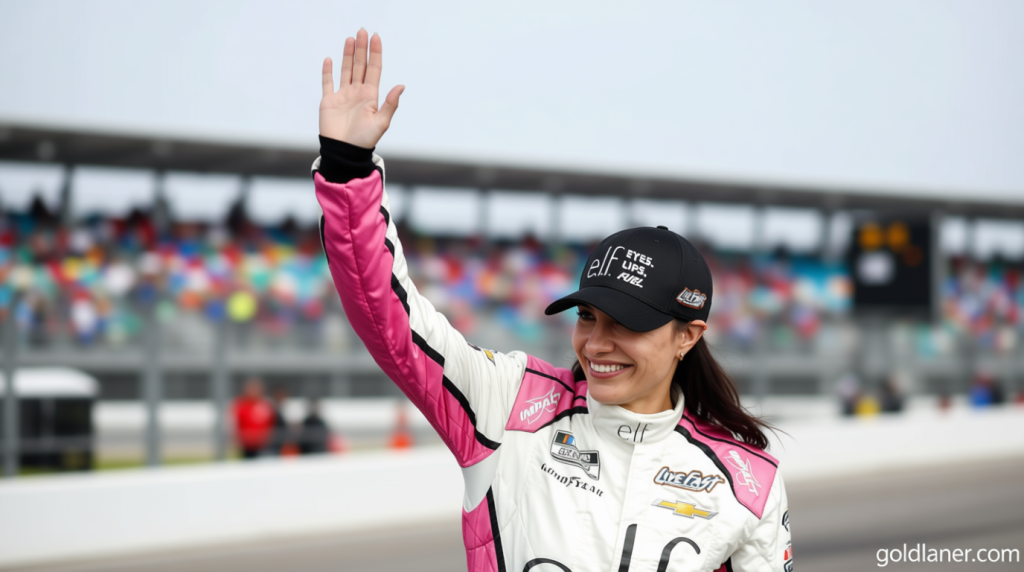
Katherine Legge Aims to Make Motorsport History with Indy 500 and Coca-Cola 600 Double
Katherine Legge aims to make history – Katherine Legge, a veteran racing driver, is set to attempt a historic milestone: the Memorial Day “double.” This ambitious challenge requires competing in two of motorsport’s most grueling events—the Indianapolis 500 and the Coca-Cola 600
Legge’s journey is not just about racing but about redefining boundaries. The double represents a unique blend of speed and endurance, where a driver must maintain peak performance in two distinct racing environments. “It’s like switching from a jet engine to a slow-moving beast,” she said, highlighting the mental shift needed. While the Indy 500 is a race of pure velocity and precision, the Coca-Cola 600 is a marathon of patience and fuel management. Both require different skill sets, and Legge is preparing meticulously to bridge the gap between them. Her preparation includes rigorous training and logistical planning. From the moment she finishes the Indy 500, she must manage a series of transfers—helicopter, flight, and shuttle—to reach the Coca-Cola 600 track in time. Any delay could disrupt the entire schedule, making timing critical. “The only thing I can control is my performance,” she remarked. “Everything else is a gamble.” The physical demands of the double are immense, with drivers expected to burn around 5,000 calories in a single day. To combat fatigue, Legge plans to use IV hydration during flights and adopt a diet of energy-dense snacks like gels, bananas, and even baby food. “I’ll need every bit of fuel to keep going,” she said, acknowledging the toll of such a schedule. The mental aspect is equally daunting, as she must quickly adapt to the nuances of both racing formats. Legge’s approach reflects the precision required. “It’s not just about finishing both races; it’s about maintaining focus through the chaos,” she explained. Her team has focused on optimizing rest periods, nutrition, and recovery to ensure she remains sharp throughout the day. “I’ve been thinking about hybrid strategies this week,” she said, hinting at the complexities of balancing two high-stakes events. Legge is making history by becoming the first woman to tackle the Indy 500 and Coca-Cola 600 on the same day. While several male drivers have attempted the double, the challenge has remained elusive for women. John Andretti made history in 1994 by completing the double, finishing the Indy 500 in 10th place before his NASCAR race was halted by engine failure. Others like Robby Gordon and Kyle Larson have tried multiple times, but none have succeeded in both races. Tony Stewart stands out as the only driver to conquer the double in its entirety, finishing both the Indy 500 and Coca-Cola 600 in 1999 and 2001. His record serves as a benchmark for Legge, who is drawing inspiration from his approach. “Stewart’s ability to switch between racing styles is something I’ve studied,” she said. The double is a testament to adaptability, and Legge is determined to prove that women can match the resilience of their male counterparts. As one of motorsport’s most visible female figures, Legge has always embraced her role as a pioneer. “I prefer to be seen as a driver rather than a female driver,” she said, emphasizing the importance of being judged solely on performance. Her participation in the Indy 500 on Sunday will mark a rare milestone, with no other woman competing in both races on the same day. “It’s a once-in-a-lifetime opportunity to show what’s possible,” she added. Despite the pressure, Legge remains grounded. “I’ve been thinking about bedtime a lot lately,” she joked, underscoring the relentless nature of the double. While her mind is focused on the race, her goal is simple: to push limits and create a legacy that transcends gender. “If I can make it through the day, I’ll be happy,” she said. “Even if it means staying awake until the early hours.”The Dual Challenge: Speed, Strategy, and Stamina
Overcoming the Physical and Mental Toll
A Historic First: Women in Motorsport
Trailblazing Beyond the Track
