
‘Trump has surrendered to Iran’: Some prominent GOP hawks fear Trump just caved
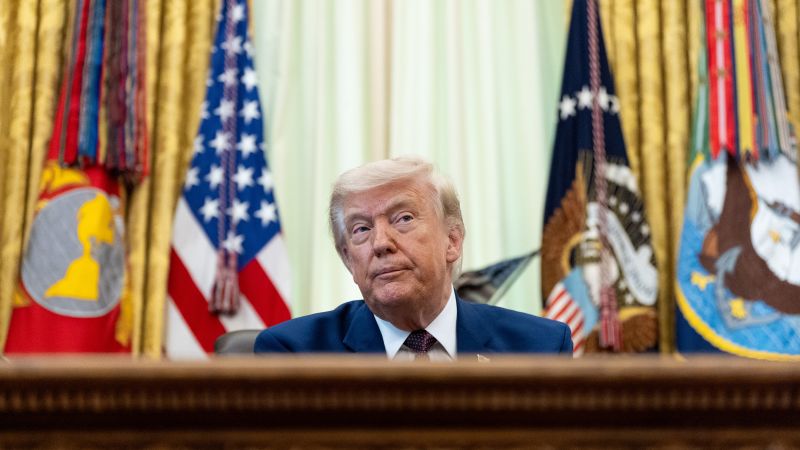
Trump has surrendered to Iran: Some prominent GOP hawks fear Trump just caved
Trump has surrendered to Iran – President Donald Trump’s decision to pursue a deal with Iran has sparked a wave of criticism from within his own political party. While the agreement appears to be gaining traction, many conservative figures are accusing him of compromising too much, fearing that his actions could alienate the foreign policy hardliners who had once aligned closely with his vision for the Middle East. This shift has raised concerns that Trump might be trading his signature tough stance for a more conciliatory approach, with some suggesting the deal could mirror the controversial Iran nuclear accord from the Obama era.
The Strain on Trump’s Political Base
When Trump initiated the Iran conflict in February 2026, he faced a dilemma: the non-interventionist wing of his party, which had supported his campaign for years, began to chafe under the weight of military engagement. Now, as he attempts to withdraw from the war, the situation has flipped. The same foreign policy hawks who once cheered his aggressive rhetoric are growing restless, worried that the administration’s efforts to reach an agreement might have weakened U.S. leverage in the region.
Although the exact terms of the memorandum of understanding remain unclear, the pressure on Trump has mounted as details emerge. Critics argue that the deal could allow Iran to continue enriching uranium for civilian purposes without significant restrictions, a provision they see as a major concession. Meanwhile, the administration’s handling of the text has drawn scrutiny, with conflicting signals from the White House about its release timeline. On Monday, officials claimed the document would be made public within 24-48 hours, but Trump hinted it would be unveiled only after signing on Friday.
Reactions from Key National Figures
“I have asked for days, why can’t we, the people, see the damn MOU?”
Mark Levin, a prominent Fox News host and longtime supporter of Trump’s Iran strategy, voiced his frustration on Sunday. His comments followed a moment when Trump criticized Israel for targeting Hezbollah during peace talks, a move Levin interpreted as a sign of wavering resolve. “Honestly, I’ve never seen anything like this. If it is a great outcome for peace, then release it,” Levin said, underscoring his demand for transparency.
Senator Lindsey Graham of South Carolina echoed similar concerns, though his tone was more measured. In a post on X, Graham praised the effort to negotiate but raised doubts about the consistency of Iran’s commitments. “Somewhat concerned” he admitted, pointing out that the details presented by the administration did not fully align with Iran’s version of the agreement. He also emphasized that Congress must have a say, stating, “It is imperative that the architect of the deal, Vice President Vance and his partners, be part of the process in presenting the final deal to Congress.” This statement highlighted the tension between the executive branch and legislative oversight, a recurring theme in Trump’s administration.
The National Review’s Caution
The editors of the National Review, a leading conservative publication, were equally skeptical. They viewed the agreement as a potential return to the Iran deal of 2015, which Trump had famously denounced as weak. “All told, there is the possibility that Trump would return the U.S. to Obama’s failed Iran deal,” the editors wrote, implying that the new framework might lack the firmness Trump had promised. They also criticized early signs that the deal would not significantly curb Iran’s ballistic missile program, a key issue for many hardline Republicans.
Former Secretary of State Mike Pompeo, another vocal critic of the war, adopted a more restrained but cautious stance. On X, he said, “I pray that any settlement preserves those sacrifices and secures the interests of the American people,” reflecting his ongoing reservations despite the administration’s push for resolution. His words suggest that even within Trump’s inner circle, there is division over the deal’s potential consequences.
Divisions Among Trump’s Allies
As the agreement takes shape, some of Trump’s closest allies have begun to distance themselves. For instance, when Vice President Kamala Harris (assuming the correct name here, though the original mentions Vance) suggested that Iranian leaders had expressed regret over their 47 years of hostility toward the U.S., conservative commentator Erick Erickson responded with exasperation. “FFS,” he wrote, an acronym for “for f*ck’s sake,” before adding, “Trump has surrendered to Iran. Those who kill Americans love this deal.” This reaction highlights a growing trend of blaming the administration’s negotiators rather than Trump himself, a tactic often used to soften the impact of criticism.
Meanwhile, Marc Thiessen, a former George W. Bush aide and a trusted advisor to Trump, warned that the emerging framework resembles Obama’s approach. “I’m anxious to see what the details of the deal are and what gets negotiated, but I’m concerned,” Thiessen said on Fox News, signaling his belief that the agreement might not be as strong as it seems. His comments add to the chorus of skepticism, suggesting that the deal could undermine Trump’s hardline image in the eyes of his base.
The Broader Implications
Some analysts argue that the agreement reflects a strategic shift in how Trump balances his domestic and international priorities. By prioritizing peace over confrontation, he may be aiming to ease tensions with Iran and redirect focus toward other pressing issues, such as economic recovery or domestic policy. However, the risk of perceived weakness remains high. Critics warn that the deal could embolden adversaries, both in the Middle East and globally, and weaken the U.S. position in regional diplomacy.
As the situation unfolds, the debate over Trump’s approach to Iran is likely to intensify. While the president’s supporters see the agreement as a necessary step toward stability, opponents fear it could mark a turning point in his legacy. Whether the deal will be viewed as a triumph or a defeat may depend on how its terms are perceived in the coming weeks, and whether it proves to be a genuine breakthrough or a concession too costly for the GOP’s hardliners.
