Why the forces that felled Keir Starmer threaten so many Western leaders

Why the forces that felled Keir Starmer threaten so many Western leaders
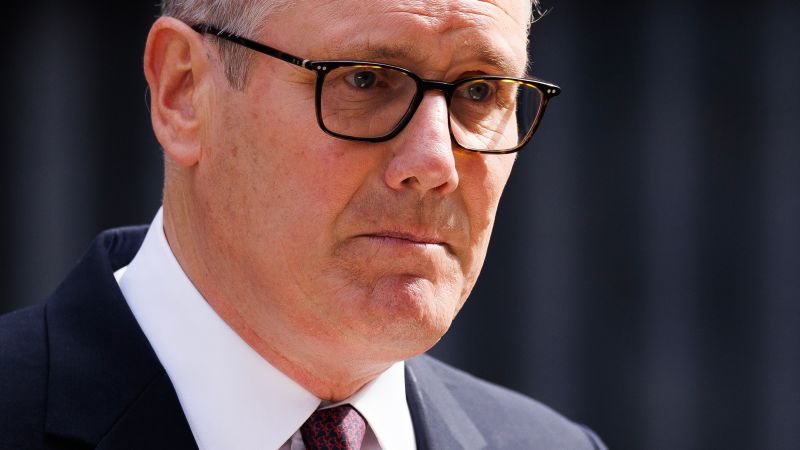
Why the forces that felled Keir – Across the Western world, a recurring pattern has emerged that seems to unravel even the most promising leaders. British Prime Minister Keir Starmer, who recently resigned after a brief tenure, is emblematic of this trend. His fall from power mirrors a broader crisis in modern governance, where voters increasingly demand tangible change but politicians struggle to translate promises into action. This phenomenon, rooted in systemic challenges and shifting public sentiment, has destabilized political systems from London to Washington, D.C., and beyond.
Starmer’s Struggles: A Tale of Unfulfilled Promises
Starmer’s resignation, announced just two years after securing a parliamentary victory, underscores the difficulties of navigating a turbulent political landscape. His administration faced a confluence of issues: an economy mired in stagnation, a fractured Labour Party, and a public weary of political rhetoric that fails to address rising living costs. Voters, disillusioned with the status quo, had elected him with high hopes, yet he found himself unable to push through key reforms. The result was a erosion of his mandate, as his inability to deliver on pledges of affordability and prosperity deepened skepticism about his leadership.
“Appeals to democracy and civic participation are corny and old fashioned and boring and naive,” Obama remarked, reflecting on the evolving role of democratic institutions in a time of uncertainty.
The former U.S. president, who once championed the idea that hope and change could be engineered through political leadership, now voices concerns about the effectiveness of democratic governance. His remarks, delivered at the opening of his presidential center in Chicago, hint at a deeper question: Can leaders in the 21st century still fulfill the promises that once defined their rise to power?
Macron’s Dilemma: The Battle for the Political Center
In France, President Emmanuel Macron faced a similar plight. Despite his ambitious vision of modernization and economic liberalization, his two terms have been marked by public unrest and a string of political missteps. His inability to overcome entrenched trade union power or the rigid structures of the French state has left him sidelined. Macron’s detached leadership style, often criticized as “tin-eared,” has further alienated citizens, casting him as an elitist in a country increasingly divided between centrist and far-right factions.
As Macron prepares to step down, the National Rally party—once a marginal force—now appears poised to seize power. This shift highlights the fragility of the political center, which many leaders have failed to defend. The French example illustrates how even a leader with a clear reform agenda can be derailed by institutional resistance and a lack of public connection.
Trump’s Decline: A Case of Misaligned Priorities
The United States, too, has seen a leader’s fortunes wane due to unmet expectations. Donald Trump, who once positioned himself as the champion of the working class, has struggled to address the core concerns of voters: the rising cost of living. Despite a generally robust economy, millions still grapple with high energy prices and stagnant wages, a reality Trump has often dismissed as a Democratic fabrication.
His recent comments about Air Force One, calling it “a level of luxury that nobody’s ever seen before,” underscore a disconnect between his image and the realities faced by ordinary Americans. This disconnect has fueled his declining approval ratings, with critics pointing to his controversial policies, such as the war on Iran, as contributing factors. As midterms approach, Democrats are optimistic about capitalizing on this discontent.
The Role of Political and Economic Forces
Starmer, Macron, and Trump are not isolated cases. The modern political maelstrom is shaped by a combination of factors: entrenched party systems, global economic forces, and the cacophony of social media. Leaders often enter office with the mandate to transform, yet they are constrained by the very structures they seek to change. This cycle of promise and disappointment has left voters questioning whether democratic institutions can still deliver on their core purpose.
For instance, Starmer’s struggle to control his party’s internal divisions and navigate a low-growth economy highlights how even a majority in parliament can be insufficient for governing effectively. Similarly, Macron’s inability to rally public support behind his reform agenda, despite years of campaigning, reveals the challenges of maintaining a cohesive political narrative in an era of fragmented attention spans.
Obama’s Thesis: Still Valid or Under Threat?
Barack Obama, who once articulated a vision of hope and change, now finds himself grappling with the same issues that have undone others. In his speech at his Chicago center, he defended democratic governance against accusations that it is outdated or ineffective. Yet, the downfall of leaders like Starmer and Macron raises doubts about the validity of his argument. If democratic systems cannot consistently meet voter demands, what justification remains for their continued trust?
Obama’s experience in Britain, where his policies faced constant scrutiny and adjustments, serves as a cautionary tale. The Labour leader’s series of U-turns and ideological clashes weakened his momentum, leaving him unable to address crises in healthcare, public services, or military readiness. These challenges, compounded by the broader economic environment, have made it difficult for Starmer to solidify his legacy.
Implications for the Future of Western Politics
The modern political landscape is defined by a paradox: voters crave transformation, yet leaders are often trapped by the inertia of established systems. This tension has created a vacuum that extremist movements can exploit. From the UK to France, the rise of far-right parties signals a loss of faith in centrist leaders who fail to address growing inequalities and economic anxieties.
Some argue that the skills of past political titans—like Margaret Thatcher, Helmut Kohl, or Ronald Reagan—are no longer sufficient for today’s challenges. Others suggest a more fundamental shift is occurring, as Western societies become increasingly ungovernable. The question remains: Can leaders adapt to these new realities, or will the cycle of unfulfilled promises continue to erode public confidence in democratic institutions?
As the political maelstrom intensifies, the lesson from Starmer’s fall becomes clearer. Leadership is not just about winning elections but about sustaining the narrative that drives public trust. When leaders fail to deliver, the consequences ripple across the political spectrum, fueling cynicism and reshaping the very nature of governance. The jinx of incumbent power, once a rare occurrence, now seems to be a defining feature of the age, challenging the resilience of democratic systems everywhere.