
What to watch in Tuesday’s primaries in Georgia, Alabama, Oklahoma and Washington, DC
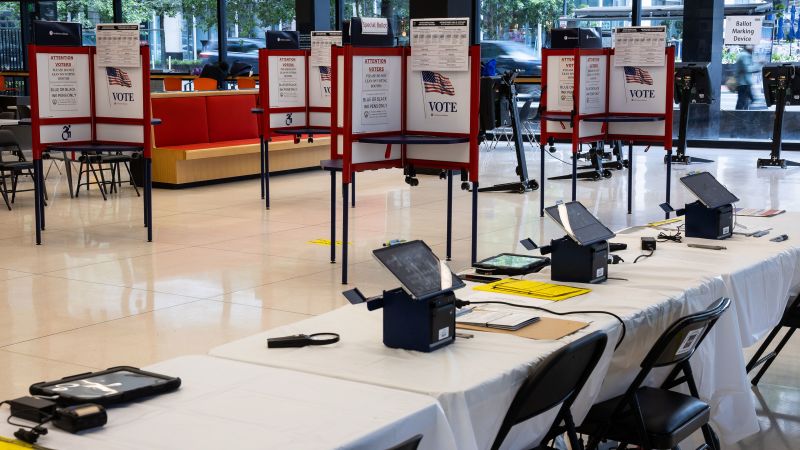
Key Races and Political Shifts in Tuesday’s Primaries
What to watch in Tuesday s primaries – Tuesday’s primary elections in Georgia, Alabama, Oklahoma, and Washington, D.C., are shaping up as pivotal moments in the upcoming political landscape. With results expected to influence major November contests, voters across these states will determine the direction of key races, including Senate showdowns and mayoral transitions. The day also marks a critical test of party loyalty and voter sentiment in deeply conservative regions, while urban centers like Washington, D.C., face a historic shift toward progressive leadership.
Georgia: A Crucial Test for Trump and Kemp
In Georgia, the political battle between Governor Brian Kemp and former President Donald Trump has reached a new stage. Kemp, who once weathered Trump’s attempt to unseat him in a 2022 GOP primary, now faces a renewed challenge in a Senate race that could define the state’s role in the 2028 presidential election. Trump’s endorsement of Rep. Mike Collins for the Senate seat adds tension to a runoff where Kemp’s choice of candidate will be scrutinized for its alignment with the former president’s agenda.
“Maybe would take back Washington, run it on the federal basis,” Trump said earlier this month, signaling his potential influence over the district’s future.
The Senate race pits Collins, a staunch Trump ally, against Derek Dooley, a former University of Tennessee football coach with a more moderate stance. Collins’ strong support from conservative voters in rural southeastern Georgia, where he captured over 40% of the primary vote, contrasts with Dooley’s 30% showing. However, the contest has become a symbolic clash between Trump’s political base and Kemp’s own loyalists, reflecting a deeper ideological divide that has persisted since the 2020 election.
Meanwhile, Georgia’s governor’s race is set to determine the next leader of the state’s Republican Party. Kemp, who has been in office since 2019, faces a challenge from Lt. Gov. Burt Jones, backed by both Trump and Kemp. Jones, a relative newcomer to statewide politics, is positioned to replace Kemp, who will step down after two terms. Yet, businessman Rick Jackson remains a formidable contender, trailing Jones by six percentage points in the primary. The race reveals a geographic split, with Jackson excelling in urban areas and Jones gaining traction in rural counties.
Washington, D.C.: A Democratic Socialist Push?
Washington, D.C., is undergoing a transformative moment as voters decide the city’s next mayor in a ranked-choice primary. The contest features seven candidates, with Janeese Lewis George and Kenyan McDuffie emerging as the most prominent. Lewis George, a democratic socialist, has drawn support from local labor unions, while McDuffie, a moderate, has backing from former mayors and Democratic National Committee leaders. This split mirrors the broader debate over progressive policies in the nation’s capital.
McDuffie’s campaign emphasizes pragmatic governance, appealing to a coalition of voters who prioritize economic stability and bipartisan cooperation. Lewis George, on the other hand, champions bold social reforms, aligning her vision with the progressive wave that has swept through cities like New York and Los Angeles. If Lewis George secures the nomination, her run could signal a broader trend of democratic socialists gaining traction in major metropolitan areas, a development that could reshape the political landscape of the nation’s capital.
The city’s voters are also selecting a nominee to replace Eleanor Holmes Norton, the long-serving non-voting delegate. Five Democrats are vying for the seat, which holds significant sway in congressional voting. This race underscores the district’s role as a Democratic stronghold, even as it faces potential federal intervention from the Trump administration.
Alabama and Oklahoma: Deep-Red Challenges
In Alabama, the Senate race between Trump-endorsed Rep. Barry Moore and former Navy SEAL Jared Hudson offers insight into the state’s political leanings. Though Alabama is traditionally a Republican stronghold, the race highlights a growing divide among voters. Moore, a vocal supporter of Trump’s policies, represents the party’s establishment, while Hudson, a relative outsider, appeals to independents and moderate Republicans. The outcome will test whether the state’s electorate is willing to follow Trump’s lead in major statewide races.
Oklahoma’s primaries are less high-profile but still significant for the state’s political future. Voters will choose nominees for key congressional and state-level races, with the potential to reshape the GOP’s strategy in the region. The state’s conservative base is expected to play a decisive role, as candidates must balance traditional values with modern issues like healthcare and education reform. These races could serve as a barometer for the party’s ability to maintain its dominance in the face of evolving voter priorities.
California’s Congressional District: A Vacancy Filled?
In California’s 25th Congressional District, a special election is set to determine the next representative following a vacancy. The race has drawn attention for its potential to influence the balance of power in the U.S. House. While the district is largely Republican, the contest has attracted a mix of candidates, including both establishment figures and grassroots activists. The result could signal a shift in the party’s appeal, particularly among younger voters who are increasingly focused on climate change and social equity.
Across the country, these primaries are more than just local contests—they are part of a larger national narrative. In Georgia, the Senate race could determine the outcome of a historically tight contest, with implications for the 2028 presidential election. The state’s decision to elect a Republican senator who aligns with Trump’s agenda may embolden the president’s influence in the South. Meanwhile, Washington, D.C.’s mayoral race raises the prospect of a new era of progressive leadership, challenging the status quo in a city where Democratic unity has long been a key strength.
As voters cast their ballots, the economy is expected to play a central role. With inflation and job market trends shaping public opinion, candidates will need to address economic concerns while appealing to their party’s core base. In Georgia, the Senate race could determine whether the state continues to serve as a battleground for national politics or moves closer to a Republican stronghold. Similarly, in Washington, D.C., the next mayor will inherit a city grappling with the legacy of the Trump administration and the challenges of a rapidly changing urban environment.
The results of these primaries will have far-reaching effects. In Alabama, a shift toward more progressive candidates could signal a broader realignment, while Oklahoma’s races may reinforce the state’s traditional conservative values. For Washington, D.C., the mayoral and delegate contests offer a glimpse into the city’s evolving political identity, as voters weigh the merits of bold progressive agendas against the stability of established leadership. These elections, though spread across different states, are interconnected by the shared goal of shaping the political direction of the nation in the months ahead.
As the polls close, the stakes are clear. Georgia’s Senate runoff, Alabama’s Senate race, Oklahoma’s major contests, and Washington, D.C.’s mayoral and delegate elections will determine the trajectory of key legislative and executive positions. Whether voters will follow the lead of their party’s leadership or choose candidates with distinct ideological visions remains to be seen. The outcome could set the stage for a transformative year in American politics, with November’s elections offering a final opportunity for these races to impact the national landscape.
